PBS Eons' "When Lizards Took Over the World" is useful because it refuses the easiest reptile story. Lizards are everywhere now, so the tempting version is a victory march: small scaly survivors spread across warm rocks, deserts, forests, islands, walls, and burrows until they became one of the most familiar vertebrate groups on the planet. The video gives a better frame. Squamates, the group that includes lizards, snakes, and amphisbaenians, did not simply appear fully successful. They spent much of their early history in the shadow of close relatives that looked lizard-like without being lizards in the modern sense.[1][4][5]
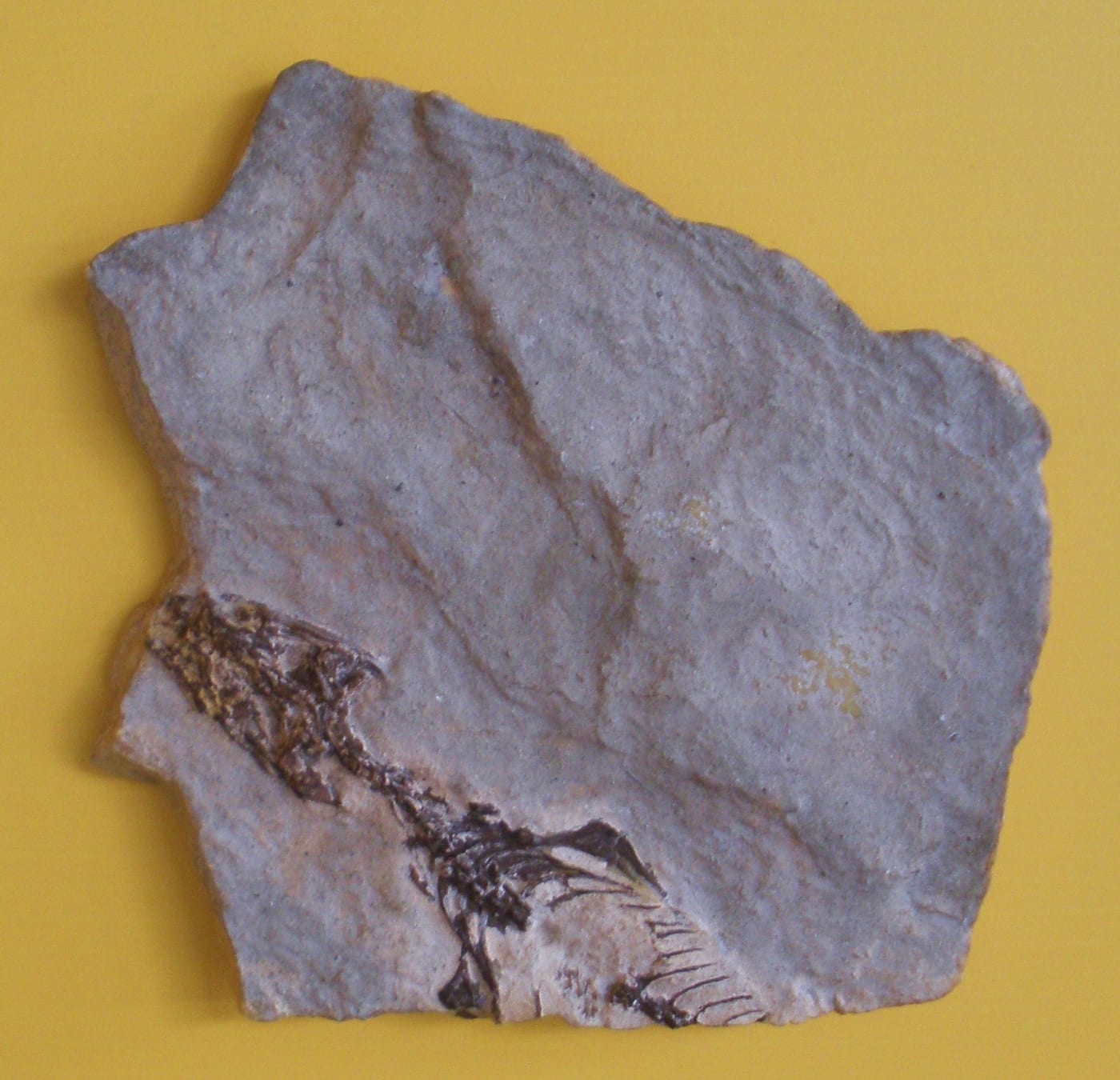
That is why Megachirella wachtleri matters so much. The fossil is not famous because it is spectacular to a museum visitor in the way a mounted dinosaur is spectacular. It is famous because a small Triassic reptile from the Italian Alps became newly legible when researchers re-examined it with high-resolution CT data and a broad comparative dataset.[2][3] Simões and colleagues interpreted Megachirella as the oldest known stem squamate, pushing the fossil record of the lizard-and-snake lineage back by roughly 75 million years compared with the previous record.[3] In other words, the beginning of the story had been present in stone, but the decisive characters were partly hidden in anatomy.
The episode's real lesson is therefore about timing. Modern abundance can make a lineage look inevitable in retrospect. Fossils do not allow that comfort. They show an early lepidosaur world in which rhynchocephalians, the broader group represented today only by the tuatara, occupied much of the ecological and anatomical space that viewers might casually assign to "lizards."[4][5] The present has one surviving rhynchocephalian species; the past had a much richer set of forms. Watching the video with that in mind changes the emphasis. Lizards did not take over because the world had always been waiting for them. They took over after a long interval in which similar-looking reptiles made the competition much less tidy.
Image context: the cover photograph shows the fossil of Megachirella wachtleri, not a reconstruction. It fits this article because the viewing guide keeps returning to the difference between a living-looking category called "lizards" and the hard evidence that lets paleontologists place one small Triassic animal near the base of Squamata.[2][3][7]
The opening works because "lizard" is treated as a question
The video begins from familiarity: lizards are widespread, diverse, and easy to recognize in ordinary life.[1] But the most important move is that it quickly destabilizes recognition. A viewer can identify a gecko or monitor by habit, yet the deep history of lepidosaurs is not arranged around modern field-guide confidence. The key split is between squamates and rhynchocephalians. They are sister lineages, not a simple ladder where one group is a primitive version of the other.[4][5]
That distinction matters because paleontology often has to discipline the eye. Similar bodies can come from shared ancestry, convergence, or retained ancestral features. The video's "lizard-like non-lizards" framing is valuable because it keeps the viewer from back-projecting the present onto the Triassic and Jurassic.[1] If a small reptile from the Mesozoic looks like something that might dart across a garden wall today, that does not automatically make it part of the modern lizard radiation. Teeth, skull joints, palate details, vertebrae, and phylogenetic placement have to do the work.
Megachirella turns the origin story into a CT problem
Around the section on early squamates, the episode gives Megachirella the role it deserves: not mascot, but anchor.[1] The 2018 Nature paper did not merely celebrate an old fossil. It combined CT scanning with a large anatomical and molecular comparison to reassess where the animal belonged.[2][3] That is the point to keep in view. The fossil's importance depends on hidden structure as much as surface outline.
The Scientific Data paper on the CT work makes the method especially clear. Researchers scanned the specimen because traditional inspection could not resolve all of the details needed for early squamate placement, and the resulting digital data helped reveal anatomical features relevant to the origin of lizards and snakes.[3] This is a good corrective to the romance of "oldest known" headlines. The claim is not just that a fossil is old. The claim is that enough of its anatomy can be coded, compared, and tested to move a lineage boundary.
That also explains why the article's title uses "starts earlier" rather than "lizards suddenly appear." Megachirella does not make the whole squamate story simple. It deepens the root and leaves much of the early branching difficult. The fossil tells us the lineage was already present in the Middle Triassic, but it does not by itself explain the later ecological spread of geckos, skinks, iguanians, snakes, amphisbaenians, and monitor lizards. It gives the story a firmer first post, not a finished fence.
The sphenodontian shadow keeps the takeover honest
The strongest part of the video is the competitive frame. Rhynchocephalians are easy to flatten because the living record is so narrow: the tuatara survives in New Zealand, and popular accounts often treat it as a living fossil.[5] But that phrase can mislead if it implies stagnation or irrelevance. The fossil record shows a lineage that was once more diverse and morphologically varied than the living remnant suggests.[4][5]
The eLife study on lepidosaur disparity and evolutionary rates is helpful here because it pushes against a too-neat relay race. It notes that squamates now include more than 10,000 species while Rhynchocephalia is represented by a single living species, but it also discusses a more complicated Mesozoic history of disparity, rates, and fossil sampling.[4] The important point for a viewer is that the decline of one lineage and rise of another are not the same as a winner simply proving superior from the start. Sampling, extinction, ecology, and opportunity all shape what the fossil record lets us see.
That is why the tuatara should not be treated as a failed lizard. It is the surviving member of a separate branch whose deep history helps explain why early squamate success was not automatic.[5] In the video, this makes the present look stranger. The familiar lizard on a wall is not the default reptile. It is the endpoint of a long series of contingent openings.
The later giants show success, but also the limits of the record
The episode's broad sweep makes room for later lizard scale, and Varanus priscus, often called Megalania, is a useful late example.[1][6] The Australian Museum describes it as an enormous monitor lizard, possibly around 3.5 to 5 meters long, while also stressing that its fossils are rare and incomplete and that relationship hypotheses may change with new material.[6] That caveat is exactly the right way to handle the animal. The giant monitor makes squamate success visible, but it also shows why spectacular size does not erase uncertainty.
Read against Megachirella, Varanus priscus is not just a monster endpoint. It is a reminder that one lineage can be both ancient in origin and uneven in evidence. At one end, a small Triassic fossil needs CT scanning to clarify its position.[2][3] At another, a Pleistocene giant is known from incomplete remains that require cautious reconstruction.[6] Between those poles sits the wider squamate radiation: abundant today, patchy in places as fossils, and entangled with ecological changes that unfolded over tens of millions of years.[4]
The video is worth embedding because it gives that large arc in a compact form. The written annotation is where the arc gets stricter. Squamate history is not a slogan about lizards winning. It is a layered story about a lineage that starts earlier than its obvious fossil record once suggested, competes with rhynchocephalians for much of deep time, expands through ecological opportunity, and leaves paleontologists with a record that is powerful precisely because it is incomplete. The takeover is real. The interesting part is how long it took to become obvious.
Sources
- PBS Eons, "When Lizards Took Over the World," YouTube video.
- Tiago R. Simões et al., "The origin of squamates revealed by a Middle Triassic lizard from the Italian Alps," Nature (2018).
- Tiago R. Simões et al., "X-ray computed microtomography of Megachirella wachtleri," Scientific Data (2018).
- Jorge A. Herrera-Flores et al., "The Jurassic rise of squamates as supported by lepidosaur disparity and evolutionary rates," eLife (2022).
- Neil J. Gemmell et al., "The tuatara genome reveals ancient features of amniote evolution," Nature (2020).
- Australian Museum, "Megalania prisca."
- Wikimedia Commons file page, "Megachirella wachtleri.jpg."