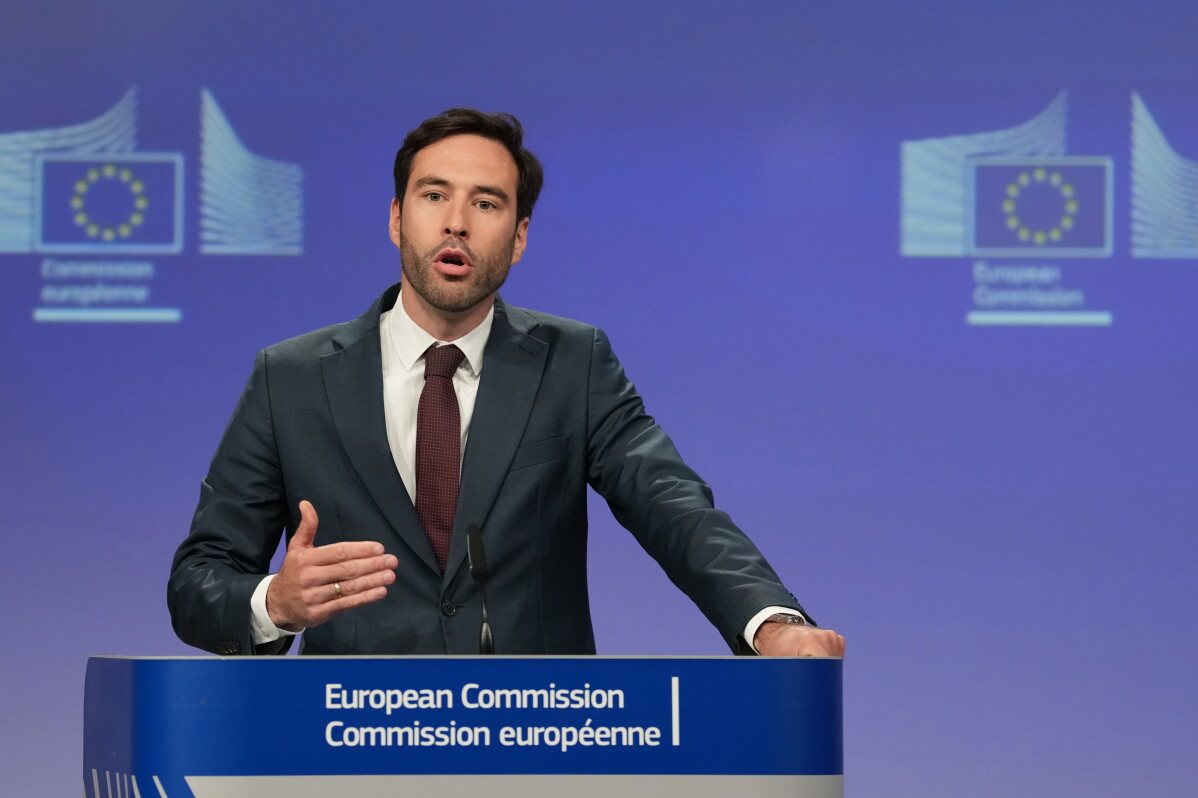
As of 2026-07-23 23:36 UTC, the European Commission has issued two non-compliance decisions against Google under the Digital Markets Act. One carries a €460 million fine for favoring Google's own services in Search. The other carries a €430 million fine for restricting how app developers can direct Play users to offers elsewhere. Google has 60 days to end the conduct. After that, the Commission can adopt a further decision imposing periodic penalties of up to 5% of Google's average daily worldwide turnover in the preceding financial year for each day of non-compliance.[1][2]
The money is the clean headline. The harder story is an interface order: who gets the prominent box on a results page, what a developer may tell a user inside an app, and how much friction Google may place between discovery in Play and purchase somewhere else.
What follows is a reported synthesis, not a transcript or a claim of access to private deliberations. The answers separate the Commission's published findings, Google's public position and what remains unresolved after the announcement.
1. What did the Commission actually decide?
It decided that Google failed two obligations that have applied to its designated services since March 2024.
The Search decision concerns self-preferencing. The Commission says Google presents its own shopping, hotel, transport and sports services more prominently than comparable third-party services, including through top placement, enhanced visuals and filters. The Play decision concerns steering. The Commission says Google's contractual and technical rules still prevent developers from freely communicating offers and completing contracts with users through their own sites or other app stores.[1]
These are final administrative findings, not preliminary accusations. The case began when the Commission opened investigations on March 25, 2024. It sent Alphabet preliminary findings on March 19, 2025, giving the company notice of the case it had to answer.[3] The Commission says Google then inspected the files and replied in writing before the July 2026 decisions.[1]
The decisions can still be challenged in court. The Commission says Google may appeal; independent reporting on Thursday said the company had not confirmed whether it would.[1][7] As of this article's timestamp, the operative fact is a compliance order with a 60-day deadline—not merely a bill for past behavior.
2. What counts as self-preferencing in Search?
The DMA does not require a search engine to make every result look identical. Article 6(5) sets an outcome rule: a gatekeeper must not rank its own products or services more favorably than similar third-party offerings, and its ranking conditions must be transparent, fair and non-discriminatory.[2]
That matters because ranking includes more than the familiar numbered list of blue links. The regulation treats relative prominence—display, linking, ratings and even a single presented answer—as part of ranking. The Commission's July finding therefore focuses on the entire result surface. A Google hotel, shopping or transport unit can gain an advantage through position, richer treatment or filters even if a rival's ordinary link still appears somewhere on the page.[1][2]
The order is deliberately framed around equal treatment rather than a prescribed page mock-up. Google must treat third-party services fairly by reference to its own services. The Commission says Google has already begun testing changes for shopping, hotels, flights, shopping ads, sports and other content, and describes parts of that work as substantial progress. It has not declared the tests compliant.[1]
That last distinction is the one to keep. A proposed redesign is evidence that negotiations have moved; it is not evidence that the case is closed.
3. What did Google Play do wrong?
Article 5(4) of the DMA says business users must be able, free of charge, to communicate and promote offers to customers acquired through a gatekeeper's platform and to conclude contracts with them. Article 5(5) separately protects a user's ability to consume items bought outside that platform.[2]
The Commission accepts that Google may receive a fee for initially acquiring a new customer for a developer through Play. Its finding is narrower: the level of Google's steering-related fees and the length of the charging period went beyond what the law permits. It also says developers could not freely communicate, promote and conclude deals through the channels they chose, including third-party app stores.[1]
Google's own compliance account shows why this is not a simple “outside billing allowed or forbidden” switch. In March 2024, the company described multiple EEA programs: user-choice billing, an option using only the developer's billing system, and an external-offers program that could lead users out of an app. Google argued that Android was already open to rival stores and sideloading, and said DMA compliance involved tradeoffs among choice, security and product usefulness.[4]
The Commission's answer is that the existence of an external route is not enough if fees, charging periods, contract terms or technical restrictions make the route ineffective. The 2026 decision therefore orders Google to enable developers, technically and contractually, to communicate offers and conclude contracts both inside and outside Play.[1]
4. What will a person in Europe actually notice?
Not a universal overnight redesign. The 60-day period exists because compliance has to be implemented, and the public release does not specify the exact pixel, label or sequence for every query and app.
In Search, users could see rival comparison services receive treatment closer to Google's own units, or see Google units lose some of their special presentation. Google warns that compliance will remove real-time Search features such as instant pricing and direct availability for hotels, flights and restaurants. That is the company's forecast of the product consequences, not language in the Commission's order. The Commission says the rule is fair treatment and notes that Google is already testing proposed solutions, which the Commission is assessing.[1][5]
In Play, the visible change should be a clearer path from an app to an outside offer or contract, with fewer contractual and technical barriers. But “clearer” remains to be demonstrated. A link that exists but is buried behind warning screens, paired with a long-running fee or made hard to describe could preserve much of the old constraint. The useful evidence will be the full user journey and developer terms after implementation, not a screenshot of one newly added button.
There is also a security disagreement that cannot be settled by slogan. Google says the required changes would dismantle safety protections on Play.[5] The DMA does contain a narrow security allowance for measures tied to third-party app or store installation under Article 6(4), but the steering finding rests on the separate Article 5(4). The former is not a blank exemption from the latter.[2] Any claimed safeguard should therefore be evaluated against a specific risk rather than accepted because it carries a security label.
5. Is the fine the main consequence?
No. The €890 million total punishes the Commission's account of the gravity and duration of two breaches. It does not buy permission to continue them.
The forward-looking leverage is the cease-and-desist order. If Google does not comply within 60 days, Article 31 permits the Commission to adopt another decision imposing a daily periodic payment of up to 5% of Google's average daily worldwide turnover in the preceding financial year for each day specified by that decision. That is a different instrument from the one-time fines, designed to make delay costly.[1][2] The company can appeal, but as of this article's timestamp it has not publicly confirmed that course.[7]
Nor does the total reveal the full damages, consumer benefit or competitive effect of a remedy. The public release does not publish the underlying fine calculation or the non-confidential text of both decisions. It says gravity, duration and recurrence were assessed, but readers cannot yet reproduce the arithmetic from the announcement alone.[1]
So the enforcement score should not be kept with a single number. Three things matter more over the next two months: whether rival services receive genuinely comparable visibility; whether developers can describe and complete outside offers without a new friction substitute; and whether the Commission publishes enough of its reasoning for courts, competitors and the public to test consistency.
6. Does the decision settle how AI Overviews and AI Mode must behave?
No. It brings them inside the conversation but leaves the implementation open.
The Commission says it has taken note of Google's proposals for applying the decision's principles to AI Overviews and AI Mode, and that dialogue will continue. That wording matters. An AI-generated answer can occupy more of the results page than a traditional link or vertical box, making relative prominence harder to observe. But the July release does not announce a finished design rule for citations, commercial modules or links within those AI surfaces.[1]
It would therefore be premature to claim either that Google's AI answers have been approved or that the Commission has ordered a particular competitor carousel. The settled principle is non-discrimination. The unsettled work is how to measure it when the search engine synthesizes an answer instead of merely arranging links.
This is also where Google's strongest product argument deserves a fair hearing. Google said in March 2024 that DMA changes could redirect traffic from direct suppliers toward large comparison intermediaries and make useful integrated features work differently.[4] That is a real design tradeoff, but it does not answer the legal question by itself. The evidence after implementation should show who gained visibility, where users completed transactions and whether direct suppliers, specialist services or Google's own units lost or gained traffic.
7. Is this now a trade dispute?
It is a DMA enforcement case with an immediate trade-policy response.
On Thursday, U.S. Trade Representative Jamieson Greer called the fine part of an aggressive approach targeting American technology companies and said the EU actions put transatlantic trade stability at risk. That statement establishes Washington's position; it does not overturn the Commission's findings or show that the law was applied only because Google is American.[6]
The legal and political tracks should be kept separate enough to test. On the legal track, Google can challenge jurisdiction, reasoning, procedure or proportionality before the EU courts. On the compliance track, the Commission can evaluate concrete Search and Play changes. On the trade track, the United States can negotiate or retaliate, but any trade response would not be evidence about whether a shopping unit was ranked fairly or whether a developer could communicate an outside price.
The cleanest near-term resolution would be less dramatic than either side's rhetoric: published decision texts, a dated Google implementation, independent observation of result prominence and Play flows, and a reasoned Commission assessment of those changes. The story should be revised if a court stays or annuls either decision, if the Commission extends the deadline, or if the non-confidential decisions materially narrow what Thursday's release appears to cover.
The shortest useful answer
Google has not simply been told to write a cheque. It has been told to stop using control of the search page and app-store relationship in two specific ways: its own services cannot receive favored ranking, and Play developers must be able to take customers to other offers without a fee-and-friction structure that defeats that freedom.[1][2]
What the public still does not have is a final interface. Over the next 60 days, the decisive evidence will not be whether Google removes a beloved widget or Brussels celebrates a large fine. It will be whether a rival service can compete for the same attention and whether a developer can make an outside offer usable in practice.
Sources
- European Commission, “Commission fines Google €890 million for breaches of the Digital Markets Act” (July 23, 2026) — primary decision summary, remedies, deadline, penalty boundary, procedural history and unresolved AI-interface work.
- European Union, Regulation (EU) 2022/1925 (Digital Markets Act) — official text of the steering, outside-purchase, self-preferencing, security and enforcement provisions.
- European Commission, “Commission sends preliminary findings to Alphabet under the Digital Markets Act” (March 19, 2025) — official preliminary case against Google Search self-preferencing and Google Play anti-steering measures.
- Oliver Bethell, Google, “Complying with the Digital Markets Act” (March 5, 2024) — Google's account of its Search changes, Play billing and external-offer programs, Android openness and stated product tradeoffs.
- Sam McNeil, Associated Press, “EU hits Google with $1 billion fine over its Play app store and search” (July 23, 2026) — independent current report, Google's response and source page for the cover photograph from the announcement.
- Office of the United States Trade Representative, “Ambassador Greer Issues Statement on the European Union Creating Uncertainty in our Transatlantic Trade Relationship” (July 23, 2026) — primary U.S. trade-policy response to the fine.
- Luca Bertuzzi, Euronews, “Brussels slaps €890 million fine on Google despite looming new US tariffs” (July 23, 2026) — independent reporting on the 60-day remedy, company response, appeal status and trade context.