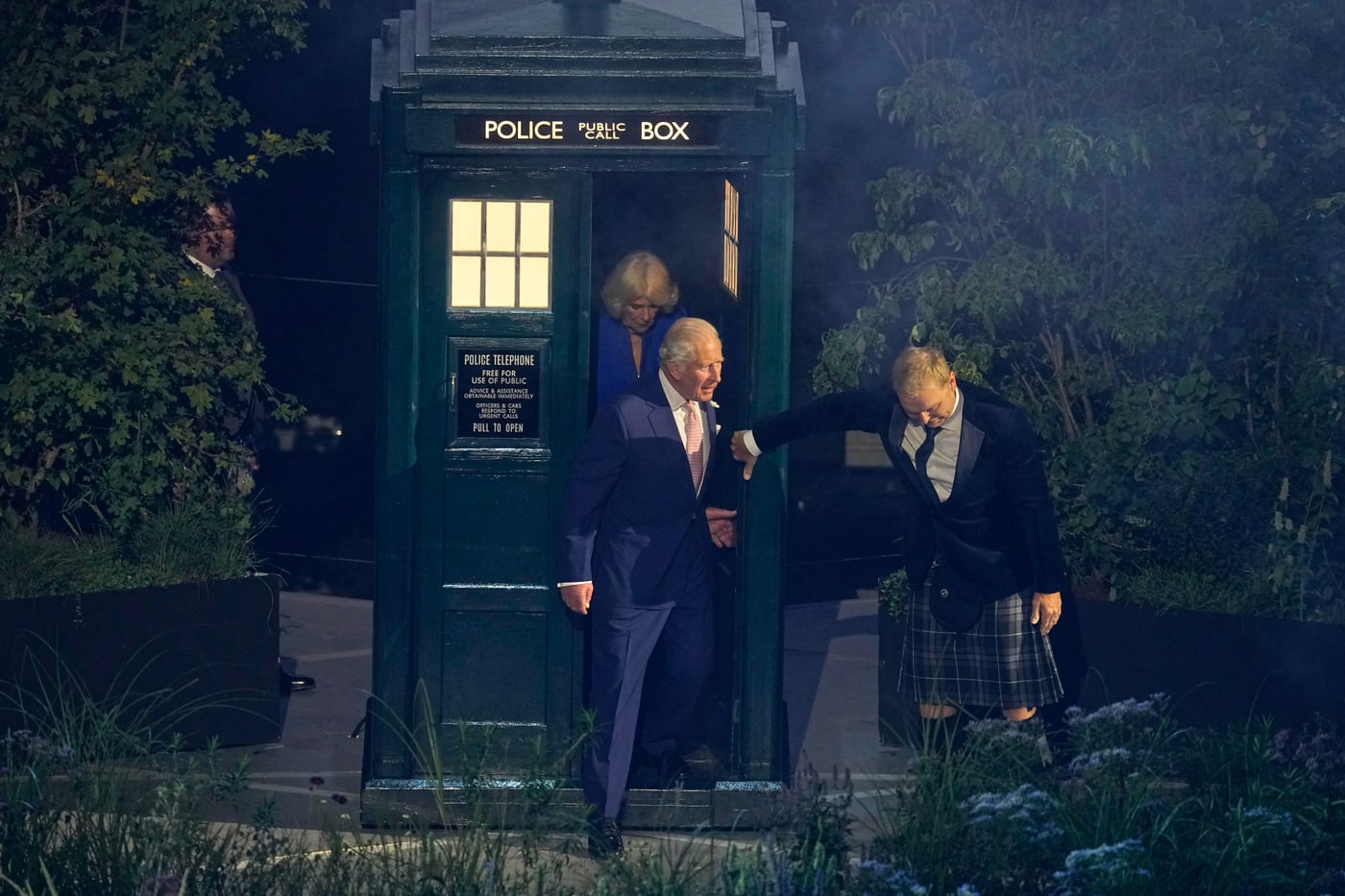
As of 2026-07-24 01:35 UTC, the 23rd Commonwealth Games are open. King Charles III arrived at Glasgow's Hydro through Doctor Who's TARDIS; around 3,000 athletes from 74 nations and territories are due to contest 215 gold medals across 10 sports and six Para sports before August 2.[1][8]
The police box was the ceremony's joke. The more consequential trick happened before the curtain rose: organisers made much of the old mega-event disappear. Glasgow 2026 has no newly built athletes' village, no road events and a competition plan concentrated in four existing venue groups.[3] Its projected £150 million budget is less than one-third of Glasgow 2014's £543 million budget, without adjusting either figure for inflation.[2][5]
That reduction should not be treated as an apology for a diminished Games. It should be treated as the product. If Glasgow can deliver safe competition, a serious integrated Para programme and a credible final account without a construction spree, Commonwealth Sport should make the compact model its presumption for future hosts—not an emergency exception.
What is known, and what is not
| Timestamp | Verified fact | Confidence and boundary |
|---|---|---|
| July 23 | The Games opened at the Hydro; competition runs through August 2.[1][8] | High. The ceremony has occurred; competition outcomes remain open. |
| Opening night | Organisers list roughly 3,000 athletes, 74 nations and territories, 10 sports, six Para sports and 215 gold medals.[1] | High on programme scope. Final participation and completed-event totals may differ. |
| Current budget | Organisers project about £150 million: £100 million from Commonwealth Sport, with the balance expected from ticketing, sponsorship, broadcasting and merchandise.[2] | Medium-high. This is the live budget, not an audited final outturn; commercial revenue is still being earned. |
| Delivery footprint | The council plan specified four competition venue groups, no Games village and no road-based events.[3] | High on the adopted design. Operational costs still need full post-Games disclosure. |
| Comparison point | Glasgow 2014 cost £543 million, including £425 million from the Scottish Government and Glasgow City Council.[5] | High. It is a nominal comparison, not a like-for-like inflation or scope analysis. |
| Why Glasgow stepped in | Victoria withdrew after its planned Games' costs escalated. Its auditor found the original A$2.6 billion budget was understated, the later claim of more than A$6 billion was overstated, and Victoria paid A$380 million to settle its exit.[4] | High. The audit explicitly warns against treating either headline estimate as reliable. |
The uncertainty line matters. Glasgow 2026 calls the sporting competition privately funded, but “no public money” is too broad. The UK government has made up to £2.3 million available as a security contingency, and the House of Commons Library records smaller public support outside the core delivery budget.[2][6] The honest claim is narrower: the £150 million sporting-delivery model has no general government underwrite. Final accounts must show whether that boundary held.
Subtraction is a discipline, not a downgrade
Traditional host pitches often begin with addition: more sports, a bigger village, a signature stadium, a transport project and a catalogue of benefits that will supposedly arrive years later. Victoria shows how quickly that logic can outrun the evidence. Its auditor found unrealistic early assumptions for venues, temporary infrastructure and villages, along with unreliable estimates and overstated benefits.[4]
Glasgow began from the opposite question: what can the city stage well with assets it already has? That led to Scotstoun Stadium, Tollcross International Swimming Centre, the Emirates Arena and Sir Chris Hoy Velodrome, and the Scottish Event Campus, including the Hydro.[3] Existing accommodation replaces a purpose-built village. The absence of road events avoids constructing a dispersed course operation. A smaller sports programme lets the venue inventory constrain the promise instead of forcing the city to reshape itself around the promise.
There is a sporting cost. Athletes in omitted disciplines lose a major international stage, and a narrower programme cannot reproduce the breadth of 2014. Scale also affects visibility: an Oxford Brookes assessment notes that the event follows the expanded men's football World Cup and is being shown in Britain on subscription television rather than its customary free-to-air BBC home.[7] Smaller can become merely less relevant if the savings are bought by shrinking public access or weakening the competition.
But those tradeoffs should be argued openly. A sport should be included because the host has a suitable venue and the event can fund a credible field—not because the programme can grow while costs remain conveniently outside the first estimate. The right minimum is not “everything previously offered.” It is a published sporting standard covering competition quality, accessibility, safeguarding, Para integration and broadcast reach.
Glasgow is a useful model, not a universal template
The strongest case for Glasgow is also its main limitation. The city can reuse facilities partly because public money helped deliver the 2014 Games. That earlier edition was widely regarded as operationally successful, sold about 1.3 million tickets and left a working venue base, but government and council funding supplied £425 million of its £543 million budget.[5] Glasgow 2026 is harvesting an existing asset stock; it is not proving that any city can stage a £150 million Games from scratch.
Its financing is unusual too. Oxford Brookes traces the majority £100 million contribution from Commonwealth Sport to money available after Victoria's withdrawal settlement.[7] A future host cannot assume that another failed bid will fund its rescue. Nor should organisers use Glasgow's favourable starting position to advertise an endlessly portable bargain.
The transferable principle is therefore not the price tag. It is the order of decisions:
- inventory usable venues and accommodation;
- publish the minimum competition and accessibility standard;
- fit the programme to those assets;
- identify security, transport and other public services before declaring the event privately funded; and
- reject the bid if the numbers work only after speculative tourism gains or an uncommitted government contribution.
That sequence turns legacy from a justification for construction into a test of whether existing public assets are actually being used.
What changes over the next 24 hours, seven days and 30 days
Next 24 hours — operations, not economics. Athletes, spectators and workers will test venue entry, transport, security and schedule resilience as the first medals are awarded. One smooth day would not prove the budget; a failure would show where the compact plan removed too much capacity. Organisers should publish material disruptions and schedule changes quickly, with causes.
Next seven days — the quality floor. The useful signals will be completed sessions, athlete and accessibility complaints, seat occupancy rather than ticket distribution, broadcast reach, and whether Para events receive comparable production and promotion. These indicators can show whether “streamlined” means focused or hollow. They cannot yet establish a long-term economic legacy.
Next 30 days — the accounting begins. After the closing ceremony, Glasgow 2026 should release a provisional cost and revenue bridge against the £150 million plan, including the use of contingency, commercial-revenue variance and separately funded public services. Final audited accounts will take longer. A prompt provisional bridge would make later revisions easier to detect, not replace the audit.
Three scenarios, with triggers
Base case: a competent compact Games. Competition proceeds with limited disruption, the service level remains credible and the core budget stays near plan. The trigger is a post-Games cost bridge that reconciles spending, commercial income and contingencies without moving ordinary delivery costs to public agencies. This would justify offering the compact model to cities with an existing venue cluster.
Upside: Glasgow changes the hosting default. Strong attendance, meaningful Para visibility, good athlete feedback and transparent accounts show that fewer sports can produce a coherent event rather than a salvage operation. The trigger is Commonwealth Sport adopting a venue-first bid standard and publishing comparable total-cost accounts for future editions. Success would be institutional imitation, not a flattering economic-impact estimate.
Downside: the small budget is only a small ledger. Security, transport or venue services emerge outside the headline number; commercial revenue disappoints; or reduced reach and athlete experience damage the competition. The trigger is a material unexplained gap between the £150 million claim and comprehensive costs, or evidence that service cuts compromised safe and fair delivery. In that case, Glasgow would be a one-off rescue financed by unusual assets and exit money, not a repeatable model.
The action list
- Glasgow 2026: publish a provisional reconciliation within 30 days of closing, followed by audited accounts that identify in-kind and separately funded public services.
- Commonwealth Sport: define the minimum athlete, Para-sport, accessibility and broadcast offer before asking for hosts, then let existing venues set the programme ceiling.
- Glasgow and Scotland: evaluate venue use, community participation and accessibility against pre-Games baselines; do not convert visitor spending into a claim that every pound was caused by the event.
- Future bidders: disclose accommodation, security, transport, temporary works and contingency before attaching legacy benefits, and refuse a new venue without a funded post-Games operator.
The argument for Glasgow's model should be considered invalid if comprehensive accounts reveal large excluded public costs, if staying near budget required a compromised competition, or if the financing cannot be reproduced without a distressed former host's settlement. Until those tests are met, the conclusion is conditional.
Still, opening night established something worth defending: a major event can enter through an existing door. The Commonwealth Games do not need to become bigger again to prove they survived. They need to show that the sport, the access and the accounts remain substantial after the excess has gone.
Sources
- Commonwealth Sport, “Glasgow 2026 Commonwealth Games officially open” (July 23, 2026) — official opening-night account and current programme scope.
- Glasgow 2026, “General FAQs — Finances and Benefits” (updated January 13, 2026) — organiser budget, funding, contingency and legacy claims.
- Glasgow City Council, “Proposed Glasgow 2026 Commonwealth Games Delivery Model” (October 24, 2024) — primary council report on venue concentration, programme reduction, accommodation and governance.
- Victorian Auditor-General's Office, Withdrawal from 2026 Commonwealth Games (March 2024) — independent public audit of Victoria's budgets, advice and A$380 million settlement.
- Scottish Government, Glasgow 2014 Commonwealth Games Legacy: Final Evaluation Report (April 2018), Chapter 1 — official 2014 scope, budget, public contribution and ticket baseline.
- House of Commons Library, “Government support for the Glasgow Commonwealth Games 2026” (June 8, 2026) — current independent legislative briefing on the core budget, public contingencies and underwriting boundary.
- Stuart Wigham, Oxford Brookes University, “Beyond the World Cup: can Glasgow's stripped-back Commonwealth Games deliver?” (July 13, 2026) — expert assessment of financing, legacy limits and broadcast reach.
- Associated Press, “King Charles emerges from Doctor Who's TARDIS to open Commonwealth Games in Glasgow” (July 23, 2026) — independent opening-night report and source page for the cover photograph.