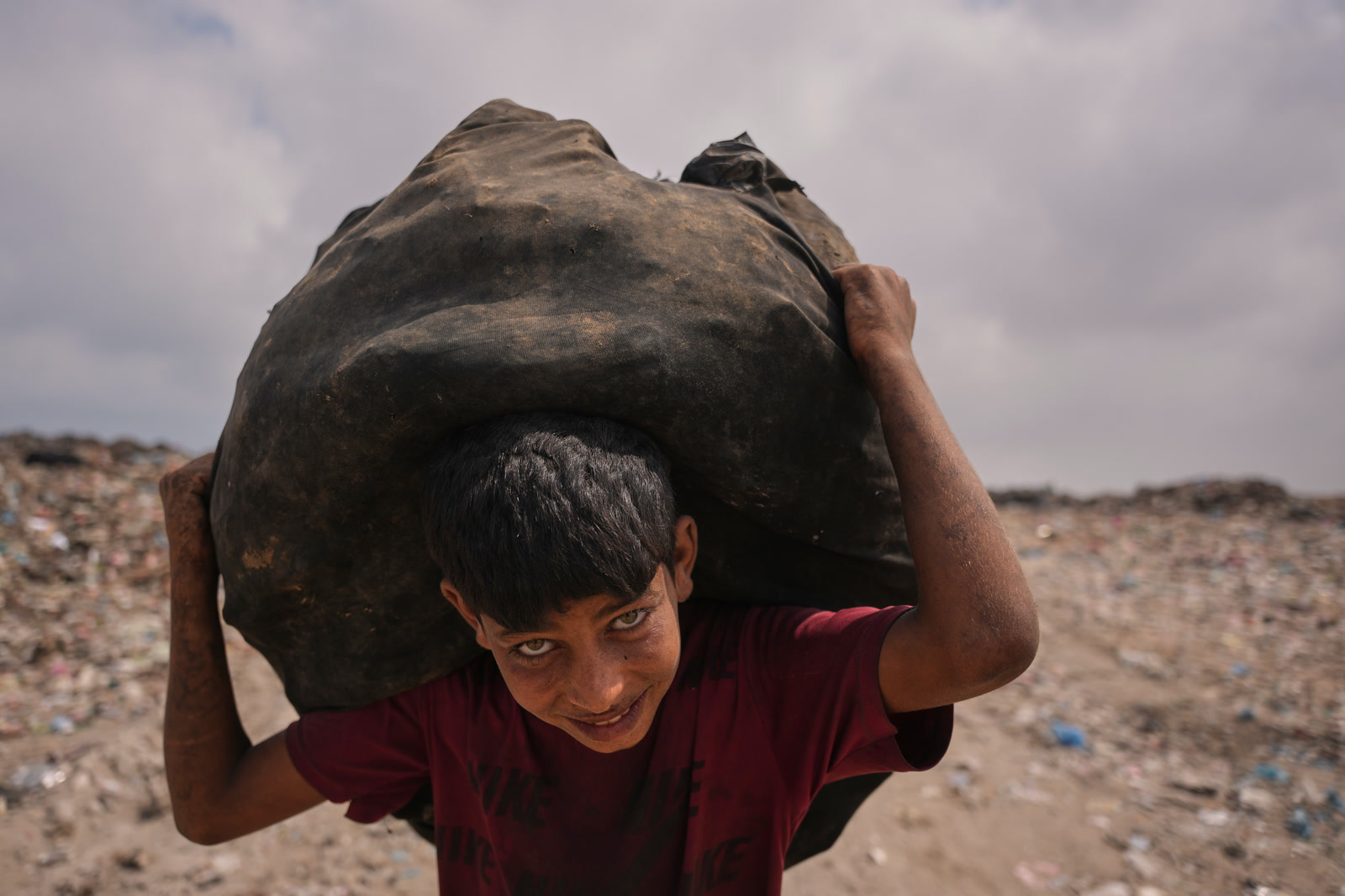
As of 2026-07-24 20:35 UTC, Gaza’s latest hunger assessment contains two truths that are easy to flatten into opposite headlines. Conditions have improved sharply since famine was confirmed in Gaza Governorate in 2025. Yet the new projection says the number of people facing Crisis or worse acute food insecurity could rise during the second half of 2026.[1][6]
That is not a statistical paradox. It is the difference between emergency relief working and a food system recovering.
The Integrated Food Security Phase Classification, or IPC, estimates that more than 1.2 million people—59 percent of Gaza’s population—faced Phase 3 or worse conditions from April 16 through June 30. That included 212,000 people in Phase 4, Emergency, while all five governorates were classified at Phase 3, Crisis. For July through December, the IPC projects more than 1.4 million people, or 67 percent, in Phase 3 or worse, with 212,000 still in Emergency.[1]
The first figure describes the latest assessed period. The second is a conditional projection. Treating both as “the current number” hides the warning built into the report: aid drove the improvement, but access, funding and local production are not yet durable enough to hold it.
First, read the scale correctly
IPC is not a famine on/off switch. It uses five phases—Minimal, Stressed, Crisis, Emergency and Catastrophe/Famine—to compare the severity and magnitude of acute food insecurity. Phase 3 already means lives or livelihoods are threatened by food deprivation; Phase 4 is a still more severe emergency. In this snapshot, the available evidence did not support an area-level Phase 5 classification in any governorate. That non-classification does not prove every pocket is below famine thresholds, nor does it mean households have enough nutritious food, stable incomes or functioning public services.[1][2]
| Measurement | What the latest evidence says | What it does not say |
|---|---|---|
| Assessed period: Apr. 16–Jun. 30 | More than 1.2 million people were in Phase 3 or worse, including 212,000 in Phase 4.[1] | It is not a live headcount for every day after June 30. |
| Projection: Jul. 1–Dec. 31 | More than 1.4 million people may be in Phase 3 or worse; the Emergency count remains 212,000.[1] | It is not an unavoidable forecast. Its assumptions can improve or deteriorate. |
| Relief reach in May | Food parcels reached about 1.5 million people, cash assistance peaked near 700,000, and nutrition support reached 60 percent of children under five.[3] | Reach does not establish that rations are sufficient, diets are diverse or assistance will remain funded. |
| Recovery capacity | Only 3 percent of cropland was described as usable, while more than 70 percent was inaccessible; sea access remained prohibited.[3] | More food entering Gaza does not automatically rebuild farms, fisheries, incomes or water systems. |
This distinction also prevents a misleading comparison with late 2025. The UN agencies’ joint release says the population in Crisis or worse has fallen from about 1.6 million, or 77 percent, at the end of last year to the latest 1.4 million figure used for the current outlook.[3] That is meaningful progress. It is also a decline from an extreme baseline, not a return to normal life.
The improvement is real—and relief explains much of it
The causal chain is unusually visible. After the October 2025 ceasefire, humanitarian assistance and commercial traffic increased. By May 2026, food parcels were reaching roughly three times as many people as received some form of food assistance in September 2025, while nutrition-programme coverage for children under five had risen from less than 1 percent to 60 percent.[3] WFP says its food parcels, bread, cash and hot meals now reach about 1.5 million people.[4]
Israel’s Coordinator of Government Activities in the Territories, or COGAT, describes the same directional change through border data. Its July 9 report estimates from providers’ self-declared shipment data that 1.778 million metric tons of food entered Gaza between October 10, 2025 and June 7, 2026, split almost evenly between declared humanitarian and private-sector supply. COGAT says it could not weigh every pallet without reducing throughput and found roughly 5 percent daily divergence when it checked declarations. The report also says a basket of food prices fell about 72 percent between September 2025 and May 2026.[5]
COGAT uses those figures to argue that entry volumes exceeded humanitarian requirements and that the main remaining constraints lie in storage, distribution, taxation and market control inside Gaza. It rejected the new IPC findings, alleging that the assessment lacked objectivity and did not take Israeli entry data into account, according to the Associated Press.[5][6] The IPC and UN agencies instead stress volatile access, restrictions on essential inputs, falling humanitarian funding and the inability of many households to reach or afford what is available.[1][3]
The disagreement matters, but it should not obscure the common signal. Both records show that more supply entered and food availability improved after the ceasefire. The harder dispute is whether aggregate entry proves adequacy for households—and where responsibility lies when it does not.
A truck at the crossing is not yet a meal
Three measurements sit between supply and recovery:
- Entry: How much food crosses Gaza’s perimeter?
- Access: Can it be collected, transported, stored, sold or distributed safely and affordably to households in different places?
- Outcome: Are people eating enough, preserving their livelihoods and avoiding acute malnutrition?
COGAT’s tonnage is principally an entry measure. IPC’s classification is outcomes-led, triangulating evidence on food consumption, livelihood change, nutrition, mortality and the drivers behind them. Neither can substitute for the other. A shipment can enter without reaching every household; a market can hold food that a family cannot afford; calories can rise while protein, fresh produce, safe water and medical care remain scarce. Conversely, household outcomes can show deprivation without identifying which part of the delivery chain caused each shortfall.[1][2][5]
Water shows the same measurement gap. COGAT reports that more than 70,000 cubic metres are supplied across Gaza each day and says the aggregate exceeds basic humanitarian standards.[5] UNICEF’s mid-year assessment says 82 percent of families are water-insecure and up to 70 percent cannot access six litres per person per day; it also says nearly 90 percent of water and sanitation infrastructure has been damaged or destroyed.[8] Those claims measure different points in the system. Taken together, they indicate that total supply at source cannot establish reliable household access through a damaged network.
The same caution applies to aid logistics. UNICEF reports that only 280 of 633 trucks it sent from Egypt during May and June were able to offload—44 percent.[8] COGAT says crossing capacity is sufficient and attributes key barriers to what happens after entry.[5] Resolving that disagreement requires comparable records for approvals, arrival at the crossing, offloading, collection, internal movement and final distribution—not a single truck total.
Relief can arrest famine without rebuilding a food system
Recovery begins when households are less exposed to the next interruption. Gaza is not there.
FAO’s June agricultural assessment found that 87 percent of cropland and more than 81 percent of greenhouse area remained damaged. There were small but concrete signs of repair: about 24 hectares of damaged greenhouses had been rehabilitated since October, sheep numbers rose 33 percent and goat numbers rose 8 percent where access and support allowed production to restart.[7] Those gains show that local recovery is possible. Their scale shows how far it still has to go.
The latest UN release says more than 70 percent of cropland is inaccessible and only 3 percent currently usable. Farmers lack reliable access to seeds, fertilizer, irrigation equipment and veterinary supplies; fishers remain barred from the sea.[3] Meanwhile, an estimated 74,000 children will require treatment for acute malnutrition over the coming year, along with about 25,000 pregnant and breastfeeding women needing nutrition support.[3]
This is why funding is part of the food-security mechanism, not an administrative footnote. WFP says shortfalls are already forcing ration cuts.[4] OCHA’s July 23 update says severe funding constraints, access restrictions and supply shortages are limiting services across Gaza even as damaged water systems, displacement sites and continued insecurity amplify need.[9] A population pulled back from catastrophe by external assistance can slide quickly if that assistance shrinks before livelihoods and infrastructure return.
What could reverse—or consolidate—the gains
The new projection is conditional, and the evidence has important limits. IPC’s acute-food-insecurity analysis covered all five governorates using remote telephone data. Its separate acute-malnutrition survey, however, excluded an estimated 17 percent of the population near the military-controlled line and Netzarim Corridor, where conditions may be more severe; Rafah could not be classified for acute malnutrition. The full IPC report was still forthcoming at the as-of time.[1][3] COGAT disputes the assessment and offers a different diagnosis of the bottleneck.[5][6] The projection should therefore be read as a warning under stated conditions, not as a precise prediction of December.
Four observable tests will show which way the system is moving:
- Access: whether more crossings and internal routes operate predictably, and whether published records reconcile entry, offloading, collection and final distribution.
- Adequacy: whether ration size, dietary diversity and nutrition-programme coverage hold as funding changes—not merely whether a household received something.
- Affordability and services: whether staple and fresh-food prices remain within reach while safe water, sanitation and healthcare become reliably accessible at household level.
- Resilience: whether farmers and fishers regain land, sea access, inputs and income quickly enough to reduce dependence on imported aid.
The central claim would need revision if sustained assistance, broad household access and local production all strengthened while Phase 3-or-worse outcomes still rose materially; that would point to a different binding cause. For now, the evidence supports a narrower conclusion. Emergency relief, reduced fighting and greater commercial access helped move the assessed conditions away from area-level Famine. They have not yet made that progress self-sustaining.
Sources
- Integrated Food Security Phase Classification, “Gaza Strip: Acute Food Insecurity Situation for 16 April–30 June 2026 and Projection for 1 July–31 December 2026” (released July 23, 2026) — assessed and projected populations, classification, access limits and response conditions.
- Integrated Food Security Phase Classification, “IPC Acute Food Insecurity Classification” — official five-phase scale and analytical purpose.
- FAO, UNICEF and WFP, “Food security and child nutrition crises persist in Gaza despite fragile gains due to increased humanitarian assistance and commercial traffic” (July 23, 2026) — relief reach, nutrition needs, access constraints and agricultural capacity.
- World Food Programme, “Hunger in Gaza: aid delivers fragile gains, but families remain in crisis” (July 23, 2026) — current assistance reach, ration pressure and field reporting on household dependence.
- Coordinator of Government Activities in the Territories, Humanitarian Situation Report During the Ceasefire: October 2025–June 2026 (July 9, 2026) — Israel’s primary account of food entry, prices, water supply and post-entry constraints.
- Sam Metz, Associated Press, “Famine in Gaza has ended but there’s still a food insecurity crisis” (July 23, 2026) — independent report on the IPC findings, COGAT’s rejection, the distinction between improved conditions and recovery, and source page for the hero photograph.
- Food and Agriculture Organization, “Gaza Strip’s agriculture and livestock sectors show early signs of recovery amid widespread destruction” (June 26, 2026) — greenhouse repair, cropland damage, livestock changes and input constraints.
- UNICEF State of Palestine, “Humanitarian Situation Update: Analysis of the Response to the Needs of Children at Mid-year 2026” (reporting period July 17, 2026) — truck offloading, water access and infrastructure damage.
- UN Office for the Coordination of Humanitarian Affairs, “Humanitarian Situation Report” (July 23, 2026) — current operational constraints, service disruption and funding pressure.