As of 2026-07-25 11:34 UTC, the European Centre for Disease Prevention and Control's latest weekly report identifies 81 locally acquired human West Nile virus infections across 35 areas in six European countries. Nine of those areas were reported as affected for the first time this season.[1]
That is a meaningful early-season signal, but the map is easy to misread. An ECDC “affected area” crosses its threshold when at least one locally acquired human infection is reported. The weekly product uses human cases, excludes animal surveillance, and is built primarily to help authorities protect blood and other substances of human origin. ECDC explicitly says it is not a comprehensive epidemiological assessment.[1][3]
The useful headline is therefore not “35 dangerous areas.” It is: a surveillance switch has turned on in 35 places, and blood services, clinicians, residents and travellers now have different decisions to make.
The snapshot, with its boundaries attached
| Record | What is confirmed | What it does not establish |
|---|---|---|
| ECDC week 30 report | Produced on July 23 at 09:45, using data submitted through July 22: 81 locally acquired cases in Italy (46), Greece (21), North Macedonia (5), Romania (5), Spain (3) and France (1).[1] | It is not a live count for July 25, and it does not measure all infections. Most infections cause no symptoms, so detected human cases are an incomplete sample.[4] |
| Geographic signal | 35 areas met the affected-area definition; nine appeared for the first time in that week's report.[1] | One affected area is not equivalent to one outbreak of a fixed size. The threshold is at least one locally acquired human infection, normally with the first case confirmed under the EU case definition.[1][3] |
| WHO alert | On July 24, WHO/Europe said the transmission season was just getting under way, urged stronger surveillance and precautions, and assessed the risk as low for most people.[2] | WHO's country figures use different cut-off dates. Its Italy figure, for example, is a July 15 snapshot; it should not be placed beside ECDC's July 22 total as if both describe the same reporting window.[1][2] |
| Clinical boundary | WHO says roughly 70–80% of infections cause no symptoms, about 20% cause a febrile illness, and about 1 in 150 infections develops severe central-nervous-system disease.[2][4] | The proportion of severe cases among reported cases is not the population's probability of severe disease. Surveillance preferentially finds people sick enough to seek care. |
| Blood-safety trigger | EU rules provide for a 28-day donor deferral after leaving a locally acquired West Nile risk area unless an individual nucleic-acid test is negative.[3][5][7] | The public map is not a do-it-yourself eligibility form. Blood services apply the rules and should be told about relevant residence or travel. |
Why one human case changes a blood service
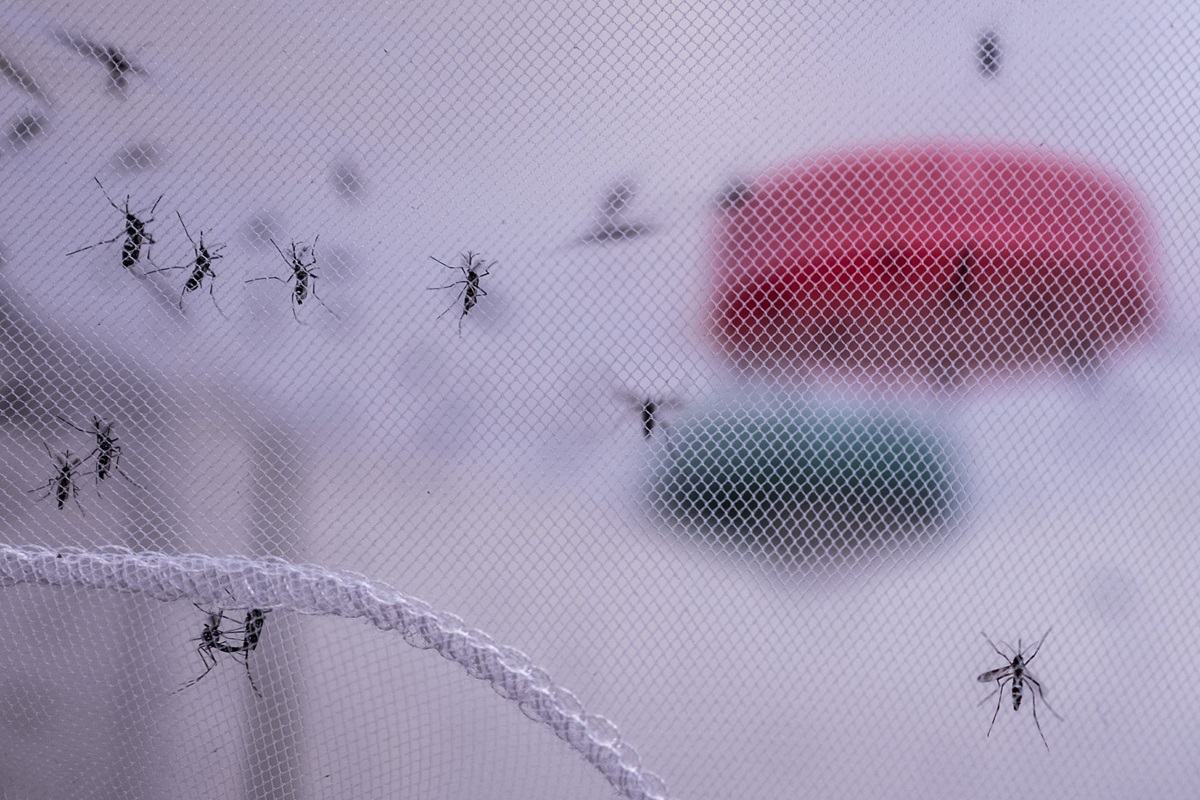
West Nile virus usually moves from infected birds to Culex mosquitoes and then to people or other animals. Everyday contact between people is not a transmission route. Blood transfusion, organ transplantation, pregnancy and breastfeeding have transmitted the virus, but rarely.[2][4]
That rare route explains the map's deliberately sensitive threshold. A person can be infected, feel well and donate while the virus is present in blood. Waiting for a large, clinically obvious cluster would make a poor safety trigger. Under the EU framework, recent presence in a risk area can instead lead to temporary donor deferral or individual nucleic-acid testing.[3][5][7]
This does not mean each yellow or newly red area carries the same mosquito exposure. The weekly report does not include bird, horse or mosquito detections, population denominators, testing intensity, hospitalization burden or the number of infections that never produced symptoms.[1] Those missing layers matter for estimating community risk. They matter less for the narrower operational question the map was designed to answer: has local human transmission been detected somewhere blood-safety teams need to notice?
The distinction also resolves an apparent paradox in the Greek data. WHO reported that 20 of Greece's 21 confirmed patients had neuroinvasive disease as of July 22.[2] That is a serious burden among the people detected. It is not evidence that 20 of every 21 infections in Greece becomes neuroinvasive. When most infections are silent and mild cases may never be tested, the confirmed-case denominator is heavily selected toward severe illness.[4]
What changes over 24 hours, 7 days and 30 days
Next 24 hours: residents and travellers in an affected area should use the ordinary prevention layer WHO recommends—approved repellent used as directed, light clothing that covers the body, window or door screens, and removal of standing water around homes.[2][4] A map entry alone is not a reason to cancel a trip. A person planning to donate blood should tell the collection service where they have lived or travelled and let that service determine eligibility under local implementation of the rules.[3][7]
Next 7 days: the highest-value update will be ECDC's next like-for-like weekly report, not a running mixture of national figures with different cut-off dates. Watch the number and location of newly affected areas, but also look for national reporting on hospitalizations, neuroinvasive disease, deaths, blood-screening measures and animal or mosquito surveillance. A higher case count can reflect wider transmission, better detection, reporting delay—or all three.
Next 30 days: attention should rise without turning into alarm. European transmission typically peaks between July and September, and WHO says the season is still beginning.[2] Blood services may have to balance deferral and testing against supply needs as the affected-area footprint changes. Public-health authorities will need the One Health view that ECDC and the European Food Safety Authority recommend: human, animal, vector and blood-safety evidence read together rather than one map asked to do every job.[6]
Three paths through the rest of the summer
Base path — seasonal expansion, targeted controls. More locally acquired cases and affected areas appear through August, while most infections remain mild or silent and authorities adjust mosquito control, clinical alerts and donor screening locally. Trigger: weekly geographic growth without a disproportionate rise in severe disease or evidence of failures in blood-safety controls.[1][3]
Upside path — a contained early signal. New-area additions slow, national surveillance finds limited onward spread, and no transfusion-linked event emerges. Trigger: several comparable weekly reports show a stable footprint alongside reassuring clinical and blood-service data.
Downside path — the operational burden accelerates. Geographic spread continues while hospitalizations or neuroinvasive cases rise sharply, blood services face material donor constraints, or surveillance detects transmission outside the expected footprint. Trigger: multiple indicators move together; a larger raw case count by itself is insufficient.
These are conditional paths, not forecasts. The current public record supports heightened surveillance and routine bite prevention. It does not support declaring a continent-wide emergency or treating every affected area as equally risky.
A short action check
- Residents and travellers: check the relevant national or local public-health advice, prevent bites, and remove standing water. Seek prompt medical care for severe symptoms such as high fever, neck stiffness, confusion, tremors, weakness or seizures, and mention recent travel.[2][4]
- Prospective blood donors: disclose residence and travel to the blood service before attending; do not infer eligibility from a news headline or map color.[3][5][7]
- Editors and analysts: preserve the data cut-off, distinguish infections from reported cases, and never convert “affected area” into “high-risk destination” without additional evidence.[1]
- Public-health teams: pair human-case reporting with animal, mosquito, clinical-severity and blood-supply indicators; the One Health layers answer different operational questions.[6]
- Invalidation condition: revise this brief's low-for-most-people, targeted-response assessment if subsequent comparable reports show sustained geographic acceleration together with a marked rise in severe burden, transfusion-linked transmission or an official regional risk reassessment. Revise the counts whenever ECDC publishes a newer reporting window.
The map is doing useful work precisely because its threshold is cautious. Reading it well means keeping that caution in both directions: act on the surveillance signal, but do not inflate an operational blood-safety boundary into a travel panic map.
Sources
- European Centre for Disease Prevention and Control, “Surveillance of West Nile Virus infections in humans in Europe, weekly report,” week 30 (produced July 23, 2026; data through July 22) — current case totals, affected areas, source limitations and operational purpose.
- WHO Regional Office for Europe, “West Nile virus: as cases rise across parts of Europe, here is what you need to know” (July 24, 2026) — current alert, country snapshots, seasonality, clinical signal, prevention advice and source page for Hedinn Halldorsson's cover photograph.
- European Centre for Disease Prevention and Control, “About the seasonal surveillance of West Nile virus infections” (updated January 12, 2026) — affected-area definition and the connection between surveillance and blood-donation safeguards.
- WHO Regional Office for Europe, “West Nile Virus” questions and answers (September 25, 2024) — transmission, symptom distribution, severe-disease boundary and care guidance.
- European Centre for Disease Prevention and Control, “Factsheet about West Nile virus infection” — clinical evidence, supportive-care boundary and measures to prevent transmission through substances of human origin.
- European Centre for Disease Prevention and Control and European Food Safety Authority, Surveillance, prevention and control of West Nile virus and Usutu virus infections in the EU/EEA (2023) — One Health surveillance, diagnostic and control context.
- European Commission, Directive 2014/110/EU (December 17, 2014) — legal text setting the 28-day donor-deferral criterion unless an individual nucleic-acid test is negative.