As of 2026-09-28 16:43 UTC.
More than a third of information requests in a new international test received no substantive reply, according to findings released on September 28 by the Centre for Law and Democracy. The study arrives as Sierra Leone's access-to-information gathering puts timely public disclosure on its opening-day agenda.[1][5]
UNESCO lists the joint gathering for September 28–30 at the Julius Maada Bio International Conference Centre in Lungi, combining its annual information-access observance with the 17th International Conference of Information Commissioners. Its programme includes discussion of publishing records proactively: making them available before each person has to submit a request.[1][2]
The two developments expose different parts of the same problem. Agencies need to answer people who ask for records. Publishing useful information routinely could also reduce how often people need to ask.
What the test actually measured
The Centre for Law and Democracy, or CLD, reported no substantive reply in 36% of the sampled requests, while 38% yielded at least some information. CLD identifies weak request-processing systems as a likely explanation for much of the silence. That is the organisation's interpretation, rather than a cause experimentally established by the study.[5]
The report covers 173 requests across 90 countries, not every agency or every information seeker in those jurisdictions. Volunteers were asked to submit two types of request to appropriate national authorities: one about spending on a children's programme, the other about completed investigations or related proceedings involving social-media platforms. They could adapt and translate the requests locally.[6]
The exercise used a common 30-calendar-day benchmark to compare timeliness. That benchmark is a research choice, not a claim that every country has the same legal deadline. The report also distinguishes answering requests from proactive publication and appeals, which it did not comprehensively assess.[6]
For readers, the boundary matters. These are results from selected requests, useful for identifying administrative failures. They are not a measure of every government's overall openness, and they do not show that publishing more records will, by itself, reduce misinformation.
The evidence at the reporting cutoff is:
- September 28 CLD release: measured request outcomes, with the report supplying the sample and method.[5][6]
- September 28–30 UNESCO listing: conference dates, venue and agenda; it does not confirm that proposed commitments have been adopted.[1]
- Conference concept notes: ambitions for timely, usable information, with delivery still to be demonstrated.[2]
A contact list shows the stakes
An earlier episode in the host country makes proactive disclosure concrete. In an April 30 account, Sierra Leone's Right to Access Information Commission, or RAIC, said 28 requesters, including civil-society organisations, had sought a full list of MPs and their contact details. They approached the commission, which engaged Parliament. According to RAIC, Parliament supplied the information on March 25, and the commission subsequently publicised the response and documents.[3]
This is the regulator's account of one case, with no request-receipt dates from which to calculate waiting times. Its significance is the repeated demand for the same basic information. A regularly updated public directory could spare later users the request-and-follow-up process.
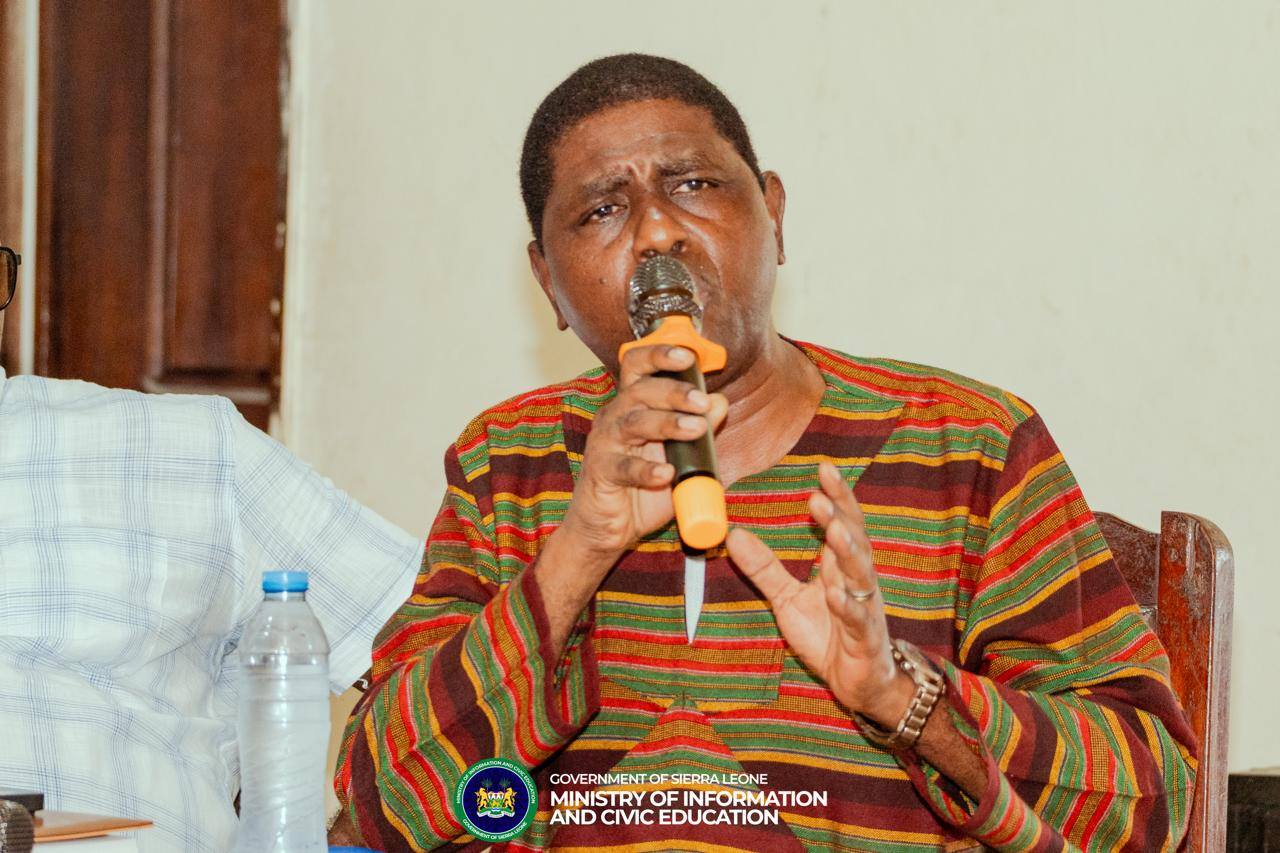
RAIC chairman Ibrahim Seaga Shaw had already emphasised both proactive publication and responses to requests in a February briefing about conference preparations. The domestic obligation therefore predates this week's gathering.[4]
The conference's concept notes seek records that are timely, relevant and readable by software. They also include media-literacy work to help citizens compare official disclosures with independent reporting. Public access should make a government's account easier to examine; official publication is only the beginning of scrutiny.[2]
What to follow after the panels
The base scenario is that the gathering produces recommendations for agencies to implement. An upside trigger would be publication schedules with named responsible bodies, usable records and monitoring. A downside trigger would be commitments followed by missed publication dates or inaccessible releases. These are conditional tests, not forecasts.
The immediate reporting checklist is short:
- Within 24 hours: read the stress-test methodology alongside its headline percentages; keep the sampled requests as the denominator.
- Within seven days: compare any final declaration with the preparatory notes and identify what participants actually agreed.
- Within 30 days: check any announced publication commitments against the records users can retrieve.
Revise the assessment as final proceedings and implementation evidence appear; correct the statistical account if CLD revises its findings. The practical test remains whether someone seeking a public record can actually obtain it.
Sources
- UNESCO, “International Day for Universal Access to Information 2026” — September 28 event notice, joint conference dates, venue and opening-day agenda.
- ICIC–IDUAI 2026 organisers, “Panels Concept Notes Day One” — proposed work on timely disclosure, publication standards, record keeping and media literacy.
- Right to Access Information Commission, “RAIC Facilitates Access To 28 Information Requests Made To Parliament,” April 30, 2026 — regulator's account of the March 25 response.
- RAIC Media, “Jointly Hosting IDUAI and ICIC in Sierra Leone Will Raise the Flag of the Country,” February 6, 2026 — Shaw's preparatory briefing, disclosure obligations and photograph; its earlier venue listing is superseded by source 1.
- Centre for Law and Democracy, “Launch of Second Global Right to Information Stress Test Report,” September 28, 2026 — released findings and the authors' interpretation of unanswered requests.
- Toby Mendel and Raphael Vagliano, “Second Global Comparative Testing of Responses to Requests for Information,” Centre for Law and Democracy, September 2026 — executive summary and methodology, printed pages iv and 4–6.