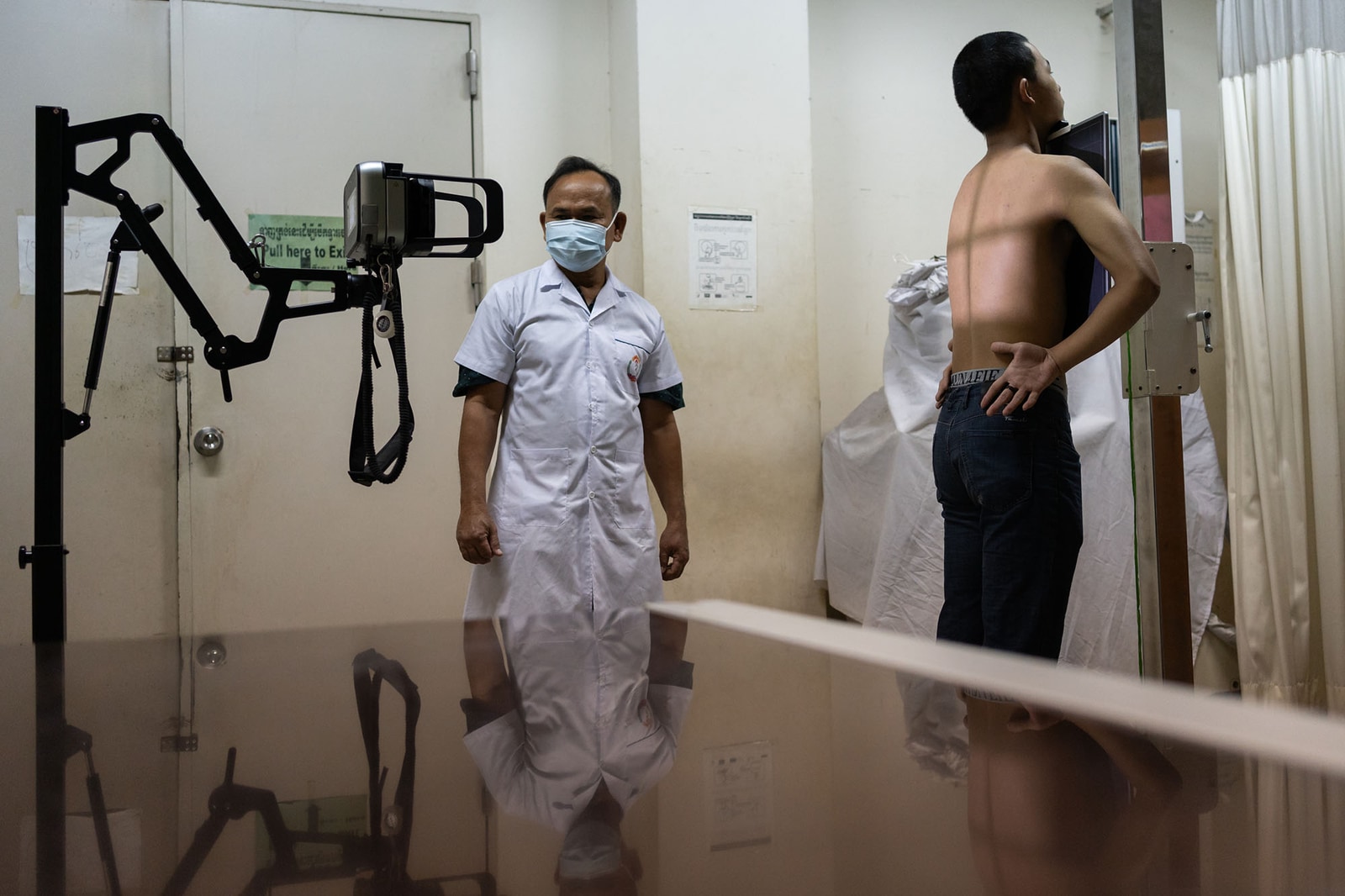
As of 2026-09-27 19:33 UTC, WHO had expanded its medical-device prequalification programme to include computer-aided detection software for tuberculosis screening. The September 25 announcement also covered contraceptive devices and brought male circumcision devices into the broader framework.[1]
For TB programmes, the significance reaches beyond choosing software. A trusted assessment can give purchasers firmer grounds for selecting a product. Whether that purchase helps someone receive care depends on the steps after an X-ray is scored: deciding who needs further investigation, completing diagnostic testing and connecting people with treatment.
That is the central implementation test raised by the announcement. Confidence in a device and confidence in a screening service require different evidence.
What changed, and what was already possible
The expansion introduces a common assessment route for specified product categories. WHO describes prequalification as a review of individual products, including supporting documentation, manufacturing quality systems and continuing oversight. Eligibility for assessment should therefore be read separately from a particular product's successful listing.[2]
| Record | What it establishes | Evidence boundary |
|---|---|---|
| WHO announcement, September 25, 2026 | CAD-TB is included in the expanded programme.[1] | An announcement about programme scope does not establish every supplier's status. |
| WHO medical-device programme page, checked September 27 | Product evidence, quality systems and ongoing oversight form part of assessment.[2] | This describes the process; it does not measure a clinic's performance. |
| WHO policy statement, June 10, 2025 | Six CAD products met performance standards for screening people aged 15 and older.[3] | The earlier performance evaluation should not be relabelled as a new prequalification decision. |
AI-assisted chest X-ray screening predates this week's change. WHO recommended CAD for TB screening in 2021; its 2025 statement describes a later independent assessment involving FIND and a WHO technical advisory group. That statement also excludes children under 15 from the recommendation.[3]
The distinction matters when purchasing language compresses several claims into “WHO-approved AI.” A recommendation about a clinical use, an evaluation of performance and an individual product's prequalification status answer different questions. Buyers need the record that supports the precise claim being made.
A score becomes a workload
CAD produces an abnormality score. A programme chooses a threshold that determines which results trigger further investigation. TDR's implementation toolkit says that choice requires calibration for the local setting and intended use, taking screening goals and costs into account.[4]
Consider a hypothetical outreach service using the same software at two thresholds. Lowering the threshold flags more images for follow-up; raising it flags fewer. The choice affects how much diagnostic work the service must arrange and the balance between finding possible cases and missing them. A score cannot settle that tradeoff by itself.
This makes calibration an operational decision as well as a technical one. Programme managers need to understand the people being screened and the resources available for follow-up. TDR's toolkit is designed to help implementers collect and analyse the performance and cost evidence needed for that decision.[4]
The implication for funders is straightforward: a procurement budget that pays for image interpretation should also account for the work that interpretation generates. Faster scoring can expose a shortage elsewhere in the service.
The useful unit is a completed pathway
WHO's screening guidance is explicit that a positive screen does not confirm TB. It identifies someone who may need diagnostic testing, sometimes at another facility. The guidance also notes that expanded screening creates additional demand for diagnostic services and treatment.[5]
An earlier field account shows what joining those steps can look like. Writing in March 2024, the Global Fund's senior TB adviser described a Bangladesh service combining digital X-rays, AI and telemedicine with on-site sputum collection and community-level treatment, provided free of charge. The same account describes Cambodia's pairing of X-rays with sputum testing on a GeneXpert platform.[6]
These are a funder's descriptions of implementation, not controlled evidence that every deployment will achieve the same results. Their value is concrete: they show why a screening investment has to include arrangements for the next encounter. A person asked to provide a sample immediately faces a different journey from someone sent away to locate another service.
For evaluating the new programme's practical contribution, my inference is that completed diagnostic follow-up and connection to treatment will be more informative than the number of images processed alone. Those measures follow the purpose of screening through to care. They would still need careful comparison before attributing any improvement specifically to prequalification.[5]
What to watch after the announcement
For purchasers and programme managers, the next 24 hours should be about checking product claims against the relevant WHO records. Over seven days, the useful question is whether planned purchases include local calibration and diagnostic capacity. Over 30 days, an existing deployment could be reviewed for completed referrals, waiting times and treatment linkage. These are suggested review horizons, not WHO deadlines or a promised assessment timetable.
Three conditional paths frame the outlook:
- Base case: assessment improves the evidence available to purchasers, while implementation proceeds unevenly. Product-specific records and locally documented rollout plans would support this reading.
- Upside: procurement, calibration and diagnostic services advance together. Shorter waits and a larger share of positive screens completing evaluation would strengthen the case for practical benefit.
- Downside: screening expands faster than follow-up capacity. Growing queues or more people lost between screening and diagnosis would undermine claims of better access, even if image processing rises.
The immediate checklist is short:
- Verify the exact product and intended use against the applicable WHO assessment or listing; revise unsupported supplier claims.
- Ask how the screening threshold was selected and whether the service can complete the resulting diagnostic work.
- Track the patient journey beyond the X-ray. If follow-up completion deteriorates, reconsider expansion and address the bottleneck before declaring success.
Sources
- WHO, “WHO announces expansion of prequalification programme for medical devices,” September 25, 2026 — announcement and product categories.
- WHO Prequalification, “Medical Devices,” checked September 27, 2026 — scope, individual product assessment, quality systems and ongoing oversight.
- WHO, “Use of computer-aided detection software for tuberculosis screening: WHO policy statement,” June 10, 2025 — independent performance evaluation and age boundary.
- TDR, “Calibrating computer-aided detection (CAD) for TB” — local thresholds, implementation goals, performance and cost assessment.
- WHO, “Tuberculosis: Systematic screening,” May 23, 2024 — screening versus diagnosis, referral and resource requirements.
- Mohammed Yassin, the Global Fund, “New Tools and Transformative Partnerships Can Help End TB,” March 22, 2024 — programme accounts from Bangladesh and Cambodia, and the Phnom Penh photograph by Andy Ball/Panos.