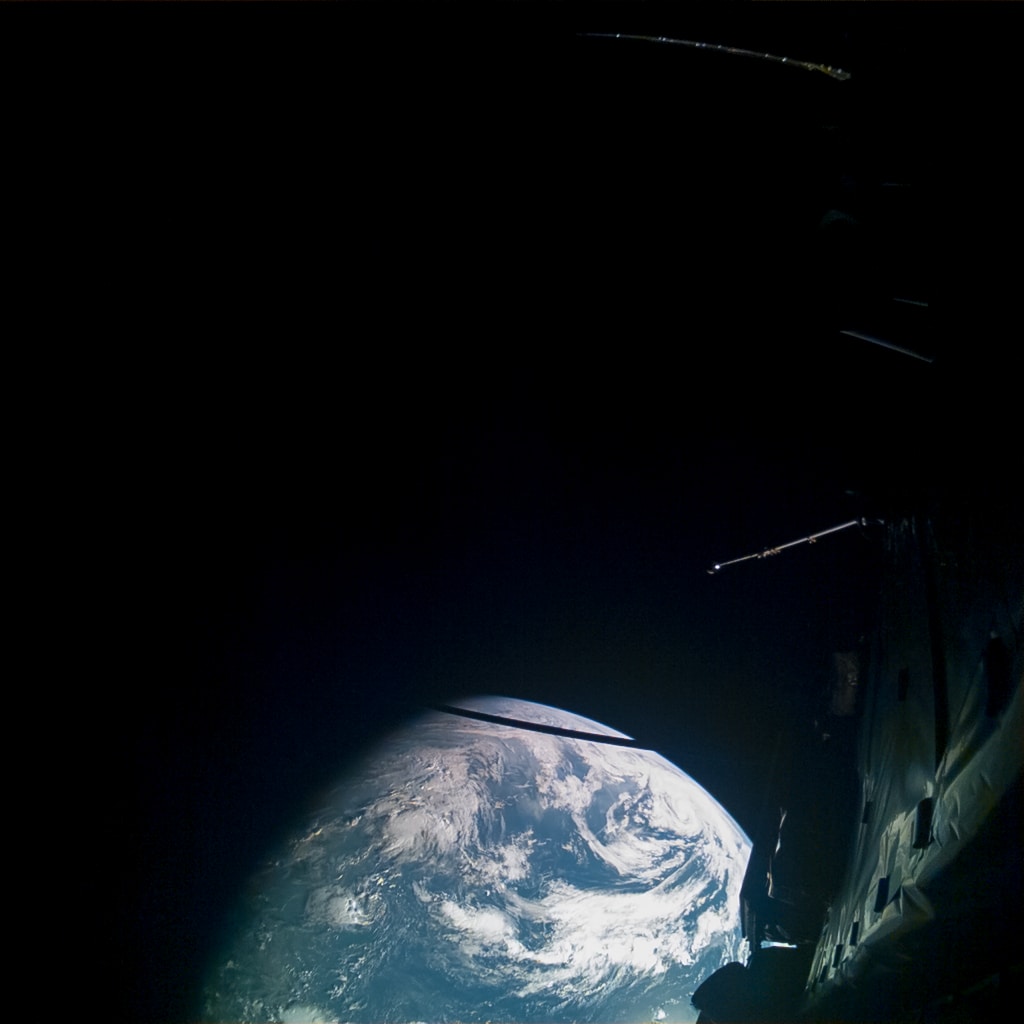
As of 2026-09-28 03:34 UTC. Europe's Juice spacecraft is scheduled to pass Earth at 11:45 UTC on September 28, coming within 8,640 kilometres over the Indian Ocean. ESA's flight plan uses the encounter to position the Jupiter-bound explorer for another Earth flyby in January 2029.[1]
The destination remains distant: NASA's mission overview lists arrival at Jupiter in July 2031, followed by investigations of the giant planet and its moons Ganymede, Callisto and Europa.[5] Today's return brings that journey back within view of home, with a practical question for the hours ahead: did the spacecraft leave on the intended course?
Today's flight plan
ESA's September 21 briefing sets out three planned milestones; success awaits confirmation.[1]
- Trajectory: the pass is expected to bend Juice's path by about 20 degrees and increase its speed by roughly 3.5 kilometres per second.[1]
- Power: an extended passage through Earth's shadow, scheduled to end at 04:03 UTC today, requires battery operation and prioritised instrument observations.[1]
- Science: observations of Earth and the Moon are scheduled from September 23 through October 3, providing calibration opportunities alongside the navigation work.[1]
Why coming back moves the mission forward
A gravity assist exchanges orbital energy with a moving planet. Its effect depends on the approach: a spacecraft can accelerate, slow down or change direction. Reaching Jupiter quickly also creates a second problem—arriving with enough fuel to brake into orbit and stay. ESA's route explanation describes a compromise among launch capability, spacecraft mass, planetary geometry and the propellant needed at the destination.[2]
The previous Earth encounter makes that logic tangible. In August 2024, Juice first passed the Moon and then Earth; the Earth leg reduced its speed relative to the Sun and redirected it toward Venus. ESA estimated that the combined encounter saved around 100–150 kilograms of fuel.[3] A temporary move inward was part of the outward journey. Distance from Earth alone is a poor measure of progress when the next encounter depends on arriving at the right place with the right velocity.
A rehearsal with consequences
Earth flybys also expose problems while engineers still have years to work on them. A peer-reviewed study of Juice's Submillimetre Wave Instrument, published in June, describes the 2024 encounter as a test of observation modes, calibration and the sequence of commands needed during future moon flybys.[4]
The record includes an instructive shortfall: SWI executed 166 of 225 planned observations, with some lost after the instrument entered safe mode. It subsequently recovered. Those figures describe one instrument during the 2024 campaign, not today's performance.[4] They show why a successful flight path and a complete scientific observing programme require separate assessments.
For readers following this mission, the useful result will therefore extend beyond a new photograph. Instrument teams need to establish how well their measurements and operating procedures work against familiar targets before relying on them in unfamiliar surroundings.[3][4]
What would count as success
Over the next 24 hours, look for ESA's confirmation of spacecraft health and the outbound trajectory. Over seven days, follow the completion of the observing campaign. Over 30 days, look for instrument-team assessments; that is a reporting horizon, not a promised release deadline. The following are conditional interpretations of the mission plan:
- Base: ESA confirms the intended flyby and teams begin evaluating the returned observations.
- Upside: instrument reports demonstrate useful improvements in calibration or observing procedures, strengthening preparation for the Jupiter tour.
- Downside: a reported navigation or instrument anomaly requires corrective work or reduces the usable observations. Its significance would depend on the mission team's assessment.
For anyone sharing the story: check the latest operational update before calling the pass successful; keep archival images clearly dated; and separate a completed manoeuvre from validated scientific results. A revised trajectory or documented anomaly would invalidate the assumption of a routine passage. Silence alone would not establish failure.
Sources
- European Space Agency, “Juice to fly past Earth for third gravity assist” (September 21, 2026) — encounter timing, trajectory, eclipse and observation plans.
- European Space Agency, “Juice: why's it taking sooo long” (September 19, 2023) — orbital energy, gravity assists and the tradeoffs of reaching Jupiter orbit.
- European Space Agency, “Juice rerouted to Venus in world's first lunar-Earth flyby” (August 21, 2024) — completed encounter, fuel savings and instrument testing.
- Thibault Cavalié and colleagues, “Juice-SWI during the Lunar-Earth-Gravity-Assist (LEGA) – Part 2: Instrument operations,” Annales Geophysicae 44, 461–487 (June 10, 2026) — sections 4.1 and 4.4 document the 2024 observation programme and instrument interruption.
- NASA Science, “JUICE” — mission targets and planned July 2031 arrival, accessed September 28, 2026.
- European Space Agency, “Juice images Earth during lunar-Earth flyby” (August 21, 2024) — photograph taken August 20, camera details and processing credits.