As of 2026-09-20 18:33 UTC, the World Meteorological Organization's latest ozone update carries an awkward pairing: encouraging atmospheric recovery and a shrinking network of traditional Dobson and Brewer stations. The September 16 release celebrates environmental progress while drawing attention to the observations needed to establish that progress.[1]
Its principal findings have different time horizons:
- Last year's atmosphere: the Antarctic ozone hole in 2025 ranked fourth to fifth smallest since 1992. Weather still produces substantial annual variation.[1]
- A longer institutional trend: active stations using traditional Dobson and Brewer instruments declined from roughly 130 in the early 2000s to 110, with losses often occurring in poorly observed regions.[1]
- A limit to technological substitution: newer array spectrometers have proliferated, but their principal focus is air quality rather than stratospheric ozone.[1]
These are reported observations, not an announcement of new closures this week. The policy implication is an inference: a successful recovery programme still needs a durable way to check its own results. A smaller hole cannot tell governments which measurements they can safely stop making.
What a station actually contributes
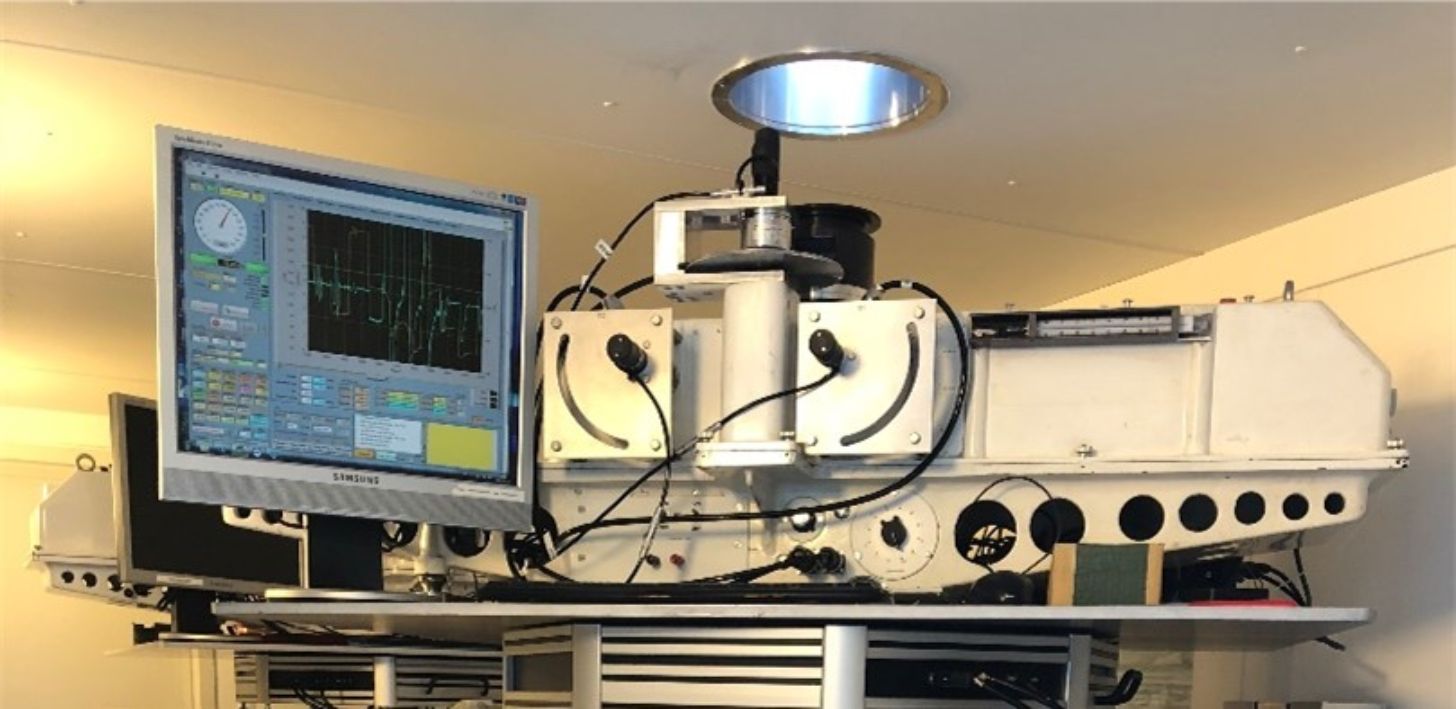
The photograph shows a Dobson spectrophotometer at Davos. Its task is to compare ultraviolet wavelengths that ozone absorbs differently. From that contrast, researchers calculate the amount of ozone in the atmospheric column overhead. MeteoSwiss uses both Dobson and Brewer instruments, alongside other methods that observe different heights and timescales.[2]
That variety matters. At Payerne, Switzerland, balloon instruments directly sample ozone as they rise, while a microwave radiometer observes ozone higher in the atmosphere. Instruments that produce a column total and those that resolve a vertical profile answer related but distinct questions: how much ozone is present, and where it is distributed.[2]
The historical record supplies another dimension. Swiss measurements began at Arosa in 1926 and have continued with very few interruptions. The resulting Arosa/Davos series spans depletion, stabilisation and the beginning of recovery. A station's value therefore includes its relationship to earlier readings, not simply the specification of the equipment operating there today.[3]
MeteoSwiss also describes an uneven recovery with altitude: outside polar regions, upper-stratospheric ozone has been recovering, while observations of the lower stratosphere have not shown the same response. That is a concrete reason to retain complementary measurements. One reassuring aggregate cannot settle every question about the atmosphere beneath it.[3]
The polar night makes the case for variety
NOAA's South Pole programme offers a particularly clear example of why an observing system needs more than one method. Dobson measurements there began in 1961. Because the optical instruments cannot operate through the dark polar winter, NOAA began weekly balloon soundings in 1986. Launches increase to approximately three per week during the austral spring.[4]
The balloons reveal how ozone changes with height, including the intensely depleted layers associated with the Antarctic hole. Their contribution is not interchangeable with a total-column reading or an annual headline about the hole's area.[4]
This does not mean every old instrument must stay forever. It means replacement should demonstrate that the relevant information survives. A new device may be excellent at its intended job while leaving another measurement absent. The sensible test is continuity of evidence: comparable observations, at the required locations and seasons, with differences between methods understood.
Measuring recovery and detecting emissions are different jobs
There is a second reason to resist declaring the monitoring task finished. Atmospheric measurements can reveal behaviour that formal commitments alone do not expose.
In a 2019 study, researchers combined frequent CFC-11 observations from South Korea and Japan with global measurements and atmospheric transport models. They traced a substantial share of an unexpected increase in emissions to eastern mainland China. The authors also identified a limitation: sparse measurements restricted their ability to locate the remaining increase elsewhere.[5]
That study measured a substance that damages ozone. The declining station count highlighted by WMO concerns instruments measuring ozone itself. These are separate observing functions; keeping one does not automatically preserve the other. Together, they illustrate the difference between checking the condition of the atmosphere and investigating a possible cause of change.[1][5]
The CFC-11 episode is historical evidence of what monitoring can uncover, not evidence of a newly detected breach in September 2026. Its relevance is practical: a gap in observations can become a gap in accountability.
Recovery also leaves a local question
For someone deciding how to spend an afternoon outdoors, a global recovery trend is too broad a guide. The World Health Organization explains that ultraviolet exposure also depends on the sun's elevation, altitude, cloud cover and reflective surroundings. It recommends sun protection when the UV Index reaches 3.[6]
The distinction is useful for public communication. Ozone recovery describes a long atmospheric process; a local UV forecast helps answer a question about exposure today. Reporting the first should preserve the usefulness of the second.
What would change the assessment
The following scenarios are analytical conditions, not forecasts. The base case is continued recovery assessment using the remaining mix of observations, provided comparable records keep arriving. The upside would be documented investment or validated replacements that restore coverage in poorly observed regions. The downside would be further losses that leave important places or seasons without equivalent observations. Station totals alone cannot establish the severity of those gaps.
For readers and programme managers, the immediate checks are:
- Today: use the local UV forecast for exposure decisions, with the WHO protection threshold in mind.[6]
- Over the next week: when sharing the bulletin, distinguish its assessment of 2025 from any claim about the still-unfinished 2026 Antarctic season.
- Over the next month: look for evidence of sustained observations, calibration and replacement coverage when agencies discuss their monitoring plans.
The concern about a shrinking traditional network would weaken if replacement systems demonstrated equivalent coverage and continuity. Until then, the relevant achievement is both a recovering ozone layer and the continuing ability to measure it convincingly.
Sources
- World Meteorological Organization, “WMO bulletin shows successes and challenges in ozone layer recovery” (September 16, 2026) — 2025 findings and observing-network changes.
- MeteoSwiss, “Ozone measurements” — instrument methods, complementary observations and the Davos Dobson photograph; accessed September 20, 2026.
- MeteoSwiss, “Ozone monitoring” — the Arosa/Davos record and differences in recovery by altitude; accessed September 20, 2026.
- NOAA Global Monitoring Laboratory, “South Pole Ozone Hole” — programme history and the role of balloon soundings; accessed September 20, 2026.
- M. Rigby and colleagues, “Increase in CFC-11 emissions from eastern China based on atmospheric observations,” Nature 569, 546–550 (May 22, 2019) — emissions attribution and geographic limits.
- World Health Organization, “Ultraviolet radiation” (June 21, 2022) — factors affecting exposure and the UV Index protection threshold.