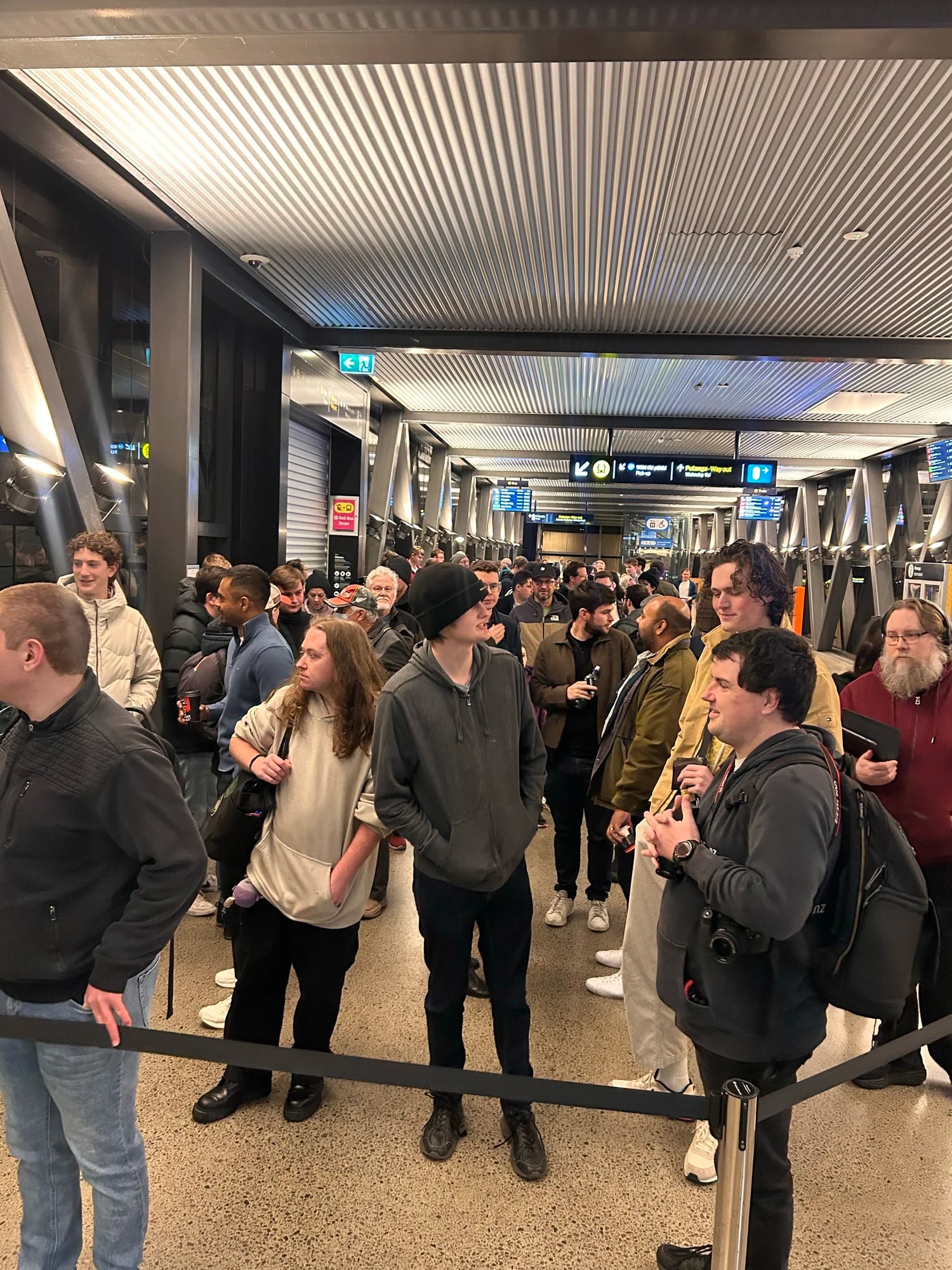
As of 2026-09-21 21:35 UTC, Auckland’s first City Rail Link week has set a record: 528,007 train boardings across the rail network between September 13 and 19, according to figures released on September 21.[1] The next challenge is turning opening-week interest into everyday use.
For passengers, the immediate question is more personal than the headline total: does the new network improve their particular trip? A route through the city centre can shorten one journey while requiring a different connection for another.
What changed this week?
Three dated records establish the position:
- September 13 — passenger services began. The opening followed the formal ceremony on September 11. Trains could now run through the city centre, extending the usefulness of the existing suburban network.[6]
- September 13–19 — a weekly record. The previous record was 504,380 boardings in March 2019; the week immediately before opening recorded 325,203. These are official network totals, not a count confined to the new tunnels.[1]
- September 21 — firmer numbers replaced early estimates. The published totals use AT HOP and contactless payment-card data. Earlier opening-week reports used estimated boarding figures, so the two series should not be mixed.[3]
Confidence is high about what these records report. They do not yet establish how many people have permanently changed their commuting habits.
Why a short central link changes distant journeys
The engineering change gives trains a route through central Auckland instead of making the city centre the end of the line. Its importance therefore extends beyond the immediate station neighbourhoods: existing tracks now connect to a different set of destinations.[6]
Auckland Transport’s current network description makes that concrete. The former Eastern and Western lines are joined as the East West Line, linking Swanson and Manukau through the CRL. The South City Line links Pukekohe with the city centre. The Onehunga West Line runs to Henderson off-peak, but terminates at Maungawhau during peak hours.[5]
That last distinction matters. AT tells western passengers travelling at peak times to Grafton or Newmarket to change to a South City train at Karanga-a-Hape. Off-peak and at weekends, Onehunga West provides a direct service to those destinations from stations between Henderson and Maungawhau. Someone repeating an old commute cannot safely assume that the familiar train still serves the familiar stop.[2]
The useful comparison is the whole trip: the walk to the station, the wait, any transfer and the walk at the other end. A faster ride into central Auckland and a convenient journey to Newmarket are different tests. The same infrastructure can improve the first while making the second depend more heavily on a well-timed connection.
What does the boarding record measure?
The reported 62% increase compares opening week with the immediately preceding week. Against the previous weekly record, the increase is approximately 4.7%, calculated from the published totals.[1] The comparisons answer different questions about the initial rebound and the new historical high.
Boardings also describe use, rather than unique individuals. A longstanding Auckland Transport patronage review distinguishes boarding counts from complete trips and notes that people can travel repeatedly. That distinction is useful here, although the 2013 review does not establish how every transfer is treated in the new 2026 figures. The headline cannot be read as half a million different people trying the railway.[7]
Opening week adds another complication: exploration is itself a reason to travel. CRL’s September 14 account described passengers getting on and off to experience the stations. It gave an early opening-Sunday estimate of about 70,000; the subsequent card-based figure was 56,757. The figures come from different counting methods; the later total is the one used in the weekly record.[4][3]
This is why a single week cannot isolate the effect on road traffic. Repeated train users, sightseeing trips and people switching from another public transport service can all contribute to a busy railway. Establishing a lasting shift from driving requires additional evidence about previous travel choices and sustained behaviour.
How much of the promised service is running?
The opening timetable is still transitional. Reporting by 1News says most stations began with six trains an hour at peak times rather than the eight originally intended. Further improvements were planned for November–December and around February. Those are reported plans, not services passengers should assume are available today.[3]
The government’s daily table records weekday punctuality and reliability in the mid-to-high 90% range. Opening Sunday’s reliability was 81.6%, affected by a Waitematā Station fire that disrupted extra opening-day services.[1] Early operation offers something more substantial than a ribbon-cutting, alongside a reminder that disruption still matters.
The distinction matters for expectations. An operating railway can attract repeat use before its full service pattern arrives, but travellers experience the timetable actually delivered. Future frequency improvements should be assessed when they appear in published schedules and run consistently.
What would make the next month convincing?
These are conditional readings of the early evidence, rather than forecasts:
- Base case: sightseeing interest eases while regular use develops. The trigger is several comparable weeks of stable weekday demand and dependable operation after the opening celebrations.
- Upside: the new connections become useful beyond the initial commuter market. Sustained off-peak demand, alongside stronger weekday use and delivered timetable improvements, would support that reading.
- Downside: inconvenient transfers or recurring disruption discourage return trips. Falling comparable-week demand together with repeated cancellations would weaken the case that initial interest is becoming a habit.
A quieter second week alone would not settle the question. School holidays, major events and closures can change the comparison; they belong beside the passenger total when judging the trend.
For passengers and readers following the project, the immediate checks are straightforward:
- Next 24 hours: plan the actual outbound and return journeys with AT, paying attention to peak versus off-peak connections.[2][5]
- Next seven days: compare the same types of days using the official card-based series, and keep opening-week sensor estimates separate.[3][4]
- Next 30 days: look for repeated weekday use and reliable operation. Verify later service increases against a published timetable before relying on them.
The promising-start assessment would need revisiting if comparable demand repeatedly fell back towards the pre-opening level or persistent service failures made the new connections unreliable. Auckland has demonstrated that people want to try its new railway. The next evidence comes from the journeys they choose to repeat.
Sources
- New Zealand Government, “City Rail Link train patronage a record-breaker,” September 21, 2026 — official weekly totals, comparison periods and daily operating performance.
- Auckland Transport, “Network and timetable changes for the City Rail Link (CRL),” updated September 17, 2026 — changed western journeys and interchange guidance.
- Justin Hu, “City Rail Link breaks Auckland train patronage records,” 1News, September 21, 2026 — card-based counts and the transitional timetable’s planned expansion.
- City Rail Link, Media Centre, releases dated September 13–15, 2026 — opening-day photograph, early boarding estimates and observations of passengers exploring the network.
- Auckland Transport, “City Rail Link: Auckland’s new network in 2026,” updated September 17, 2026 — current line identities, destinations and journey-planning entry point.
- Auckland Council, “CRL opening puts Auckland on track for the future,” September 11, 2026 — formal opening, passenger-service date and the change to through-running.
- Deloitte for Auckland Transport, “Growing Public Transport Patronage by 2022,” November 2013, page 7 — historical explanation of boardings and complete trips, used here only for the conceptual distinction.