Spoiler note: this essay discusses the film's central archival reveal.
Cheryl Dunye's The Watermelon Woman begins with a modest practical problem: a young filmmaker wants to know who a Black actress was. The problem becomes larger because the official record has made that actress almost impossible to know. BFI describes the film as both a romantic comedy and an investigation into film history, and identifies it as the first U.S. feature directed by an out Black lesbian filmmaker.[1] That historical distinction matters, but the film's deeper charge is formal. Dunye does not simply tell a story about being missing from cinema history. She makes a movie whose texture is built from missingness: video store chatter, street interviews, invented photographs, awkward research encounters, interracial desire, and direct address to the camera.
The result is not a clean recovery narrative. It is a comedy about the labor of wanting recovery while knowing that the archive may not deliver it. Cheryl, played by Dunye, works in a Philadelphia video store and starts researching an unnamed 1930s Black actress credited only through a racist nickname. The Film Collaborative's synopsis notes that the search for Fae Richards, the elusive "Watermelon Woman," overturns Cheryl's personal life as much as it advances her documentary project.[3] That double movement is the point. The film refuses to separate historical repair from present-tense mess.
The archive is not a warehouse; it is a power relation
The most radical thing about The Watermelon Woman is that it treats the archive as a social encounter. Cheryl does not merely look up a name and find a file. She meets gatekeepers, bad assumptions, fragmentary memories, community gossip, racial condescension, and her own desire to make the past answer the present. BFI's essay on the film is especially useful here: it tracks how Cheryl's research is blocked or distorted by white institutional authority, from library space to community archive space to policing in the street.[1]
That structure changes the meaning of evidence. In a conventional film-history mystery, the archive is where truth waits. In Dunye's film, the archive is where power has already decided what counts as truth, whose names get preserved, and whose bodies appear only as function. Fae Richards matters because she is not simply "lost." She has been made hard to retrieve by an industry that used Black women while reducing them to roles, credits, and stereotypes.
The movie's answer is not to pretend that one determined filmmaker can repair everything. Instead, it makes research look handmade. Cheryl interviews people. She misreads clues. She lets her documentary project leak into her dating life. She performs herself as both investigator and unreliable subject. Criterion Channel's film page calls the movie a balance of romantic comedy and serious inquiry into the history of Black and queer women in Hollywood.[4] That balance is not tonal decoration. It is Dunye's method: the joke, the crush, the argument, and the archive all belong to the same inquiry.
Fae Richards is invented, and that is the argument
The film's famous reveal is that Fae Richards is not a historical person waiting to be restored. She is an invented figure, created for the film with the help of photographer Zoe Leonard. The Film Collaborative page is unusually direct about this: Dunye says the character came from the lack of information about Black lesbian film history, so she invented her; Leonard created the fictional photographic archive that gives Fae a life-like historical surface.[3]
That invention can sound like a trick if reduced to plot. In the film, it works as an ethical argument. Dunye is not falsifying a recoverable record. She is showing what it feels like to need a record where one has been denied. Fae becomes a placeholder for women whose names were not kept, roles that were narrowed by racist Hollywood convention, and queer lives that were rarely granted public form. BFI makes this point sharply when it argues that Fae stands in for named and unnamed Black actresses sidelined by film history, and for footage that a small-budget production could not access.[1]
The fake archive therefore does two jobs at once. It exposes absence, and it refuses to let absence remain visually empty. Leonard's photographs do not solve the history. They stage the hunger for history. Their elegance is unsettling because they look exactly like what viewers have been trained to trust: aged stills, posed glamour, documentary trace. But because the film eventually marks them as invented, they ask the viewer to think about why some images feel legitimate while some lives need invention before they can be seen at all.
The video-store comedy keeps the history alive
One reason the film still feels fresh is that it does not speak in museum tones. BFI's film page describes it as an ode to love, community, and the past, following a filmmaker whose search for an actor resonates with her own life.[2] That description catches the film's social warmth. Cheryl's research happens amid work shifts, flirtation, friendship, embarrassment, and arguments about desire. The video store is not just a period detail from the 1990s. It is a counter-archive.
At the store, movies circulate through hands and recommendations rather than through official scholarship. Taste is practical. Memory is informal. A clerk can become a curator because she is close to the shelves and close to the customers. That setting matters for a film about missing film history. Cheryl's search begins not in a rarefied archive but in the everyday afterlife of movies: rentals, conversations, casual discoveries, and the stubborn feeling that something important has been left unnamed.
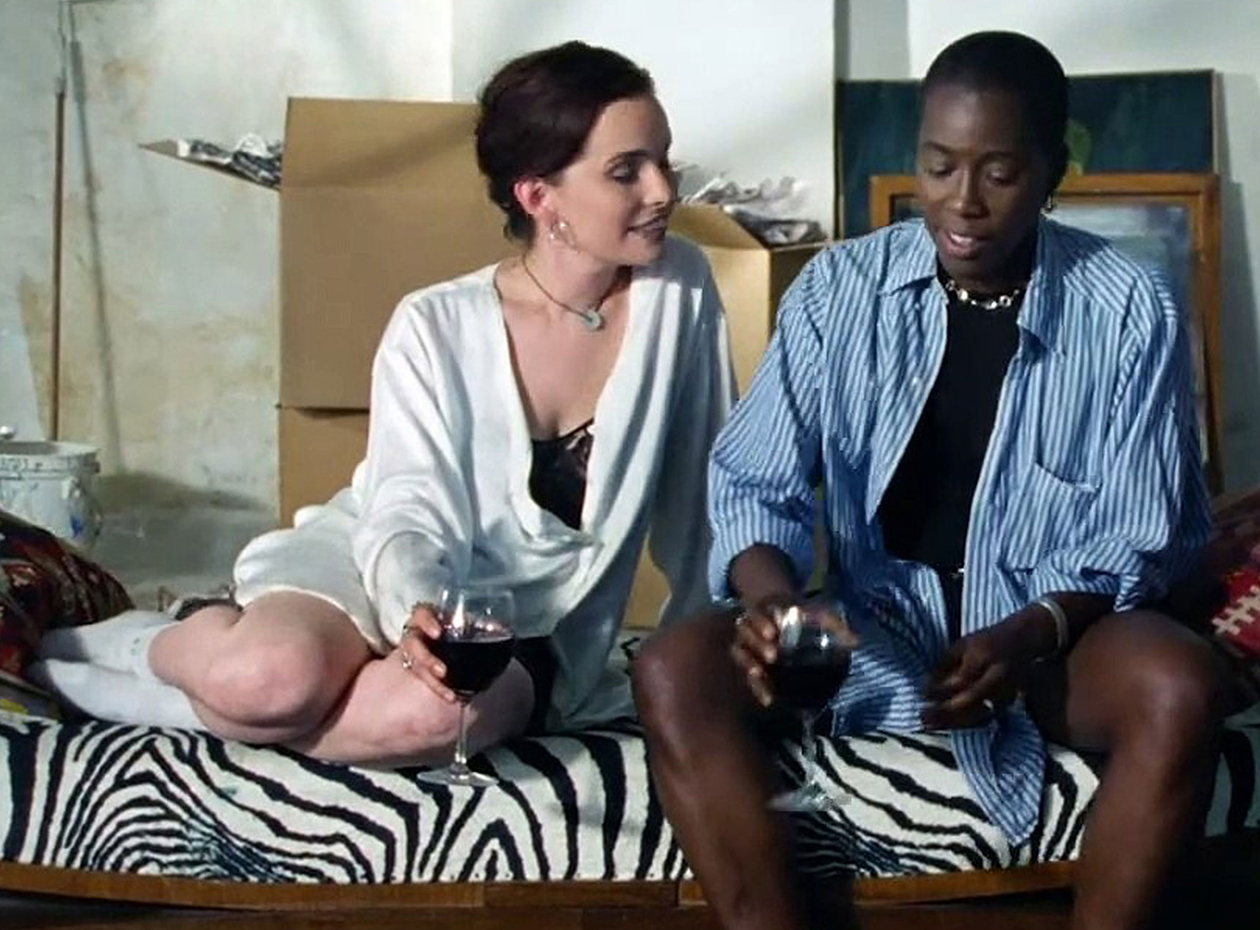
The romance with Diana complicates that search rather than simply decorating it. Their relationship forces the film to test how desire crosses race, class, and cultural possession. Tamara's skepticism is not just protective-friend comic relief; it keeps asking whether Cheryl's private life is reproducing some of the same asymmetries her research is trying to expose. This is why the movie's lightness has bite. Its comedy does not cancel the politics. It lets the politics move through scenes that feel lived rather than diagrammed.
A landmark because it refuses a single landmark shape
AFI's Movie Club entry gathers the film's public landmarks: its status as the first theatrically released feature directed by an out Black lesbian filmmaker, its partial NEA funding, the political backlash around that funding, the fictional Fae Richards Archive, and its later acquisition by MoMA.[5] Those facts help explain why The Watermelon Woman belongs in film history. But they do not fully explain why the film still works as cinema.
It works because Dunye declines the prestige grammar that often surrounds "important" films. She does not make a solemn monument to erasure. She makes a flexible object that can laugh, flirt, accuse, invent, and doubt itself. BFI places the film inside New Queer Cinema's 1990s formal experimentation, where low-budget work challenged not only which stories were told but how narrative itself could behave.[1] The Watermelon Woman is central to that movement because its form is inseparable from its politics. To tell a missing story, it must keep changing tools.
That is the final force of the film's invented archive. It does not give viewers the comfort of completion. It gives them a method: look for the gap, ask who benefits from the gap, build with what remains, and admit when building is also invention. In that sense, The Watermelon Woman is not only about Black queer film history. It is about what cinema can do when the official record is too thin to hold the lives that made it possible.
Sources
- Chrystel Oloukoï, "The Watermelon Woman at 25: the Black lesbian classic that wears its brilliance lightly," BFI, 2021 - feature essay on the film's New Queer Cinema context, archival invention, form, and politics.
- BFI, "The Watermelon Woman (1997)" - film page with credits, running time, and Sight and Sound poll context.
- The Film Collaborative, "The Watermelon Woman" - distributor page with synopsis, production details, Cheryl Dunye's explanation of inventing Fae Richards, Zoe Leonard archive context, and the article image still.
- Criterion Channel, "The Watermelon Woman" - film page summarizing Dunye's romantic-comedy frame and inquiry into Black and queer women in Hollywood.
- American Film Institute, "AFI Movie Club: THE WATERMELON WOMAN" - contextual notes on the film's theatrical milestone, NEA funding, political backlash, Fae Richards Archive, Berlinale Teddy Award, and later MoMA acquisition.