Vittorio De Sica is usually filed under one large and correct heading: Italian neorealism.[1][3] The label matters, but it is still too broad to explain why his films keep cutting so deep. De Sica's real signature was not simply that he took the camera into postwar streets or preferred small people to grand heroes. It was that he knew how to show people being pressed by systems without turning them into case studies. Children, fathers, pensioners, the unhoused, the half-employed, the publicly embarrassed: he films them close enough for pain to register, but never so crudely that dignity disappears.[1][2][3][4][5]
BFI's quick route through the career gets to the point by listing the kinds of figures De Sica kept returning to: the street kids of Shoeshine, the father with a young family in Bicycle Thieves, the retired civil servant in Umberto D.[1] Those are not isolated plot hooks. They are the shape of his cinema. He repeatedly asks what institutions, markets, and public spaces do to people who cannot afford much insulation. The answer is often harsh, but it is never glib. Even when De Sica and Cesare Zavattini are at their most accusatory, they keep faith with gesture, pause, posture, and the embarrassing granularity of daily life.[1][3][4][6]
That fidelity also helps explain why his range matters. De Sica was not only the maker of severe neorealist classics. He began as a major actor, moved with unusual ease between performance and direction, and could turn from the punishing realism of Umberto D. to the fable logic of Miracle in Milan without losing his moral center.[1][5] What holds the body of work together is not one tone but one habit of attention: he keeps asking how ordinary people carry themselves when money, law, class, and public humiliation start narrowing their room to move.
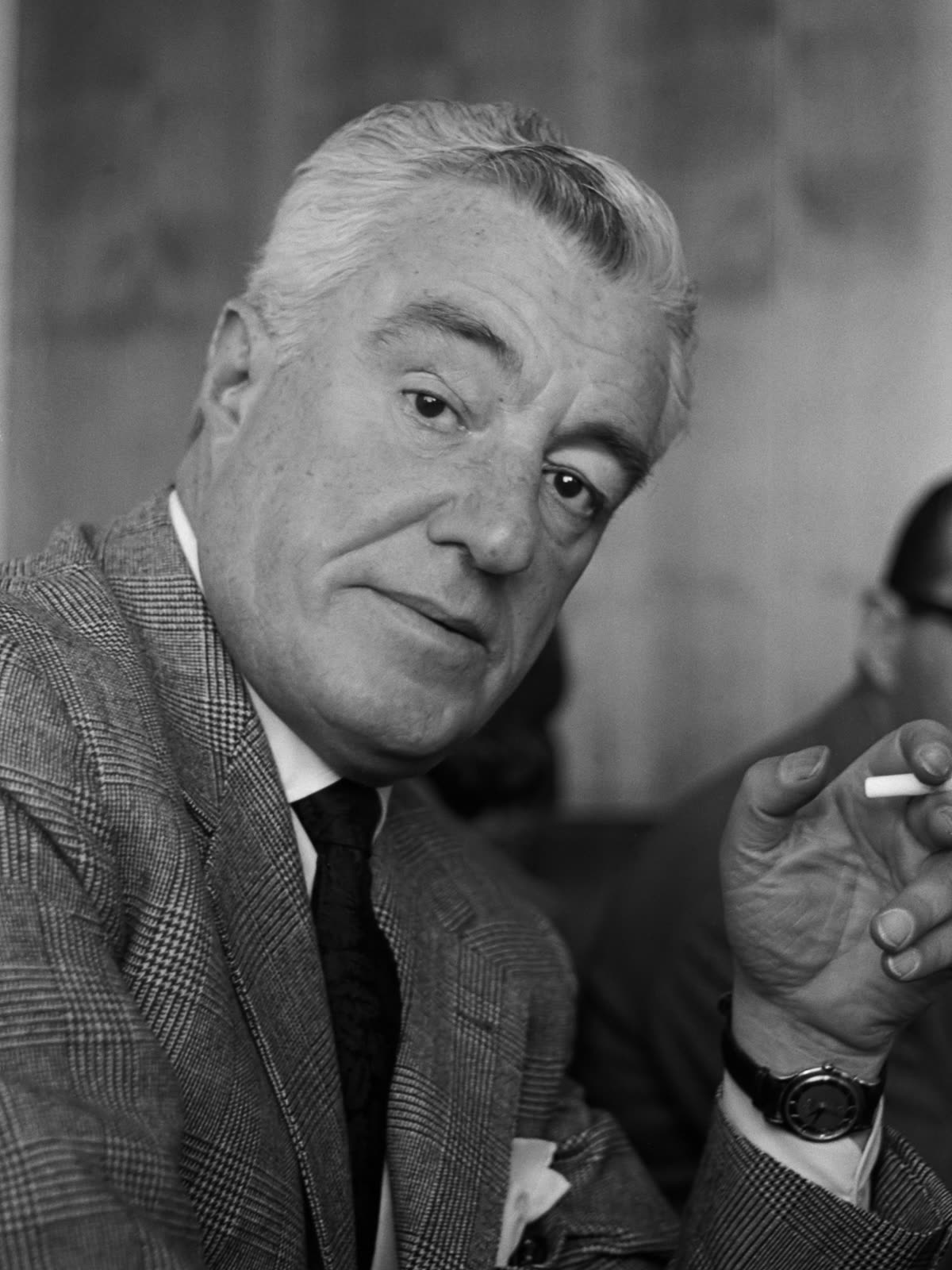
Image context: the lead image uses a 1962 archival photograph of De Sica from Wikimedia Commons.[7] A real documentary portrait is the right visual here because this piece tracks a directorial method across multiple films. The face belongs to a filmmaker who understood that how a person stands in public can already tell you what kind of pressure a society is applying.
In Shoeshine, childhood is not innocence protected from the state but innocence exposed to it
Criterion's description of Shoeshine is blunt and useful: two boys in Rome try to earn enough to buy a horse, get caught in a robbery case, and are sent into a brutal juvenile detention system that tests their loyalty.[2] What makes the film last is not only its sadness. It is the way De Sica refuses to sentimentalize the boys while still refusing the adult world's excuses. Institutions in Shoeshine do not arrive as abstract policy. They arrive as rooms, bars, interrogations, separations, routines, and the steady conversion of friendship into vulnerability.[2]
That child-level pressure is essential to De Sica's profile because it reveals how he works with scale.[1][2] He does not need a huge social canvas to imply national damage. A pair of boys, a horse they dream about, and a detention center are enough. The adult world appears as indifference organized into procedure. The children are not reduced to symbols of lost purity; they remain contradictory, impulsive, loyal, frightened, and legible as children. This is one of De Sica's deepest strengths. He can condemn a system without draining behavior of spontaneity.
In Bicycle Thieves, the city itself becomes a machine for public shame
The best-known De Sica film is still the clearest statement of his method.[1][3][6] Criterion's capsule summary remains perfect in its simplicity: a working man in postwar Rome has the bicycle he needs for his new job stolen on the first day, and he and his young son spend the day trying to recover it.[3] BFI calls the film a perfect example of De Sica and Zavattini's belief in the power of small human stories over Hollywood spectacle.[1] That contrast matters, but the real power of Bicycle Thieves lies in how quickly the "small story" becomes immense once the city starts refusing mercy.
Rome in this film is not scenic backdrop. It is a testing ground where work, masculinity, fatherhood, and legality all get exposed in public.[3][6] Every market, church queue, stairwell, alley, and crowd becomes a place where Antonio can lose more than a bicycle. He can lose authority in front of his son. He can lose the right to appear competent. He can lose the little fiction that diligence will be enough. De Sica's camera never needs to overstate any of this. The humiliation is built into the search itself.
The production history behind the film sharpens the point. Criterion's Working with Vittorio De Sica notes that the filmmakers deliberately sought out overlooked people and off-the-beaten-path places, and that Enzo Staiola, who plays Bruno, was discovered on the street.[6] That matters because De Sica's realism is not just a matter of content. It is a casting and looking ethic. He wants bodies, faces, and locations that carry the abrasion of the world rather than the polish of studio reassurance.
In Umberto D., De Sica strips the problem down to age, rent, and the minimum conditions of self-respect
If Bicycle Thieves is about a man losing social footing in front of his child, Umberto D. is about a man trying to preserve self-respect when society no longer finds him economically meaningful.[4] Criterion describes Umberto as an elderly pensioner struggling through Italy's postwar recovery with only his dog Flike for steady company, trying to secure food, shelter, and basic kindness in a city shaped by modernization.[4] That phrasing captures why the film feels so merciless. De Sica is no longer asking how poverty injures ambition. He is asking what happens when poverty begins hollowing out personhood itself.
The movie's severity is famous, but what matters for a director profile is how formally controlled that severity is.[4] De Sica does not chase melodramatic spikes. He watches routines. He watches waiting. He watches the ordinary panic of small bills and the humiliation of asking. This is where his actor's intelligence becomes especially visible. He knows that the body's tiniest negotiations with pride can be more devastating than a speech. A glance away, a hand hesitating before a request, the difficulty of remaining upright when one has become inconvenient to the city: these are De Sica's special materials.[4]
What makes Umberto D. more than a bleak social problem film is that De Sica keeps its emotional proportions exact. He does not inflate Umberto into a saint. He lets him be irritable, proud, lonely, difficult, and deeply human. That exactness is the source of the film's force. The attack on social abandonment works because the person at the center never becomes an emblem first and a man second.
Miracle in Milan shows that De Sica needed fantasy not to escape reality but to test it from another angle
One of the laziest readings of De Sica treats the fable elements in Miracle in Milan as a charming detour away from the harder neorealist line.[1][5] Criterion's account suggests something more interesting. The film follows a community of vagabonds building a shantytown on the outskirts of Milan, only to face developers once oil is discovered beneath their land; De Sica and Zavattini answer that conflict with comedy, tenderness, and overtly storybook invention.[5] The fantasy does not cancel the politics. It clarifies them.
That shift matters because it proves De Sica's central subject was never "grimness" as such.[5] His subject was how ordinary people remain ordinary under pressure, and sometimes the best way to honor that is not stricter realism but a fairy-tale register that keeps goodness from being crushed flat by economics. The shantytown in Miracle in Milan is fragile, comic, collective, and completely exposed to class power. The film's whimsical turns do not hide that exposure. They allow De Sica to ask what solidarity, generosity, and wishfulness look like when the material world keeps insisting on hierarchy.[5]
Seen beside Shoeshine, Bicycle Thieves, and Umberto D., the film broadens rather than dilutes De Sica's profile. He could look at children betrayed by institutions, workers undone by the city, the elderly cornered by modernization, and the unhoused pushed around by property logic, then choose either realism or fable according to what best revealed the pressure. The method changes. The ethical center does not.
Why De Sica still matters
De Sica's cinema remains bracing because it never confuses sympathy with softness.[1][3][4] He cares intensely for vulnerable people, yet he does not rescue them with flattering rhetoric or false victory. He understands that the modern street can be a stage for humiliation, that institutions often speak in the voice of procedure, and that money has a way of reorganizing family feeling, friendship, and self-respect long before anyone names it as ideology.[1][2][3][4][5]
That is why the actor-director background matters so much.[1][6] De Sica knew performance from the inside, which may be one reason he was so attentive to how people present themselves when they are short on options. His films keep returning to bearing: how a boy acts brave, how a father tries to stay authoritative, how an old man clings to formality, how a crowd can watch another person's embarrassment and quietly become part of the machinery. Few directors have been better at filming the public life of pride.
Put that together and the neorealist label starts to feel less like a full explanation than a doorway. De Sica matters not simply because he helped define a movement, but because he kept finding humane forms equal to social damage. Streets, detention rooms, boarding houses, soup kitchens, vacant lots, bicycles, dogs, children, and improvised communities: in his films, these are never minor details. They are the places where a society reveals what it thinks people are worth.[1][2][3][4][5]
Sources
- BFI, "Where to begin with Vittorio De Sica."
- The Criterion Collection, "Shoeshine (1946)" film page.
- The Criterion Collection, "Bicycle Thieves (1948)" film page.
- The Criterion Collection, "Umberto D. (1952)" film page.
- The Criterion Collection, "Miracle in Milan (1951)" film page.
- The Criterion Collection, "Working with Vittorio De Sica."
- Wikimedia Commons, "File:Vittorio De Sica (1962).jpg" - source page for the article image.