Spoiler note: this essay discusses the full film, including its ending.
The most frightening people in The Headless Woman do not threaten Verónica. They soothe her. Her husband inspects the car. A relative makes calls. Men with useful connections check whether the police have heard of an accident. Records cease to exist. By the time Verónica’s social world has finished taking care of her, nearly every trace that might connect her to a death has been converted into a misunderstanding.
Lucrecia Martel’s 2008 film begins with a possible hit-and-run, but it is not finally a puzzle about whether a dog or a boy absorbed the impact. It is about the way protection can become an erasure service. Verónica’s family never gathers around a table and agrees to obstruct justice. They do something more ordinary and, for that reason, more disturbing: they translate alarm into errands. Each person performs a small act that can be described as help. Together, those acts build an alibi.[1]
The Headless Woman premiered in competition at Cannes, where its official record credited Martel as writer-director, María Onetto as Verónica, Bárbara Álvarez as cinematographer, Miguel Schverdfinger as editor, and Guido Berenblum for sound.[3] Those crafts do not decorate the moral argument. They make us feel how easily a person can be restored while responsibility is quietly removed from the room.
The first refusal happens inside the car
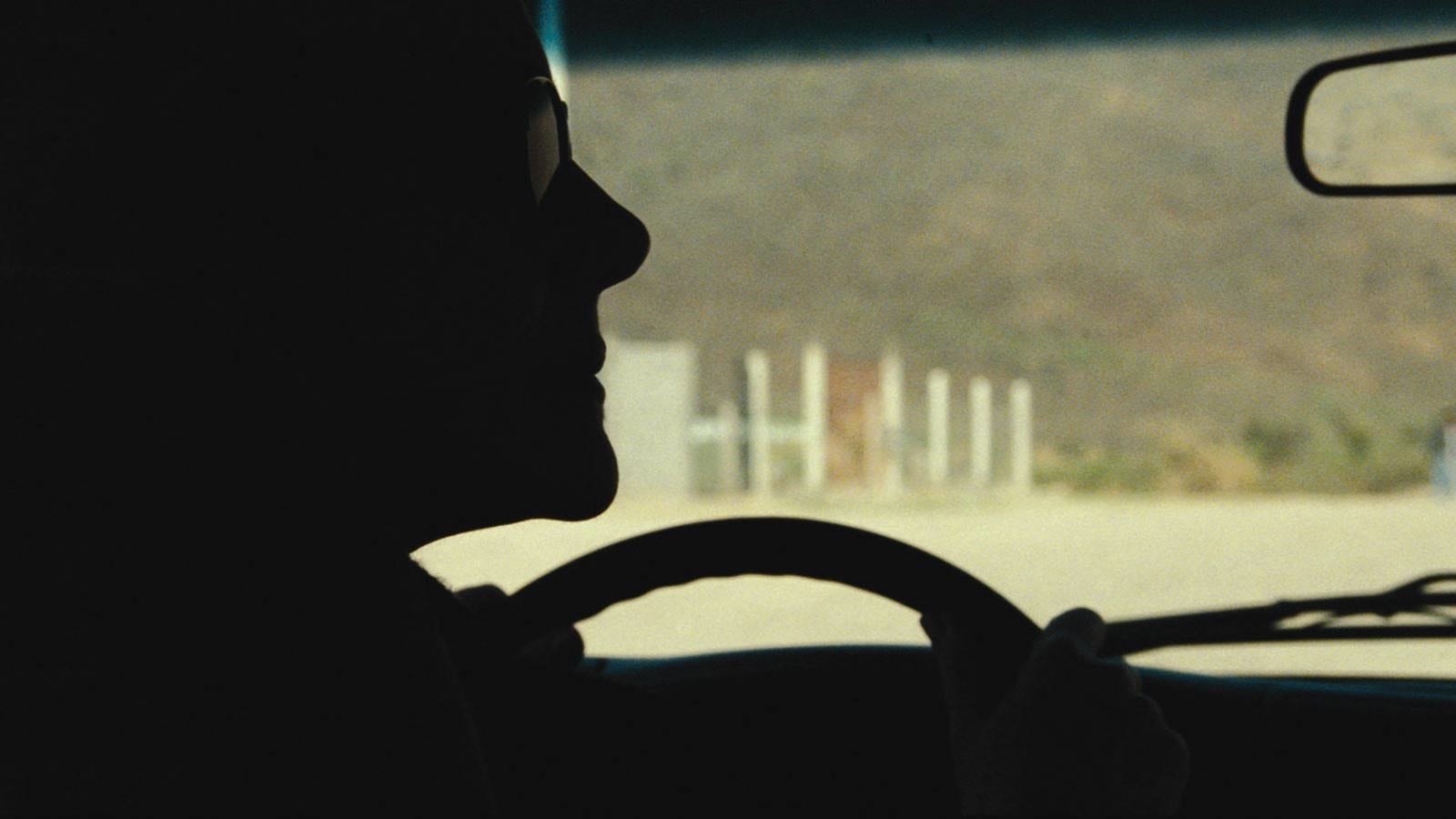
Verónica is driving on a dry road when her phone rings behind her. She reaches back. The car hits something hard enough to jolt the frame and knock off her sunglasses. Martel does not cut outside to identify the body. The camera remains near the passenger seat as Verónica stops, breathes, recomposes herself, and drives on.
Álvarez recalled that the sequence was shot in a single day during the first week of production. Her decisive idea was to hold the camera beside Verónica so the audience would undergo the transformation without seeing the impact itself. In the resulting take, the collision, her first stop, her careful replacement of the sunglasses, and her departure remain beside her; only afterward does a rearward view show a dog on the road, an image that still cannot settle what she struck. The result is intimate without being exculpatory: we share Verónica’s restricted position, but we also watch her choose not to investigate it.[2][6]
Martel preserved two materially possible accounts. Verónica may have struck a boy who fell into the canal and was carried by storm water; she may have struck a dog while the boy died by another route. The director nevertheless identified a fact that ambiguity cannot dissolve: Verónica has enough doubt to imagine severe harm and still refuses to go back.[1] The uncertainty concerns the victim. The refusal belongs entirely to her.
That distinction is the film’s first ethical cut. A conventional mystery promises that better evidence will tell us how to judge the protagonist. Martel asks why judgment should wait. Even if the road never yields a conclusive answer, the duty created by the impact is already clear: stop, look, call for help. Verónica instead lets the missing reverse shot become a moral shelter.
Help arrives before anyone asks for it
After the crash, Verónica drives to a hospital, leaves before completing the visit, and goes to a hotel, where she spends the night with her husband’s cousin. She moves through those choices in a state of concussion, fear, or deliberate disconnection that the film never reduces to a diagnosis. People recognize her, guide her, and answer practical questions she barely formulates. Her confusion is genuine, but so is the social competence around it. She does not have to explain herself coherently in order to pass from one protected interior to another.[6]
Martel makes that ease visible through obstruction. Verónica is cropped by the widescreen frame, screened by equipment, or held in shallow focus while other people become soft shapes behind her. At Cannes, Martel described building the film from several strata—image, depth, body, and sound—rather than delivering one emotion directly to the audience.[4] In a later interview, she explained that some shots keep Verónica sharp and turn the background ghostly, while others reverse the arrangement. Focus is not a fixed badge of importance. It is a social pressure: who can be allowed to blur, and who remains the person the room organizes itself around?[1]
Verónica’s privilege is therefore not simple luxury. It is frictionlessness. She is a dentist, a wife, a cousin, an employer, a patient known to the people around her. Even when she appears not to know herself, the network knows where to place her. The hospital receives her body. The hotel receives her silence. Her domestic and professional worlds absorb her absence and wait for her identity to return.
Martel was exact about the class relation behind that absorption. She noted that domestic workers in northern Argentina could be treated not as employees with bounded duties but as servants expected to supply affection as well as labor. She also chose the tall, pale, blond Onetto partly so that Verónica would stand apart from many of the people who serve or pass through her world.[1] Care in the film is never only an emotion. It is work, and the people entitled to receive it are not the same people required to provide it.
The cover-up is a workflow
Verónica eventually says aloud that she killed someone on the road. The men around her do not investigate the possibility so much as manage its effects. They reassure her that their police contacts would know about a fatal accident. They examine the damage and arrange for the car to be repaired away from immediate scrutiny. Later, her hospital has no admission record and hotel staff say the room was unoccupied. The film strongly implies coordinated erasure without showing who altered either record. The operations remain dispersed across relatives, professionals, and favors; no single gesture looks large enough to carry the moral weight of the whole.[1][6]
That is precisely why Martel’s account of the family response matters. She called the group’s impulse both beautiful and frightening: people gather to reduce the suffering of one of their own, then hide facts and perhaps a crime in the process. The same capacity that makes a family dependable also makes a class defensive.[1] The Headless Woman does not claim that comfort is secretly cruelty. It shows how comfort becomes cruel when its boundary is drawn around the protected person and not around the person who may have been harmed.
Verónica does not need to issue instructions. Her passivity is functional. She stands near the edge of the frame while other people look, call, explain, and fix. Silence gives each helper room to believe that he is handling only a car, a frightened wife, a bureaucratic error, or an awkward night. Responsibility is broken into tasks small enough to complete without naming their shared purpose.
Film thrillers often make a cover-up strenuous: destroy the evidence, coordinate the lie, fear the witness. Here the network behaves almost automatically. The family’s influence reaches a police contact, a repair shop, a hospital, and a hotel with the same soft force. Privilege does not merely put Verónica above the rules. It makes the rules arrive as personal service.
The background contains the cost
While Verónica is carried through interiors, boys move through the roadside scrub and canal. Domestic workers cross rooms. Laborers clear a blockage after the storm. A young worker’s absence is registered only indirectly at the garden shop. These figures are not a separate subplot waiting to be promoted into the foreground. Their partial visibility is the structure of Verónica’s world: present enough to sustain it, peripheral enough to be overlooked.
Martel’s sound design refuses to let the frame’s hierarchy become complete. Voices overlap. Water, phones, traffic, household movement, and speech from beyond the image keep announcing spaces the camera does not master. At the Cannes press conference, Martel explained that some small exchanges were intentionally left unsubtitled so they could remain audible as part of the soundtrack rather than be flattened into information.[4] The film asks us to hear social proximity without pretending proximity produces recognition.
The family’s response exposes the asymmetry. Verónica’s uncertain memory is sufficient to activate police contacts, medical access, repair labor, and record-keeping favors. The boy’s absence is not sufficient to activate the same urgency. One person’s fear becomes an emergency because a network treats it as actionable; another person’s disappearance risks becoming weather, poverty, or the way things are.
Chris Wisniewski’s close reading of the film calls attention to how the men recede into the background as they make calls and inspect the dent, while Verónica’s stillness becomes acquiescence. He also notes the ending’s decisive institutional blank: when she returns to the hotel, the room she occupied has no registration attached to it.[6] By then the cover-up is not simply a story the family tells. It is the reality the records support.
An old habit in contemporary clothes
Martel layers 1970s pop music into a world of mobile phones and contemporary cars. She said the songs would recall Argentina’s dictatorship for viewers of her generation, especially the comfortable life of people who declined to see political violence, and that the anachronism connected that older refusal to contemporary indifference toward poverty.[1] The film does not announce this history as a decoding key. It lets the past persist as a habit of attention.
Cecilia Sosa reads The Headless Woman as an oblique counter-narrative of Argentine mourning: the film carries the affects of complicity and denial associated with the 1976–83 dictatorship into a democratic present where socially excluded lives can still go unrecognized.[5] That argument sharpens the meaning of the erased register without turning the missing boy into a one-to-one symbol for the disappeared. The connection is procedural. A body becomes easier to neglect when records, institutions, and respectable people agree—actively or tacitly—not to hold its absence in view.
This is also why the film’s political force resides in favors rather than speeches. Large systems of impunity are reproduced through ordinary competencies: whom to call, how to phrase the question, where to send the car, which entry can be removed. History survives not only in ideology but in the inherited confidence that one’s circle can make a problem go away.
Restored to the party
Near the end, Verónica has changed her hair and returned to the hotel. She asks about the night after the accident and learns that the room was officially empty. Then she joins her family and friends at a party. Martel films the gathering through glass, with bodies sliding in and out of focus. The social world that looked unstable after the crash has recovered its shape; what has vanished is the evidence that Verónica ever fell outside it.[1][6]
The ending offers neither confession nor innocence. Verónica has been restored to circulation. She can enter the bright room because the people who love her have made her experience administratively unreal. Their success is the film’s bleakest event.
That is the moral trap inside the title. A “headless” woman sounds severed from reason, memory, or self. Yet Verónica’s danger is not that she remains helplessly detached. It is that her world reconnects her to everything except responsibility. Family, class, and institution fit her back into place so efficiently that the possible victim becomes the only person left outside the frame of care.
Martel does not ask viewers to stop caring for compromised people. She asks what care becomes when it protects the comfort of the powerful from the claims of the harmed. Real care would have required the action withheld in the first scene: return to the road, look beyond the windshield, and accept that another life can place a demand on your own. Everything that follows is assistance without that recognition. That is how help becomes an alibi, and how a cover-up comes to feel like love.
Sources
- Amy Taubin, “Shadow of a Doubt: An Online Exclusive with Lucrecia Martel.” Film Comment, July–August 2009 — director interview on ambiguity, responsibility, class protection, domestic service, focus, historical continuity, and the lead-image source.
- Bárbara Álvarez, “The Headless Woman: Latent Ideas,” in “Opening the Aperture: Women Cinematographers on Their Craft.” The Criterion Collection, January 31, 2022 — first-person account of designing and shooting the accident sequence.
- Festival de Cannes, “La Mujer Sin Cabeza (The Headless Woman)” — official 2008 competition record, synopsis, runtime, principal credits, cast, and production details.
- Festival de Cannes, “Press Conference: ‘The Headless Woman’ by Lucrecia Martel,” May 21, 2008 — Martel on physical emotion, layered construction, depth of field, sound, subtitles, and CinemaScope.
- Cecilia Sosa, “A Counter-narrative of Argentine Mourning: The Headless Woman (2008), directed by Lucrecia Martel.” Theory, Culture & Society 26, nos. 7–8 (2009), 250–262 — complicity, dictatorship memory, poverty, mourning, and socially unrecognized lives.
- Chris Wisniewski, “Layers of Evidence: The Headless Woman.” Reverse Shot, Museum of the Moving Image, April 4, 2013 — framing, sound, the family’s distributed cover-up, erased records, and the final hotel sequence.