Victor Sjostrom's The Wind (1928) is often remembered as one of the last great American silent films, but that phrase can make it sound like an ending: a final flourish before synchronized sound changed the industry. The movie is sharper than that. It feels modern because it treats weather not as backdrop, metaphor, or production spectacle, but as a pressure system that rewires social space. The wind enters rooms. Sand crosses thresholds. Doors refuse to stay symbolic. Lillian Gish's Letty does not merely suffer in a harsh landscape; her body becomes the place where climate, labor, sexuality, marriage, and isolation collide.[1][2][3]
The basic setup is simple enough. Letty travels from Virginia to a western ranch, where the open country is less a frontier of opportunity than a trap with no soft edges. AFI records the film as a Metro-Goldwyn-Mayer release from November 23, 1928, directed by Victor Seastrom, written for the screen by Frances Marion from Dorothy Scarborough's novel, and built around Gish, Lars Hanson, Montagu Love, and Dorothy Cumming.[1] BFI's film record gives the same essential triangle of authorship and performance: Victor Sjostrom directing, Marion and John Colton writing, Gish at the center.[2] Those credits matter because The Wind is not just a star vehicle. It is a collaboration in which performance, scenario, and mise-en-scene make a single argument: exposure is not only physical. It is social.
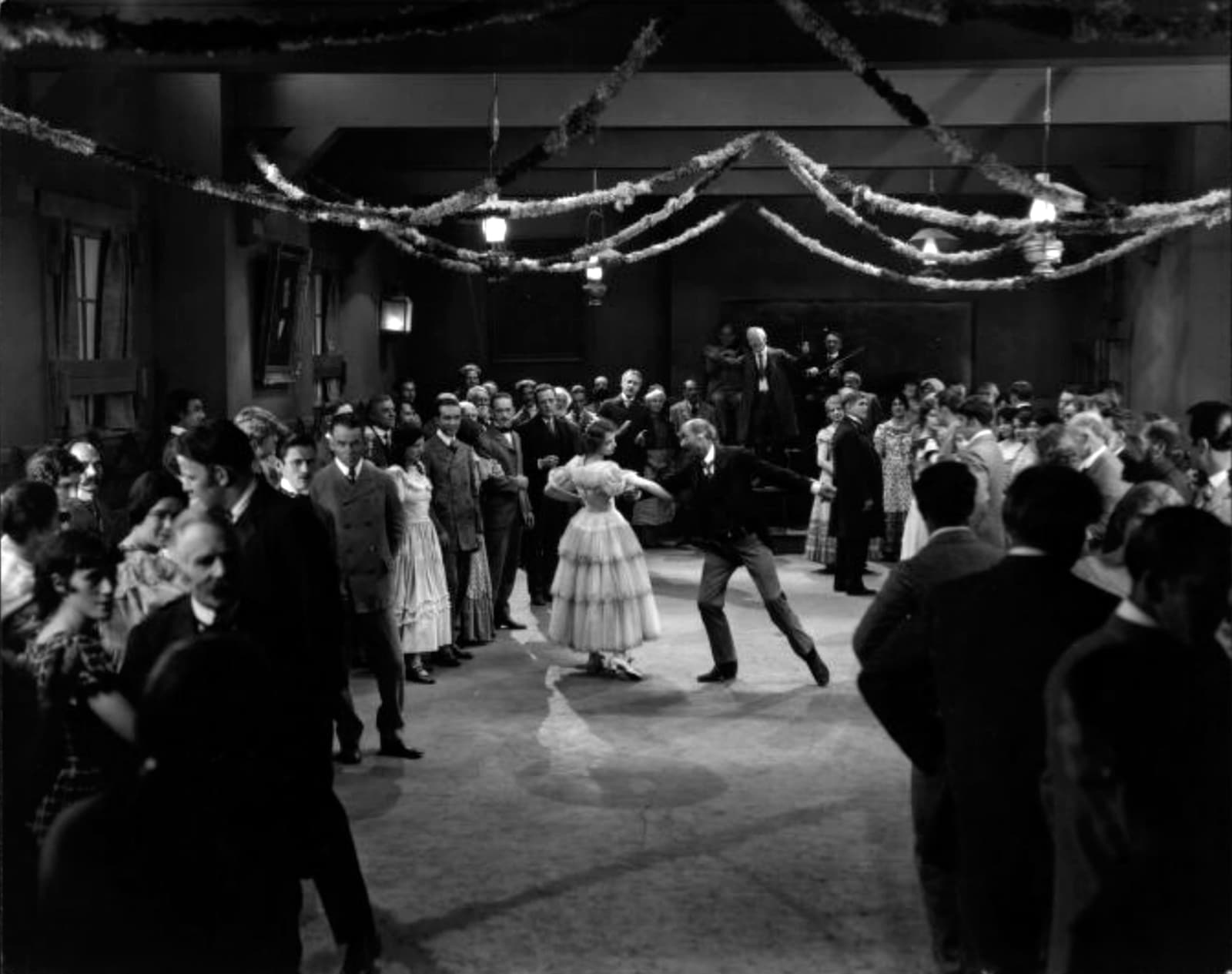
Image context: the cover uses a real 1928 MGM publicity still preserved through UCLA Library Digital Collections and hosted on Wikimedia Commons. It is not a poster or a diagram; it is a production-era photographic image of Gish in the film's world, useful because the article is about pressure around bodies rather than a single isolated icon.[5]
The prairie is not empty
Many westerns turn space into freedom. The Wind turns space into volume. The plains are broad, but they do not release Letty. They amplify everything she cannot control. The most important visual fact is not the horizon by itself; it is the way the horizon keeps sending material into the house. Sand sifts, gusts, rattles, and interrupts. The landscape refuses to stay outside.
That is why the film's domestic rooms feel so unstable. A door in a simpler melodrama might divide inside from outside, safety from danger, marriage from exposure. Here, the door is only a temporary negotiation. The wind presses on it. Sand finds its way beneath it. The house becomes a bad container, and Letty has to learn that shelter is not the same as security.
This is where Sjostrom's direction is more severe than decorative expressionism. The film does not need distorted painted sets to communicate psychic breakdown. It makes ordinary materials hostile: cloth, floorboards, windows, coffee cups, beds, basins, and doorframes. Silent Era's production listing is useful on this point because it identifies the film's technical and material frame: black-and-white, eight reels, MGM production, cinematography by John Arnold, and a synchronized music-and-effects release context even though the film remains fundamentally silent in performance grammar.[4] The film's terror is built from that silent grammar. You can almost hear the house before any recorded sound effect helps you.
Cora makes the weather social
The strongest early complication is that Letty is not simply innocent and everyone else cruel. The Library of Congress National Film Registry essay by Fritzi Kramer stresses how carefully the film lets Cora's grievance appear before the audience. Letty arrives with charm, impractical clothes, and a kind of soft entitlement. Cora is doing brutal ranch labor, smeared by necessity and ignored by the family members who brighten around the newcomer.[3]
That matters because the wind would be a smaller symbol if it only represented nature attacking a delicate heroine. The film makes it social first. Letty is unprepared for the work of this place. Cora is trapped by the work of this place. The men move through the same environment with different permissions. Before the storm becomes Letty's personal nightmare, the household has already taught us that survival here is gendered, bodily, and resentful.[3]
Gish plays that tension without asking us to flatten Letty into a saint. Her first fragility is partly physical, partly cultural. She does not yet know how to read the ranch, and she does not understand how her own refinement can become an insult in a house where labor is visible on another woman's hands. The film close reading starts here, before the famous hysteria: The Wind is about a person whose inherited social grammar fails in a place that has no patience for it.
The body registers what speech cannot
Because the film has no dialogue track in the modern sense, Letty's body has to carry changes that a later screenplay might over-explain. Gish does this through shrinking, bracing, reaching, freezing, and sudden overextension. She does not simply widen her eyes at danger. She seems to absorb the weather through posture.
The key is that the performance changes scale. Early Letty is light, alert, and socially practiced. She has learned how to be looked at. As the film darkens, that practiced surface becomes useless. Her body starts reacting before her social manners can organize a response. She leans away from rooms, clutches at barriers, and turns domestic objects into inadequate defenses. The point is not that Gish acts "big" because silent acting was exaggerated. The point is that she makes nervous response legible as choreography.
Kramer's Library of Congress essay is especially strong on the marriage scenes with Lige, including the coffee episode and the nervous physical staging around attempted intimacy.[3] The important thing is not just whether Lige is kind or rough, whether Letty is fair or unfair. The scene works because both people are trapped inside a room where every small gesture becomes evidence. A cup accepted and secretly discarded can carry as much emotional information as a speech. A look at a wash basin can change the moral temperature of a marriage.[3]
That is the film's silent genius: it makes objects testify. Letty cannot yet say what kind of life she can endure, so the props say it for her. The basin, the door, the bed, the window, and the sand all become witnesses.
The wind uncovers more than a body
The film's late movement is famous for the way it pushes Letty toward hysteria after Roddy's assault and death. The Library of Congress essay notes the climax in which the wind exposes the buried corpse and reads the moment as the culmination of Letty's terror, while also pointing out the film's unresolved ambiguity around the final reconciliation.[3] That ambiguity is essential. The film gives viewers a release, but it does not fully cleanse the room.
The wind uncovering Roddy's body is a literal plot event, but the stronger reading is that the wind uncovers the structure that has been present all along. It reveals that the house was never sealed, that marriage was never simple refuge, that social charm could not solve material violence, and that landscape could become an accomplice to memory. Sand behaves like evidence. It refuses burial.
This is why the happy ending has always felt unstable. AFI notes that modern sources describe a contrast between the novel's tragic ending and the film's studio-required happier ending.[1] Kramer's essay is more precise about the known script drafts, saying they show romantic reconciliation and that Sjostrom withholds enough detail to keep uncertainty alive.[3] Either way, the ending is not emotionally simple. Letty's embrace of Lige can be read as survival, love, shock, dependence, or all of them at once. The film's greatness lies in refusing to make recovery look clean.
A silent film that still feels physically loud
The Wind was released at a moment when the industry was already turning toward sound, yet its most durable lesson is not nostalgia for silence. It shows how much cinema can make viewers feel through pressure, framing, rhythm, and bodily response. The wind is an environmental force, but also an editing principle, a performance cue, a domestic invader, and a moral irritant.
That is why the film belongs beside the most severe close readings of silent cinema. It does not treat nature as an emblem pasted onto psychology. It makes weather operational. It gets into the room, changes the blocking, deforms ordinary gestures, and makes the viewer feel how a mind can be worn down by forces that never pause long enough to become one clean villain.
Gish is the center because she can make that pressure readable without reducing it. Sjostrom is the architect because he keeps the pressure moving through the environment rather than trapping it in a single performance showcase. Marion's scenario matters because it threads romance, labor, violation, and ambiguity through the weather instead of letting any one of them explain the film away. Nearly a century later, The Wind remains unsettling because its central image is still exact: a person trying to keep the outside world outside, while the sand has already found the floor.
Sources
- AFI Catalog, "The Wind (1928)" - release, credits, source-novel, synopsis, and ending-history notes.
- British Film Institute, "The Wind (1928)" - film record for director, writers, and principal cast.
- Fritzi Kramer, "The Wind," Library of Congress National Film Registry essay - analysis of performance, source material, Cora, Lige, and the ending.
- Silent Era, "The Wind (1928)" - Progressive Silent Film List production, release, technical, and survival-status entry.
- Wikimedia Commons, "File:Lillian Gish and others in The Wind.jpg" - MGM publicity still sourced from UCLA Library Digital Collections.