L.A. Rebellion is easy to misname if the phrase is treated as a genre label. It was not a house style, not a studio wave, and not a single manifesto with matching camera rules. It was a university corridor, a city pressure field, a set of friendships, an argument about who film school was for, and later an archival project that had to recover work the market had little reason to keep visible.[1][2][3]
That is why the movement matters now. It shows how cinema history can be made outside the usual sequence of hit, influence, canon, restoration. The filmmakers associated with L.A. Rebellion came through UCLA from the late 1960s onward, after the Watts uprising, during the Civil Rights era, amid the Vietnam War, and in the shadow of Hollywood's long failure to represent Black life with ordinary complexity.[1][2][5] The school was not merely a credentialing machine in this story. It became a counter-archive: a place where student work, community memory, political critique, African and diasporic reference points, and practical mentorship could gather before the wider industry knew how to receive them.
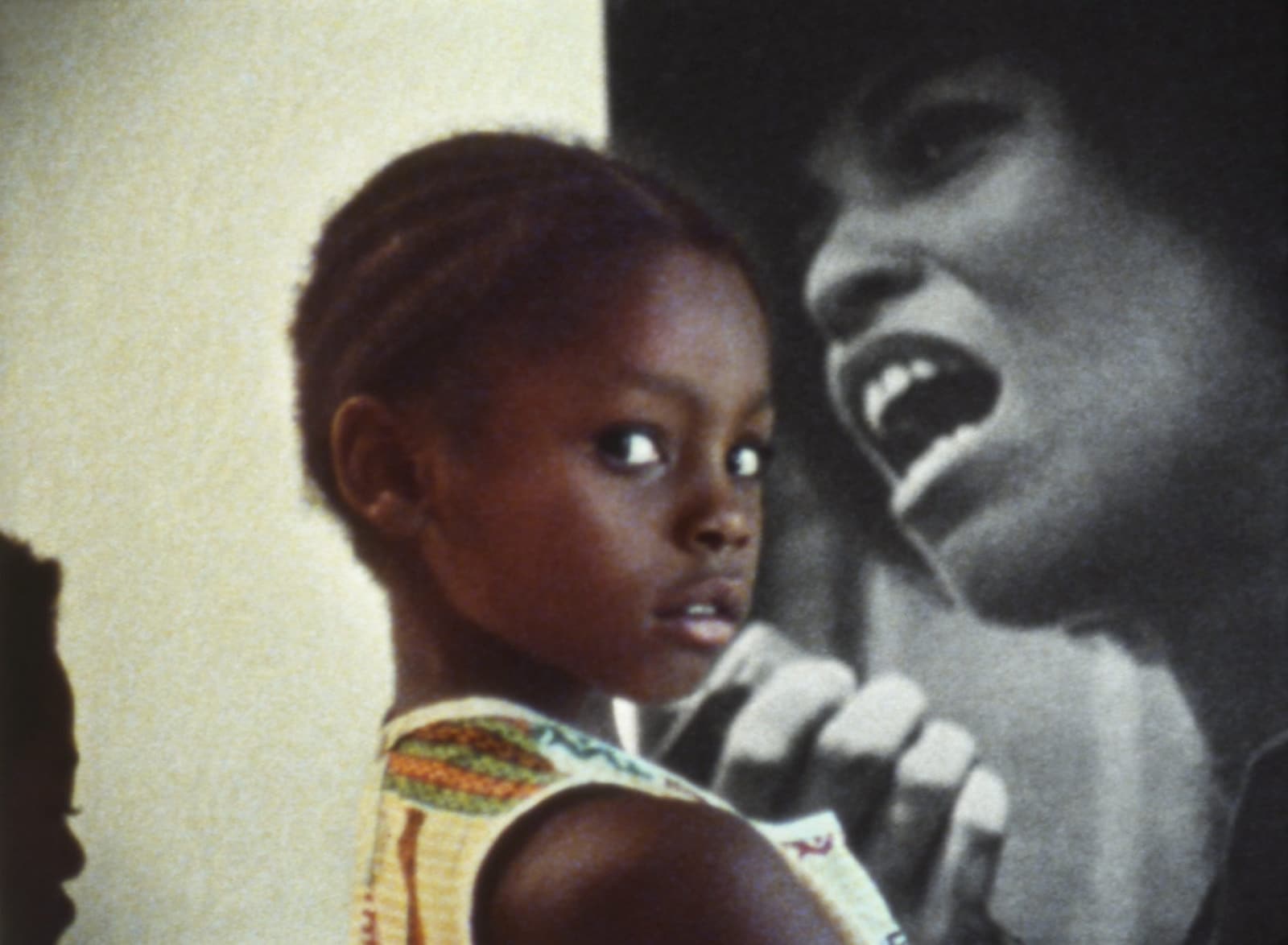
A movement with an institutional address, not one look
The cleanest starting point is institutional rather than stylistic. UCLA Film & Television Archive traces the movement to a period when African and African American students entered UCLA's film school through an Ethno-Communications initiative intended to respond to communities of color; the Archive also emphasizes that the artists arrived across more than two decades and mentored one another as new cohorts appeared.[1] Harvard Film Archive makes the same point from the programming side: what these filmmakers shared most clearly was an institutional setting, even though their aesthetics and politics varied widely.[2]
That distinction matters because it prevents the usual flattening. If L.A. Rebellion is reduced to "Black neorealism in Los Angeles," Charles Burnett's Killer of Sheep becomes the default key and everything else risks being measured by its lyric restraint. Burnett is indispensable, but the movement is wider than one masterpiece. Harvard's 2013 program lists filmmakers including Julie Dash, Billy Woodberry, Haile Gerima, Jamaa Fanaka, Barbara McCullough, Larry Clark, Alile Sharon Larkin, Ben Caldwell, and Zeinabu irene Davis, and notes work ranging from classical narrative to modernist experiment, African and African American musical traditions, montage, expressionism, and surrealist avant-garde practice.[2]
The movement's unity is therefore not visual sameness. It is a shared refusal of a training pipeline that assumed Hollywood's representational habits were neutral. Film school normally teaches technique as if technique belongs to nobody in particular: cuts, fades, framing, blocking, continuity, coverage. L.A. Rebellion made those tools answerable to different memories. A camera could hold labor without turning it into sociology. A domestic room could carry migration, gender, and economic pressure. A political poster could sit inside a child's field of vision without being reduced to background decor. Style became the question, not just the answer.
The counter-archive begins before preservation
Calling L.A. Rebellion a counter-archive is not only a metaphor for later restoration. It describes the original act of making the films. When a community has been overexposed as stereotype and under-preserved as ordinary life, filming a street, a kitchen, a welfare office, a jazz performance, a child's errand, or a family argument becomes archival work in advance. The films keep experiences that commercial cinema either simplified or failed to record at all.[3][4][5]
University of California Press's page for L.A. Rebellion: Creating a New Black Cinema frames the group as African, Caribbean, and African American independent film and video artists active around UCLA in the 1970s and 1980s, naming their desire to create alternatives to dominant American narrative, style, and practice.[3] That last phrase is the hinge. L.A. Rebellion did not merely ask for more Black characters inside existing movie grammar. It asked what grammar could do when Black experience was not an exception, a social problem, a market segment, or an accessory to somebody else's development.
This is why the movement's films can feel formally patient and politically charged at the same time. In Burnett, daily survival and work fatigue can take precedence over plot mechanics. In Gerima, political awakening can fracture narrative order rather than arrive as a tidy lesson. In Dash, history can move through gesture, costume, ritual, and voice instead of exposition. In Woodberry, family pressure can be tender and devastating without needing melodramatic escalation. The films do not all behave alike, but they share an insistence that form has to be rebuilt around what the old forms could not hold.[2][4][5]
Hollywood proximity made the refusal sharper
The Los Angeles setting is not incidental. UCLA was close enough to Hollywood for the industry to be physically present and structurally distant at the same time. Harvard points out that UCLA sat near both Hollywood and the site of the 1965 Watts uprising, making the diversity question especially charged there.[2] That geography gives the movement its strange voltage. The filmmakers were studying cinema in the city that exported American images around the world, while also living near communities whose actual lives were rarely permitted equivalent image authority.
BFI's history of Black U.S. independent cinema places L.A. Rebellion inside a longer arc that includes race films, Blaxploitation, Black independent work, and later commercial breakthroughs, but it also stresses that the movement's most notable work clustered around a narrower period from the mid-1970s into the early 1980s.[4] That timing is crucial. These films emerged after the first shocks of civil-rights-era visibility and during an era when commercial cinema could absorb Blackness as attitude, genre energy, or market opportunity while still resisting deeper changes in authorship and form.
L.A. Rebellion's answer was not simply respectability. The films are too varied and too restless for that. They could be lyrical, militant, playful, mystical, observational, polemical, feminist, diasporic, or formally abrasive. What connects them is a different theory of audience. They do not behave as if Black life must be translated for an imagined mainstream viewer before it can become cinema. They assume that Black experience already contains enough history, contradiction, beauty, and difficulty to organize the frame.
Restoration finished what distribution could not
The counter-archive became literal once UCLA Film & Television Archive began the L.A. Rebellion initiative. The Archive describes an effort that included screenings, a symposium, a touring exhibition, online access to early student works, a DVD anthology, oral histories, restoration, cataloging, and preservation.[1] BAMPFA's series notes that many films were shown in new prints and restorations undertaken by UCLA, while presenting thirty-five representative works across the movement.[5] The preservation story is not an appendix. It is part of the meaning.
Many of these films had fragile distribution lives. Some were student works. Some circulated through festivals, classrooms, community screenings, archives, and specialist programs rather than ordinary theatrical release. Some became famous only after long gaps of unavailability. BFI notes that UCLA-authored restoration helped bring a large body of work back into circulation after many films had been difficult to see.[4] That delayed visibility changes how influence works. L.A. Rebellion did not need continuous commercial availability to matter, but restoration altered the scale at which its importance could be argued, taught, and felt.
The University of California Press book is evidence of the same shift. Its description emphasizes essays, oral histories, a complete filmography, extensive illustrations, and bibliography, all grounded in archival work and preservation.[3] In other words, the movement required more than admiration. It needed infrastructure: prints, catalogs, interviews, teaching editions, screening programs, and institutions willing to say that student films, community-centered features, and formally difficult work belonged in the record.
The lesson is not nostalgia
The easiest sentimental reading would turn L.A. Rebellion into a lost golden age of independent Black cinema. That misses the sharper lesson. The movement matters because it shows how fragile alternative cinema can be when production, distribution, and preservation are not aligned. Making the films was only the first battle. Keeping them available, legible, and connected to one another required another generation of archival labor.[1][3][4]
It also shows that film school can be more than professional sorting. Under the right pressure, it can become a commons: equipment, teachers, peer critique, political argument, and proximity to a city all feeding a body of work that no single filmmaker could have created alone. That is the deeper reason the movement resists one-film summary. Killer of Sheep, Bush Mama, Bless Their Little Hearts, Daughters of the Dust, Passing Through, Water Ritual #1, A Different Image, and the many shorts gathered in UCLA's DVD anthology do not form a neat shelf. They form a record of artists using an institution against the limits of the image culture around them.[1][2][5]
L.A. Rebellion made film school into a counter-archive because it understood something Hollywood rarely had to learn: representation is not only who appears on screen. It is who controls duration, rhythm, address, memory, and preservation. The movement's films keep asking what cinema becomes when Black life is not material for correction or spectacle, but the source of form itself.
Sources
- UCLA Film & Television Archive, "L.A. Rebellion" collection page - movement history, initiative scope, still image from Ashes and Embers, and preservation context.
- Harvard Film Archive, "L.A. Rebellion: Creating a New Black Cinema" - 2013 program note on UCLA, the Ethno-Communications Program, filmmakers, and stylistic range.
- University of California Press, L.A. Rebellion: Creating a New Black Cinema - book page with publication metadata and summary of the movement's archival and scholarly scope.
- BFI, "A short history of Black US indie cinema" - overview placing L.A. Rebellion within Black independent cinema and later restoration visibility.
- BAMPFA, "L.A. Rebellion: Creating a New Black Cinema" - 2012 series page describing the movement, representative films, and UCLA restorations.