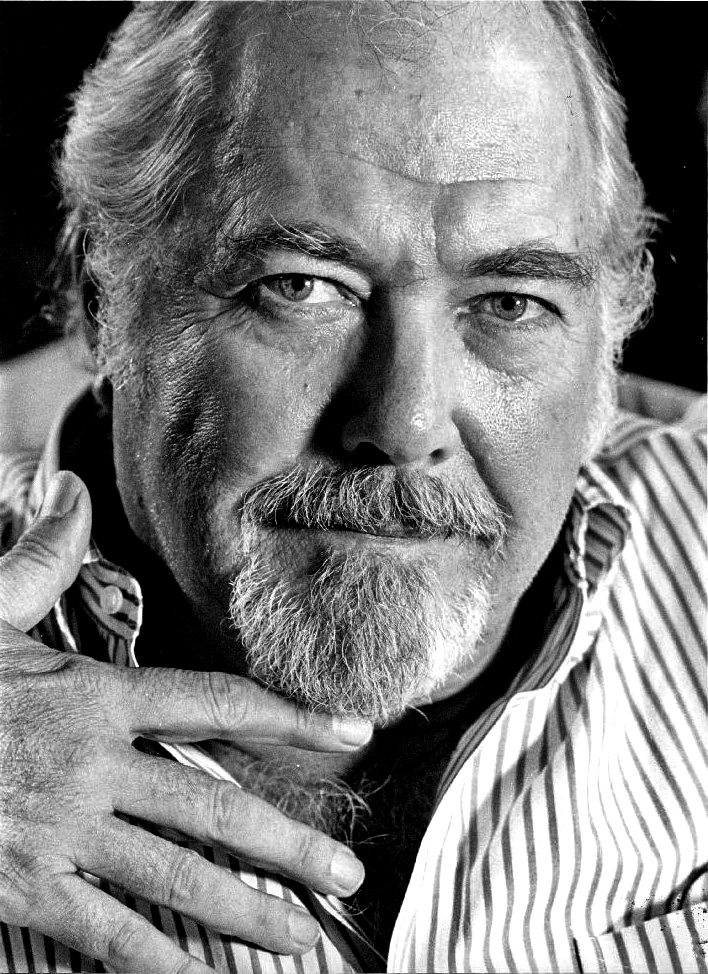
Robert Altman is often described through style tags so familiar they risk becoming evasions: overlapping dialogue, zoom lenses, ensembles, improvisatory looseness.[1][2][3][4] All of that is true, but it can make his films sound shapeless when the opposite is closer to the mark. Altman was one of the great organizers of controlled disorder. He kept building movies in which no one voice owns the frame for long, then used that instability to expose how American myths actually sound when you stop hearing them from the winner's position.[1][2][3]
That is why his best work still feels so alive. In MASH, McCabe & Mrs. Miller, The Long Goodbye, Nashville, The Player, and Gosford Park, Altman does not merely satirize institutions from outside.[1][2][3][4][5] He puts the viewer inside their noise. A military camp, a frontier town, a detective story, a country-music city, a movie studio, an English country house: each becomes a listening environment in which power is dispersed, overheard, interrupted, and never entirely stable.[1][2][3][4]
*Image context: the lead image uses a real live-stage photograph from *A Prairie Home Companion's performance world.[6] It fits a director-led essay because Altman's films are always negotiating between one authorial intelligence and the unruly social fields he stages: voices, bodies, routines, music, and institutional noise all competing for attention.
1. Altman turned dialogue into a crowd behavior rather than a delivery system
The most immediate Altman signature is sonic, but the point is not novelty for its own sake.[1][2][3] BFI's overview of his work is useful here because it frames overlapping dialogue, long takes, widescreen staging, and zooms as parts of one narrative method rather than separate tricks.[1] Altman wants the viewer to listen laterally. Instead of guiding attention through one clean line at a time, he lets talk stack, collide, trail off, and slip behind other actions. The result is not confusion as a gimmick. It is a more social picture of how institutions actually operate: several people want something at once, nobody has the full script, and status has to be inferred from who gets heard, who gets ignored, and who keeps talking anyway.[1][3]
The BFI interview with Altman sharpens that understanding by showing how little interest he had in packaging himself as a formal theorist.[3] He admits that his fingerprints persist across wildly different projects, even when he is resisting tidy explanations of method.[3] That resistance matters. Altman's films rarely feel like demonstrations of a thesis. They feel like pressure zones in which the audience must keep choosing where meaning lives. An Altman scene asks not only "What happened?" but "Who heard what, and at what cost?"
That question keeps his movies from becoming merely chatty.[1][4] In The Player, Criterion's essay notes the director's ability to set a film spinning in many directions at once while discovering comedy in casual conversation.[4] The famous opening shot is exemplary because it is not just a flex. It trains the viewer to treat side talk, industry banality, and background ambition as the real atmosphere of Hollywood. What looks like digression is usually the substance.
2. His drifting camera refuses to crown a single hero
Altman's camera is often remembered as curious, mobile, and slightly wayward, and that too can be misunderstood.[1][2][4] The movement is not evidence of indecision. It is an ethics of attention. Classical Hollywood frequently uses the camera to stabilize rank: this is the star, this is the decisive action, this is the point you must not miss. Altman relaxes that hierarchy without abandoning control. He pans, zooms, and reorients within crowded frames so that significance can emerge from edges, pauses, and reactions rather than from one centrally announced event.[1][2]
BFI's page on Nashville states the case plainly: Altman forged a naturalistic aesthetic in which overlapping dialogue and restless camerawork pick out detail with apparent spontaneity.[2] The phrase "apparent spontaneity" matters. His movies never simply dump raw life on the screen. They are composed to feel more open than they are. In Nashville, twenty-four characters do not form a democratic utopia. They form a competitive civic weather system of songs, campaign language, self-advertisement, and accidental vulnerability.[2] The camera's refusal to settle into a single protagonist is what lets Altman treat the city as a whole nervous organism.
This is also why his supposed antiheroism lands so hard.[1][3][5] Altman does not strip glamour from America by replacing heroes with noble underdogs. He shows that most public systems are too crowded, compromised, and performative to sustain heroism cleanly. Even when a nominal lead exists, that figure usually looks provisional inside the larger field. A detective can drift. A studio executive can panic. Aristocrats and servants can become parts of the same surveillance pattern. The zoom lens helps here because it can discover a person without granting them permanence. Attention arrives, then slides elsewhere.
3. The real Altman tone is cynicism laced with sympathy
What keeps Altman from hardening into smug superiority is the emotional mixture under the formal daring.[1][3][4][5] Criterion's The Player essay describes the great 1970s work as balancing cynicism with compassion, and that balance is the key to why even his harshest films retain warmth.[4] Altman sees vanity, money, careerism, delusion, and rot very clearly. But he also treats human performance as a survival tactic rather than only a moral failure. People posture in his films because institutions demand posturing. They improvise selves because the script handed to them was already damaged.[1][3][4]
Britannica's biography is especially helpful on the career arc.[5] It emphasizes both Altman's unconventional independence and his long habit of favoring character and atmosphere over conventional plot machinery.[5] That does not make him anti-story. It makes him skeptical of stories that flatten a culture into a victory march. His ensembles are therefore not decorative sprawl. They are arguments about how a society distributes attention, shame, aspiration, and noise.
This is why Altman still matters so much in a movie culture that keeps swinging between franchise clarity and prestige overexplanation.[1][2][3][4] He trusted the audience to live inside incomplete knowledge without treating incompleteness as emptiness. He made movies where the frame stays alive even when the obvious action moves elsewhere, where a side character may suddenly become the moral center for thirty seconds, and where a nation reveals itself less through declaration than through chatter, drift, and badly coordinated desire. Overlapping dialogue was never the whole point. The deeper point was that America, in Altman's cinema, cannot be heard honestly if it is cleaned up first.[1][2][3][4]
Sources
- Geoff Andrew, "Where to begin with Robert Altman." BFI.
- BFI, "Nashville (1975)" film page.
- Geoff Andrew, "Robert Altman interview: 'If I made a film that everybody liked it would be pretty terrible'." BFI.
- Owen Gleiberman, "The Player." The Criterion Collection.
- Encyclopaedia Britannica, "Robert Altman."
- Wikimedia Commons, "File:2016-01-30endAPHC.jpg" - live A Prairie Home Companion stage photograph used for the cover image.