Spoiler note: this essay discusses major plot turns in Orpheus, including Eurydice's death, Orpheus's trip into the Zone, and the ending.
Jean Cocteau's Orpheus (1950) is full of images that have become easy to summarize and hard to feel freshly: the mirror that liquefies into a door, the chauffeur and princess arriving in a Rolls-Royce, the poet listening to messages on a car radio, the ruined no-man's-land between life and death.[1][2][3][4] Treated from a distance, these can look like a list of surrealist signatures. Up close, the film is much tighter than that. Its real achievement is technical. Cocteau takes poetry, usually imagined as inward voice or private vision, and turns it into a logistics system. Messages have to be received, bodies have to cross, escorts have to arrive, and time has to be managed across borders.
That is why Orpheus still feels brisk rather than vaporous.[1][2][4] Criterion's film page places Cocteau at the height of his powers, and Mark Polizzotti's essay is especially useful because it treats the film as the place where the director's favorite private myths suddenly become widely legible.[1][2] Danica van de Velde's Senses of Cinema essay sharpens the same point from another angle: Cocteau's modernized myth is personal, but it is also inflected by postwar France and by very concrete cinematic devices, from reverse motion to mercury effects.[4] The movie won the International Critics Prize at Venice in 1950, but its durability comes from something more basic than prestige.[1][4] It keeps giving impossible events a practical texture.
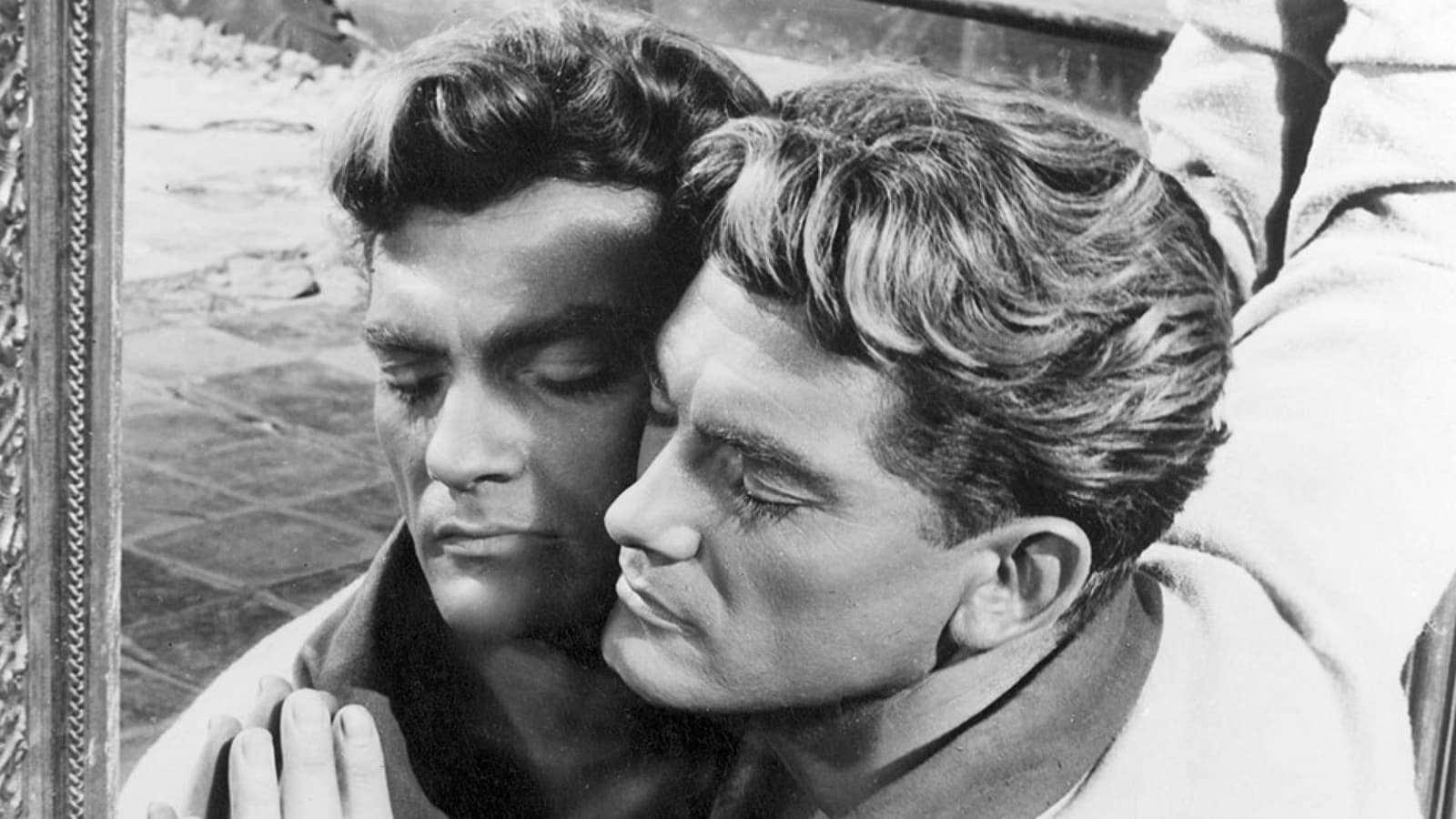
Image context: the lead image uses BFI's still of Jean Marais leaning into the mirror.[3] That exact gesture matters because Orpheus never asks the viewer to believe in a separate fantasy kingdom with its own decorative rules. It takes a familiar reflective surface, keeps the room almost plain, and then lets touch, angle, and motion push the ordinary over the line.
The mirror is not a symbol first. It is a working threshold built from touch, timing, and simple effects
The most famous trick in Orpheus remains the best one because Cocteau never overloads it.[1][2][4][5] A mirror stands in a room. A gloved hand tests it. The surface trembles. Then a body passes through. Even when one knows how much practical labor sits behind the effect, it still lands as a discovery rather than a demonstration. Van de Velde notes that Cocteau used manipulated images, reverse motion, superimposition, and a vat of mercury to produce the mirror's strange liquidity.[4] The BFI's afterlife survey gets the broader point exactly right: mirrors, water, and reversed film are enough to open the underworld.[5]
What matters artistically is not only that the trick works. It is that the trick preserves resistance.[2][4] The mirror does not dissolve into frictionless digital space. It remains heavy, slightly dangerous, and physically negotiated. A body has to lean into it with commitment. Hands press first. The surface wavers before it yields. Cocteau keeps the passage half ceremonial and half awkward, which is why it never becomes a clean fantasy shortcut. Crossing into death looks like entering another medium by force.
That tactile quality changes the meaning of reflection everywhere else in the film.[2][3][4] Mirrors are not merely metaphors for self-knowledge or narcissistic doubling, though those meanings are certainly available. They are customs gates. They sit inside domestic space but answer to another jurisdiction. Once Cocteau establishes that rule, every reflective surface acquires pressure. A mirror can still flatter, decorate, or frame a face, but in Orpheus it also waits to become procedural. The marvelous is not a separate atmosphere floating over the room. It is a hidden use built into the room.
The car radio turns poetry into stolen signal instead of private inspiration
Cocteau's modernization of the myth would be thinner if he only replaced lyre music with surreal props.[1][2][3] The real leap is that he makes inspiration sound transmitted. Orpheus does not simply compose from interior genius. He becomes obsessed with cryptic phrases broadcast through the radio in the princess's car, phrases linked to the dead young poet Cegeste and to a world beyond ordinary authorship.[1][2][4] Polizzotti is strong on this point, treating the film's radio poetry as part of Cocteau's fusion of everyday modernity and oneiric displacement.[2]
This changes the social shape of authorship.[1][2][3][4] A classical poet sings outward. Cocteau's poet listens inward to something arriving from outside. He is less bard than receiver. The radio gives poetry the character of intercepted traffic, and that shift is what makes Orpheus look so inattentive to the living. Eurydice's domestic presence, ordinary and warm, has to compete with the thrill of messages that feel illicit, disembodied, and possibly not meant for him at all.[1][3][4] The tragedy is not just that death seduces him. It is that he prefers transmission to reciprocity.
The car itself matters too.[2][3] Death does not arrive in mist or antique robes. She arrives with a chauffeur, a luxury vehicle, and motorcycle outriders. The effect is funny for a moment, then unnerving. Cocteau turns myth into convoy. Poetry now moves through engines, radios, police-like escorts, and road discipline. That is why the film's strange objects never feel random. They all belong to one system of managed passage.
The Zone makes the afterlife feel like postwar infrastructure instead of eternal abstraction
If the mirror is the border device, the Zone is the territory it opens onto.[2][4][5] Criterion's essay identifies the bombed-out Saint-Cyr military academy ruins as the location behind the film's no-man's-land, and that concrete detail matters enormously.[2] Cocteau could have staged the underworld as ornate dreamscape, classical cavern, or cathedral void. Instead he gives us rubble, open corridors, blank ground, and a judicial bureaucracy whose authority feels chilling precisely because it is so stripped down.[2][4][5]
This is where Orpheus becomes unmistakably a film of 1950 rather than a timeless fable with modern costumes.[2][4] Postwar damage is not just background texture. It becomes the spatial grammar of the beyond. The dead do not reside in some ornamental inferno; they circulate through a realm that looks administratively occupied, morally exhausted, and spatially unfinished. Van de Velde describes Cocteau's blend of dream and reality as increasingly hard to separate as the film advances.[4] The Zone is the place where that fusion becomes most exact. It is both a oneiric threshold and a ruin that viewers in 1950 Europe would have recognized as materially recent.
Because the Zone is so bare, performance starts doing more of the work.[1][2][3] Jean Marais cannot rely on spectacle to carry Orpheus through it. He has to move through emptiness under instruction, watched by functionaries and governed by rules he only partly understands. Maria Casares, as the princess, gains force from the same economy. She is not surrounded by baroque signs of supernatural grandeur. She carries death in posture, timing, and calm command.[1][2][3] The film's austerity makes hierarchy sharper.
The film finally works because every device splits desire from ordinary life
Seen one by one, the mirror, the radio, and the Zone are remarkable inventions.[1][2][4][5] Seen together, they perform one shared task. Each device redirects attention away from mutual human presence and toward a more abstract circuit of obsession. The mirror asks Orpheus to prefer passage to dwelling. The radio asks him to prefer signals to conversation. The Zone asks him to treat love itself as a border case, something to be processed under conditions set elsewhere. Eurydice does not lose him to melodramatic villainy. She loses him to a chain of technical fascinations.
That is why the film's emotional tone is stranger than romantic tragedy alone.[1][2][3][4] The underworld is seductive, but not because it promises release from rules. It promises more exact rules, more perfect messages, more charged thresholds. Cocteau turns poetic calling into a disciplined temptation. Orpheus keeps moving toward systems that feel purer than domestic life, and the movie keeps showing the cost of that movement on the people forced to wait for him.[1][3][4]
This is also why the ending does not feel like a simple restoration.[1][2][4] Cocteau can rearrange memory, erase knowledge, and reset the household more cleanly than a realist drama would allow, yet the film leaves behind the sense that poetry has already damaged the ordinary by rerouting desire through dead channels.[2][4] The tricks never detach from consequence. They are beautiful because they stay connected to appetite, vanity, jealousy, and the wish to cross where one has been told not to cross.
More than seventy-five years later, Orpheus still looks modern in the best sense: not because its imagery predicts later fantasy cinema, but because it understands that media change what longing feels like.[1][2][4][5] Cocteau's miracles are hand-built, his afterlife is half ruin and half office, and his poet is a man ruined by transmission. That combination is what keeps the film alive. The mirror is memorable. The system behind the mirror is what lasts.
Sources
- The Criterion Collection, "Orpheus (1950)" film page.
- Mark Polizzotti, "Orpheus: Through a Glass, Amorously," The Criterion Collection.
- BFI, "Orphee (1950)" film page.
- Danica van de Velde, "Between Dreams and Death: Jean Cocteau's Orpheus (1950)," Senses of Cinema.
- Amy Simmons, "10 great films about the afterlife," BFI.