Mike Leigh is often introduced through two shortcuts: the British social realist and the improvising auteur.[1][4][5] Both labels are true enough to be useful, yet both are too blunt to explain why his films land with such peculiar force. Leigh's real signature is that he turns private discomfort into public weather. A secret, a sulk, a boast, a joke stretched half a beat too long, a failed attempt at dignity, a badly timed kindness: in his cinema these never stay inside one person for long. They move outward into the room and reorganize everyone else's posture, timing, and speech.[1][3][4]
That is why his best films feel so exact about social life without ever seeming diagrammatic. Leigh does not build stories around the efficient revelation of plot. He builds them around pressure. The pressure might come from unemployment in Meantime, aspirational hosting in Abigail's Party, domestic strain in Life Is Sweet, urban drift and male rage in Naked, or family recognition in Secrets & Lies.[1][2][5][6] What links those worlds is not a single ideology or genre. It is a method for making people share space until class, shame, longing, and self-invention begin to show themselves in real time.
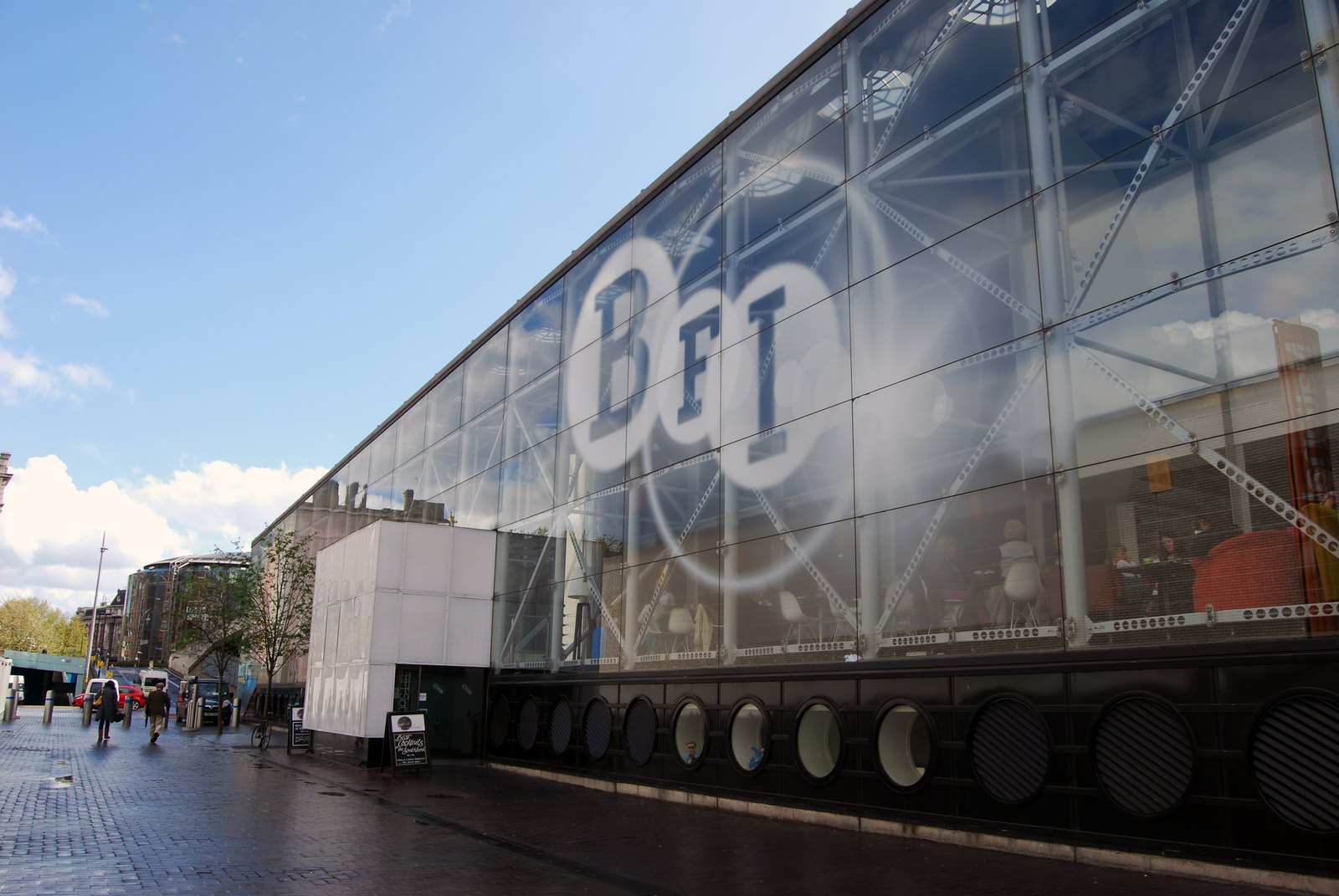
Image context: the lead image uses a real BFI Southbank exterior photograph because this piece is about authorial method rather than one single title.[8] The article needs Leigh's public film world in view: rehearsal rooms, screening institutions, streets, and ordinary spaces where private discomfort becomes social weather.
The rehearsal method is less about looseness than about density
Britannica and MoMA both describe the core of Leigh's practice in similar terms: extended rehearsal, actors helping generate character, and a final script emerging through that exploratory process rather than preceding it.[1][5] The common misunderstanding is to hear this and imagine something casual or free-floating. Leigh's films feel alive because they are built, not because they are lax. The Guardian interview sharpens the paradox. Leigh talks there about collaboration, trust, and instinct, then says plainly that you have to be a control freak.[4] That sentence matters because it explains why his work never dissolves into shapeless naturalism.
His method produces density. Characters arrive on screen with the sensation of already having spent years becoming themselves. They do not present as "types" carrying a thesis. They seem to have habits, evasions, and private ceremonial routines that continue off-camera.[1][4][5] That is true of Brenda Blethyn's Cynthia in Secrets & Lies, Timothy Spall's many Leigh figures, the brittle hostesses and exhausted parents and half-deluded optimists who populate the films from the 1970s onward.[1][2][4] Leigh's gift is not merely that actors sound unforced. It is that the scenes feel preloaded with a whole invisible biography.
The other consequence of the method is moral. Leigh has repeatedly resisted the star system's demand for polished legibility, insisting instead on what he calls a different culture, one concerned with real people in the street.[4] The result is not anti-cinematic drabness. It is a different kind of cinematic attention. Faces do not need to advertise their significance before a film begins. Rooms do not need to be glamorized into symbols. Social detail carries dramatic authority because Leigh has already trained the viewer to treat ordinary behavior as consequential.
Kitchens, buses, clinics, and pavements become pressure chambers
BFI's film-by-film guide to Leigh's London gets at something essential when it says his city is as distinctive as Fellini's Rome or Ozu's Tokyo.[3] Leigh's London is not a postcard capital or a thriller maze. It is a city of buses, cafes, side streets, porches, stations, waiting areas, and cramped living rooms where social temperature can rise suddenly.[3] He keeps choosing places that are neither fully public nor fully private. They are transitional zones, and transition is where his characters lose control of their preferred self-presentation.
Look at how often the important scenes in Leigh come down to who can bear to stay in the room. In Life Is Sweet, family space is both shelter and abrasion. In Secrets & Lies, the Holborn meeting between Cynthia and Hortense carries enormous emotional force precisely because it happens in a central, ordinary public setting rather than in melodramatic isolation.[3] In Happy-Go-Lucky, Poppy's movement through schools, streets, bookshops, and driving lessons makes London feel like a civic test of temperament.[2][3][7] Leigh's environments do not merely host character. They expose how character behaves under traffic, interruption, overheard speech, and class visibility.
This is why his cinema can feel more spatial than its reputation suggests. He is not a grand architect in the Fritz Lang sense, nor a stylized choreographer in the Jacques Tati sense. Yet he understands the social geometry of doorways, tables, curbs, bus seats, and stairwells with unusual sharpness.[3][7] A Leigh location often asks one hard question: how much privacy does a person really possess once ordinary life has started pressing in? The answer is usually very little, and the drama begins there.
Embarrassment is one of his deepest narrative engines
Leigh's films are full of pain, but they are equally full of embarrassment, and embarrassment is where his humane precision becomes hardest to fake. In lesser work, embarrassment is either a comic garnish or a humiliating spectacle. In Leigh, it is diagnostic. It tells you what a character believes they owe the room, what class performance they are failing to maintain, and how badly they need recognition without wanting exposure. That is why Abigail's Party can feel simultaneously hilarious and suffocating, and why Secrets & Lies reaches catharsis only after long stretches of social awkwardness, failed concealment, and speech that keeps missing its proper tone.[2][5]
The range of Leigh's cinema becomes clearer when Naked enters the picture. BFI's essay on the film emphasizes its bitterness, its violence, and the disturbance it means to cause.[6] That harsher register matters because it proves Leigh is not only a chronicler of rueful domestic comedy. He can widen embarrassment into menace. Johnny's manic rhetoric in Naked does not simply reveal one damaged man; it poisons every space he enters.[6] The room becomes unsafe because language itself has become predatory.
Seen across the body of work, embarrassment is the hinge between Leigh's comedy and his cruelty. It is where aspiration curdles, where kindness becomes invasive, where authority sounds tinny, where intimacy overreaches, where people discover that the self they meant to present cannot survive contact with others. His films are great ensemble pieces because embarrassment is contagious. One person's collapse in tone or judgment quickly becomes everybody else's problem.
He keeps changing register without giving up the method
One reason Leigh has lasted is that he does not keep remaking one film, even when the core method remains recognizable. BFI's retrospective announcement runs from Bleak Moments through Peterloo, with stops at High Hopes, Topsy-Turvy, Happy Go Lucky, and Mr. Turner.[2] In the Time Out interview around Mr. Turner, Leigh says he always tries to deliver a different kind of experience with each film.[7] That ambition shows. The works vary not only in period and subject but in dramatic scale, tonal acidity, and formal reach.
The period films are especially revealing. They do not represent a break from his concern with everyday textures; they magnify it.[2][7] Topsy-Turvy turns artistic production into labor, rehearsal, costume, exhaustion, and collaboration. Vera Drake makes moral argument inseparable from domestic routine and social secrecy. Mr. Turner treats genius not as airy transcendence but as bodily habit, rough speech, workshop practice, and institutional negotiation.[7] Even Peterloo, the largest canvas of his career, still depends on how groups gather, listen, mishear, address, and endure one another.[2][4]
That refusal to freeze into a house style also helps explain why later Leigh never feels merely nostalgic for earlier Leigh. The subjects shift, the social surfaces change, and the pressure points move. Yet the films remain unmistakable because their underlying question remains steady: what happens when ordinary people can no longer keep feeling, class, and performance in separate compartments?
Why he still matters
Mike Leigh matters because he keeps showing that realism is not the same thing as neutrality.[1][4][5] His films are structured arguments about how people live together, what kinds of pressure deform them, and how much comedy and sorrow can occupy the same minute. They feel generous because they are specific. They feel alive because they are exacting. And they endure because they understand a truth that cinema often softens or forgets: the hardest dramas are not always hidden in extraordinary events. They are very often waiting in the kitchen, on the pavement, by the station entrance, or at the table where everyone is trying, with uneven skill, to remain a person in front of other people.
Sources
- Encyclopaedia Britannica, "Mike Leigh" biography.
- BFI, "Major celebration of Mike Leigh announced for the autumn".
- Oliver Lunn, "A film-by-film guide to Mike Leigh's London... then and now," BFI.
- Zoe Williams, "'You have to be a control freak': Mike Leigh on 50 years of film-making," The Guardian.
- The Museum of Modern Art, "Life Could Be Better: The Films of Mike Leigh" retrospective press release PDF.
- Andy Medhurst, "Mike Leigh: the naked truth," Sight and Sound / BFI.
- Dave Calhoun, "Mike Leigh interview: 'I always try and deliver a different kind of experience'," Time Out.
- Wikimedia Commons, "File:BFI Southbank0182.JPG" (source page for the BFI Southbank exterior lead image).