Michael Curtiz is one of those directors whose films can feel more famous than his name.[1][2] That partly comes with the territory of classical Hollywood: studio-era directors often disappear behind stars, genres, and titles that became larger than authorship. But Curtiz's case is unusually sharp. The man who made Casablanca, The Adventures of Robin Hood, Mildred Pierce, Yankee Doodle Dandy, and Mystery of the Wax Museum is still regularly described as if he were only an exceptionally efficient foreman.[1][2] What that description misses is how much pressure his movies generate through staging itself. Curtiz keeps people moving through rooms, down staircases, across gangways, past mirrors, and into crowds until work, desire, and danger all become questions of circulation.
That is why a director profile on Curtiz makes more sense than one more single-film tribute.[1][2][3] His signature is not a single genre or one recurring icon. It is a way of animating the studio picture from within. Gangster film, swashbuckler, backstage melodrama, wartime romance, pre-Code horror, musical biography: the surfaces change, but the inner behavior often does not. Curtiz likes institutions under strain, professionals with too much to coordinate, and sets that behave like argument rather than furniture. His camera does not simply observe those pressures. It organizes them.
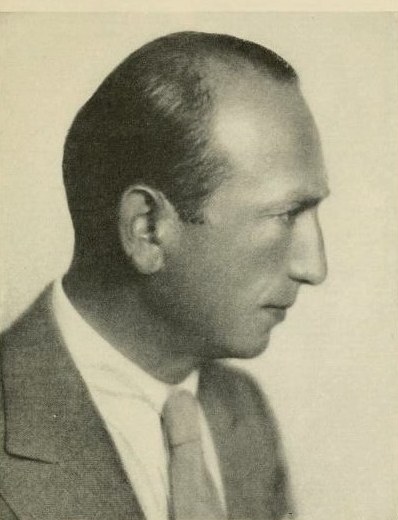
Image context: the lead image uses a 1937 Warner Bros. portrait of Curtiz from Wikimedia Commons.[7] It fits this article because the still gives us the public studio craftsman, poised and controlled, while the films themselves keep showing how much force he could release once actors, decor, and camera movement entered the same system.
He makes institutions feel alive before he makes heroes feel singular
Senses of Cinema is right to frame Curtiz as both highly accomplished and persistently underrated, a director whose movies became pillars of popular culture while his own authorship often stayed oddly anonymous.[1] Part of that paradox comes from his range. TCM's profile stresses the raw scale of his output, noting 178 credits across six decades and a freedom of movement among drama, comedy, romance, noir, musical, swashbuckler, and war film that would make a narrower auteur look almost monomaniacal by comparison.[2] Yet the range is not randomness. Curtiz's best pictures keep returning to organized human systems: gangs, regiments, theater companies, newspaper offices, pirate crews, households, restaurants, or transit zones where one person's impulse immediately hits a larger machine.
That is why his films so often feel busy in the strongest sense.[1][2] Even when the plot turns on a star performance, the surrounding world never goes inert. In Casablanca, Rick's Cafe works because it is not merely a romantic backdrop; it is a relay station of refugees, waiters, musicians, black-marketeers, officials, and watchers.[2] In Mildred Pierce, domestic ambition keeps spilling into restaurants, kitchens, ledgers, uniforms, and customers. In The Adventures of Robin Hood, rebellion looks vivid because it is collective, routed through forests, halls, battlements, banquets, and men moving in groups rather than through one isolated feat of swagger.[1][2][4]
Curtiz understands that institutions are already dramatic forms. Give them traffic, depth, and competing incentives, and the story acquires momentum before anyone delivers a speech about what is at stake. This is one reason his films tend to start quickly and stay quick. He is rarely waiting for a concept to announce itself. The world has already been built to produce conflict.
His camera treats rooms as pressure systems
One of the most useful claims in the Senses essay is that Curtiz had an "innate gift for camera mobility, notably in enclosed spaces."[1] That phrase gets near the center of the matter. Plenty of directors can make an exterior scene feel expansive. Curtiz's special talent is to enter rooms and make them more dynamic, not less. A corridor becomes a channel of rank. A stairway becomes a moral incline. A mirror becomes a trap for desire. A desk, a doorframe, or a table edge begins dividing power without anyone needing to name the division aloud.
Brad Stevens's Sight and Sound essay on classical Hollywood mise en scene helps explain why this matters.[6] He describes Curtiz's intelligence as a kind of visual pointmaking, where the arrangement of actors and decor tells the viewer something the characters themselves may not fully grasp. That is exactly the quality that keeps Curtiz from dissolving into generic "craftsmanship." His compositions are not handsome by accident. They are built to think. If a face is obscured, if a body passes behind glass, if someone climbs while another waits below, the shot is usually making a judgment about attention, vanity, authority, or desire.
This is also why Curtiz's pictures age so well when stripped of their canonical reputation and just watched as moving objects.[1][2][6] The force is often local and immediate. A scene does not require retrospective grandeur to work. It works because the camera keeps locating where energy sits in relation to bodies and barriers. He was a famously hard-driving studio director, but the films themselves do not feel merely rushed. They feel coordinated. Speed becomes legibility.
Decor and color are never decorative extras
Curtiz's reputation sometimes gets reduced to black-and-white efficiency and Warner Bros. hustle, which makes it easy to forget how sensitive he was to the expressive use of design and color.[1][2] MoMA's note on Mystery of the Wax Museum is particularly revealing here. The museum calls it the last major studio production shot in two-color Technicolor and stresses how the process's restricted red-green palette turned out to be unexpectedly effective for horror because of its "inherently ghoulish bent."[5] That is more than a historical curiosity. It points to a larger Curtiz habit: he does not treat production limits as neutral conditions to be endured. He turns them into atmosphere.
The same principle appears at a grander pitch in The Adventures of Robin Hood.[4] MoMA describes that film as vital to the history of three-strip Technicolor and emphasizes that its visual design is more subtle and complex than Warner publicity rhetoric would suggest.[4] That complexity is a useful word. Curtiz never uses color only to flatter spectacle. He uses it to give hierarchy, texture, and charge to the screen. Richness is organized, not simply displayed. You feel this in the way halls, banners, costumes, and foliage sort bodies into alliances and pressures before the action peaks.
Even away from color, Curtiz's decor tends to behave like equipment rather than ornament.[1][5][6] Wax figures, tavern balconies, stair rails, chandeliers, office partitions, and domestic upholstery all help convert social relations into visible structure. The set is not where performance happens after the fact. The set is what sharpens the performance into something legible.
The "happy accident" story underrates what he repeatedly solved
Because Casablanca became so beloved, it has often encouraged a lazy way of speaking about Curtiz: if the film is great, then perhaps it is great in spite of his anonymity, or because the material, cast, and wartime timing happened to line up.[1][2] The Senses essay is useful on this point because it notes how the film's success ended up obscuring Curtiz's own legacy rather than securing it cleanly.[1] The TCM profile, by contrast, places Casablanca inside a much larger pattern, emphasizing not just the Oscar win but Curtiz's recurring command of actors, dramatic lighting, and fluid camera movement from intimate close-ups to crane shots.[2]
That broader view is the more convincing one.[1][2] Casablanca does not look like an exception when you watch enough Curtiz. It looks like a culmination. The mixture of traffic, professionalism, emotional pressure, and visual clarity is already present elsewhere, only redistributed across different genres. What changes from film to film is the emotional key. In one case the system is romantic sacrifice; in another it is criminal ambition, comic disorder, horror display, or rebellious pageantry. The directorial intelligence lies in turning each of those worlds into a usable field of motion.
MoMA's artist page, sparse as it is, still makes the point through simple juxtaposition: The Adventures of Robin Hood, The Sea Wolf, Yankee Doodle Dandy, and Mildred Pierce sit together as works online under Curtiz's name.[3] That is not the filmography of a director with no identity. It is the filmography of a director whose identity was broad enough to travel. He could absorb new genres without surrendering the habits that made them move.
Curtiz matters, then, not because he invalidates authorship, but because he enlarges what authorship can look like inside the studio system.[1][2][6] His films are too alive to be reduced to administration. He keeps classical Hollywood from sitting still. People work, flee, flirt, climb, hide, perform, and betray one another inside frames where every wall and walkway has been made to count. That is a directorial signature worth recognizing: not a single repeated image, but a repeated conversion of space into pressure and movement into meaning.
Sources
- Jeremy Carr, "Curtiz, Michael," Senses of Cinema.
- Turner Classic Movies, "TCM Spotlight: Michael Curtiz."
- MoMA, "Michael Curtiz" artist page.
- MoMA, "The Adventures of Robin Hood. 1938. Directed by Michael Curtiz, William Keighley."
- MoMA, "Mystery of the Wax Museum. 1933. Directed by Michael Curtiz."
- Brad Stevens, "Reflections on style: what became of classical Hollywood mise en scene?" Sight and Sound / BFI.
- Wikimedia Commons, "File:Michael Curtiz, Warner Bros. 1937.jpg."