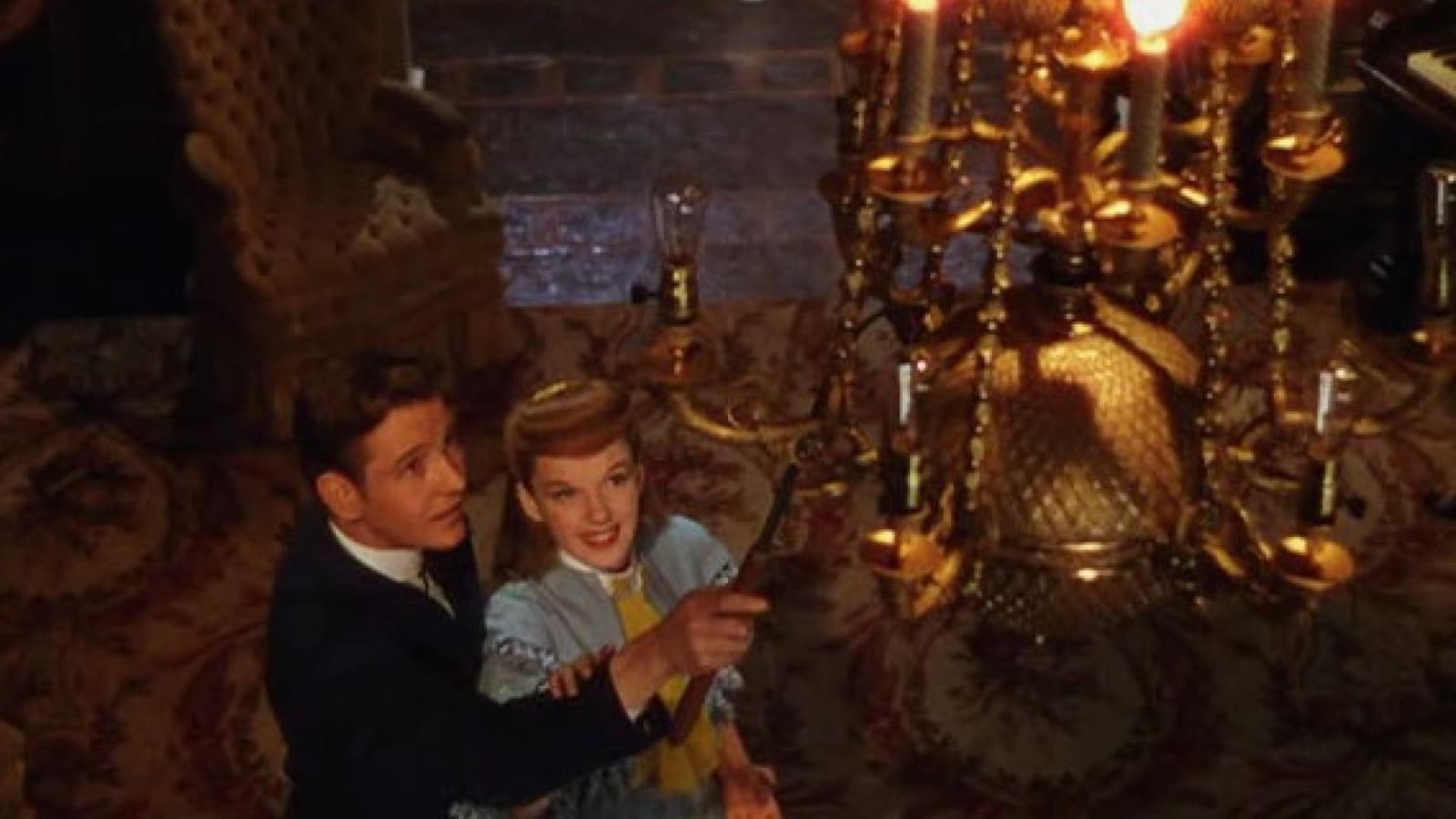
People often remember Meet Me in St. Louis as a Christmas perennial with one immortal song and a great deal of Technicolor comfort.[1][6] That memory is understandable, but it misses the film's real design. Vincente Minnelli's musical is not built around holiday arrival alone. It is built around threatened duration. The Smith family's house, their routines, and their city seem secure, yet every scene is quietly measured against the possibility that the whole arrangement may be broken by a move to New York before the 1904 World's Fair arrives.[2][3] The movie spans seasons, songs, porch rituals, trolley rides, kitchen labor, sibling feuds, and candlelit rooms, but all of that abundance is held inside one anxious question: how long does home remain home once it has entered countdown?
That is why the picture still lands with more force than its reputation for coziness suggests.[4][5][6] Minnelli does not preserve the past like a snow globe. He keeps it alive by letting it tremble. The songs are radiant because they are tied to specific thresholds in family time. The Fair matters because it is both promise and deadline. The house feels beloved because the film never lets us forget that it could become memory.
Image context: the lead image uses BFI's still of Judy Garland as Esther lighting a candle beneath the chandelier.[1] It fits this essay because the movie's emotional weather lives in just such interiors. Light pools warmly across the room, but the scene also carries the knowledge that this room, like the season itself, may have to be left behind.
The house is the film's true protagonist
TCM's production history starts in the right place: Sally Benson's source material began as a series of New Yorker stories about 5135 Kensington, the Smith family home in turn-of-the-century St. Louis, later gathered into a book whose chapters ran month by month.[3] That structure survives in the film's deepest rhythm. Even when the plot appears loose, the house keeps everything coherent. Bedrooms, parlor, dining room, kitchen, front steps, and upstairs hall are not neutral backdrops. They are a living map of who belongs where, who can overhear what, and how a family inhabits time together.
This is why the movie never feels merely anecdotal.[2][3] One daughter worries over a boy next door, another over marriageable timing, Tootie stages her own lurid dramas, the mother keeps domestic order moving, and Grandpa watches with amused endurance. Yet the stories do not scatter because the house absorbs them. Every room has social gravity. It allows privacy, but only provisionally. A bedroom window can turn yearning outward; a hallway can carry news from one generation to another; a dining table can make the family look momentarily unified even while pressure builds underneath.
Minnelli's gift, as BFI's guide to his work suggests, was to keep the family-friendly MGM musical wholesome without making it thin, and melancholy without making it inert.[4] Meet Me in St. Louis is an early and exemplary case. The home is lush, but never static. Curtains, lamps, stair rails, ornaments, and seasonal decorations do not exist only for visual pleasure. They create the sense that domestic life is something arranged and therefore vulnerable to rearrangement.
The Fair and the move announcement turn nostalgia into pressure
At first the 1904 World's Fair feels like a horizon of communal excitement.[2][6] It is the city's bright future arriving in the near distance, and the film delights in that promise. Trolleys, telephones, electric spectacle, courtship rituals, and public amusements all suggest a modern world opening outward. David Parkinson's BFI survey of great musicals captures the contradiction well: the film celebrates female emancipation and technological advance even while championing old-fashioned American values.[6] That tension is not incidental. It is the movie's motor.
The father's announcement that the family may have to relocate to New York changes the emotional charge of everything that follows.[2][3] The Fair remains desirable, but now it becomes something the family might miss, along with the street, the neighbors, and the whole domestic ecosystem that made desire intelligible in the first place. The future stops being abstract progress and becomes a threat to local attachment. Suddenly the house is no longer only a container for everyday life; it is a place under notice.
Andrea Alsberg's Library of Congress essay adds the larger historical reason this emotional setup mattered so deeply in 1944.[5] The film was produced during the war, when American families were already living with separation, relocation, rationing, and uncertainty. The result is a movie that offers glow and reassurance while quietly acknowledging instability. It does not mention the war in story terms, because it lives in 1903-1904, yet wartime audiences could easily feel why a film about a beloved household endangered by movement might cut so close.
That is why the nostalgia in Meet Me in St. Louis feels active rather than embalmed.[3][5][6] The film does not say that home is valuable because it is old. It says that home becomes visible when time starts pressing on it. The Fair promises arrival; the father's career plan threatens departure; the audience is left suspended between civic pageant and private loss.
The songs work because they are emotional logistics
A weaker musical could have treated its songs as detachable pleasures.[2] Minnelli and the Freed Unit make them function as emotional logistics instead. Each major number solves a different problem of feeling inside the house's countdown.
"The Boy Next Door" is private longing organized by architecture.[2][4] Esther is not singing from some mythical romantic elsewhere. She is singing from home, framed by a neighborhood so near that desire can cross only a small physical distance and still feel immense. The song depends on porches, windows, and the awkward dignity of wanting someone who lives almost within earshot.
"The Trolley Song" performs the opposite movement.[2][6] Where the earlier number is enclosed, this one is social, mobile, urban, and exuberant. Motion through public space does not dissolve feeling; it amplifies it. The city's transit system becomes a medium for courtship energy, a reminder that modern infrastructure in this film is thrilling as well as unsettling. The trolley is not the enemy of home. It is one of the routes by which home reaches outward.
"Have Yourself a Merry Little Christmas" is the great compression point.[2][5][6] By the time it arrives, the movie has already spent months teaching us how deeply the family occupies its own rooms and seasonal rituals. The song matters because it gathers that whole domestic year into one winter scene and lets warmth coexist with dread. Its emotional force comes from suspension: comfort is present, yet it is being sung under the pressure of possible dispersal. The number is tender because it knows the room may not hold forever.
Tootie keeps the postcard from going dead
One reason the film lasts is that it refuses to become too tasteful.[2][5] Tootie, with her morbid streak and taste for exaggeration, keeps puncturing the smoothness that nostalgia can impose.[2] Her presence matters structurally. She turns childhood into something unruly rather than decorative, and she keeps the film's emotional register from settling into pure sweetness.
This is especially clear around Halloween and the darker edge of the family year.[2][5] The movie is often marketed through Christmas memory, but autumn gives it one of its necessary shocks. Community ritual becomes rough, fearful, and ecstatic. Children test courage, the neighborhood acquires menace, and the supposedly ideal domestic world suddenly shows its appetite for disorder. That disturbance prepares the later winter material by proving that the Smith household is not made of sentiment alone. It contains aggression, fear, grief, pride, and tantrum as surely as it contains song.
So when the movie finally offers its softest moments, they carry weight.[4][5][6] Warmth has survived pressure; it has not floated above it. Minnelli makes the family seem lovable because he lets them be irritable, theatrical, frightened, selfish, and then loving again. The film's home is persuasive because it is fully inhabited.
That is the final achievement of Meet Me in St. Louis.[3][4][5] It understands nostalgia as a time problem, not a decorative style. The house matters because it can be lost. The Fair matters because it names a future the family wants and fears. The songs matter because they pin emotion to specific rooms, streets, seasons, and departures. In the end the film does not preserve home by freezing it. It preserves home by making us feel the countdown that threatens to take it away.
Sources
- BFI, "Meet Me in St. Louis (1944)" film page.
- Andrea Passafiume, "The Essentials - Meet Me in St. Louis," Turner Classic Movies.
- Andrea Passafiume, "The Big Idea - Meet Me in St. Louis," Turner Classic Movies.
- Christina Newland, "Where to begin with Vincente Minnelli," BFI.
- Andrea Alsberg, "Meet Me in St. Louis," Library of Congress National Film Registry essay PDF.
- David Parkinson, "The best musicals of all time - one film per year," BFI.