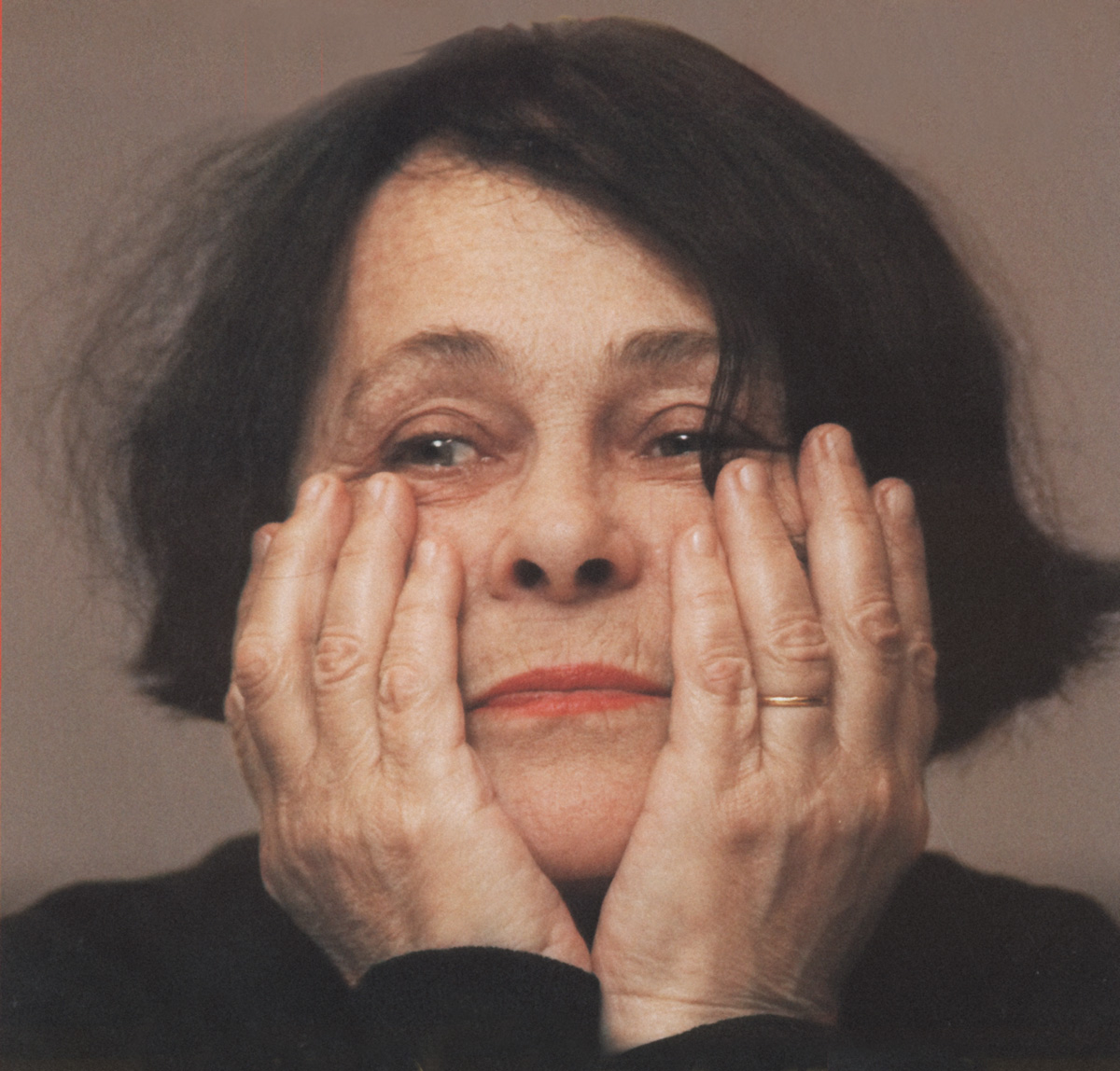

Kira Muratova is easy to introduce badly. One can list the facts - Soviet and Ukrainian film director, Odesa-based, repeatedly censored, long neglected outside Eastern Europe - and still miss the main thing. Her films do not feel important because they can be rescued into a tidy history of suppression and rediscovery. They feel important because they keep making tidiness itself look false.
Film at Lincoln Center's trailer for its 2025 retrospective Kira Muratova: Scenographies of Chaos is therefore useful precisely because it does not try to turn her work into a clean thesis.[1][2] The e-flux announcement for the Film at Lincoln Center and Faktura 10 program describes it as a 16-film retrospective running May 16-25, 2025, with a career span from the early 1960s to Muratova's death in 2018 and an opening presentation of The Asthenic Syndrome in a new 4K restoration.[2] Those facts matter, but the trailer's stronger lesson is formal. It teaches the viewer to expect interruption, faces that will not settle into psychology, speech that becomes texture, and scenes where ordinary rooms seem charged with social static.
That is why this video works as an annotated viewing. It is not a substitute for watching Muratova's films. It is a doorway into how to watch them. Criterion's collection page stresses the range of her work, from Brief Encounters and The Long Farewell through The Asthenic Syndrome, Three Stories, and The Tuner, while also describing the fragmented, heightened quality of her cinema.[3] The trailer compresses that range into a brief signal: Muratova's cinema does not use disorder as decoration. Disorder is how the world tells the truth before plot can domesticate it.
Watch the trailer as a warning against summary
The first thing to notice is how little the trailer behaves like a conventional career overview.[1] A safer trailer would give a chronology: early promise, censorship, comeback, canonization. Muratova's biography can support that arc, but her films resist it. BAMPFA describes Brief Encounters and The Long Farewell as banned for about two decades, and Janus likewise identifies Brief Encounters as a first solo feature banned by Soviet censors for twenty years.[4][5] Yet the point is not simply that censors misunderstood an artist ahead of her time. The point is that Muratova's form made official readability impossible.
That difference changes the viewing task. In a normal melodrama, one watches for the emotional problem that organizes the characters. In Muratova, one also watches for the social noises that interrupt the emotional problem: public language, repeated gestures, awkward pauses, decorative clutter, sudden cruelty, badly managed affection, and people whose speech does not clarify them so much as expose their friction with the world. Masha Shpolberg's Frames Cinema Journal essay is especially helpful on this point because it argues that Muratova's early critique of Soviet reality works not primarily through plot or dialogue but through mise-en-scene and the built environment.[6] The trailer gives a fast version of that resistance. It does not ask, "What is the story?" first. It asks, "What kind of pressure is making these people speak, pose, repeat, and break?"
That is the right question for the early films. Brief Encounters can be described as a love triangle, and The Long Farewell can be described as a mother-son psychodrama.[3][4][5][6] Those descriptions are accurate, but they are incomplete in the way a map of a room is incomplete without the air inside it. Muratova's early work makes feeling drift through offices, domestic interiors, provincial roads, and half-explained memories. The people do not simply move through settings. The settings seem to argue with them.
Repetition is not a quirk
Muratova's repeated phrases, doubled gestures, and unsettled rhythms can look eccentric from a distance. The trailer's compressed form risks making them seem like a signature flourish.[1] The better reading is harsher and more useful: repetition is her way of showing how social life damages spontaneity and then turns damage into pattern.
The Criterion Channel frames Muratova's work as fragmented, heightened, and committed to disorder and contradiction as a way of testing cinematic language.[3] BFI's obituary makes a related point from another angle, describing a cinema of narrative fragmentation and dialogue that exposes the absurdity of speech.[7] Put those observations together and the trailer becomes easier to read. When Muratova repeats, she is not merely being strange. She is asking what happens when people inherit phrases, roles, rituals, and emotional habits that no longer fit but still keep speaking through them.
This is one reason her work feels so modern. Contemporary viewers are used to fragmented media, looped public language, and performances of selfhood that repeat until they start sounding empty. Muratova got there by another route: late Soviet and post-Soviet social pressure, Odesa studio practice, censorship, theatricality, and a fierce impatience with respectable explanations. Her characters often seem to be trying to live inside scripts that have gone rotten. Instead of smoothing that failure into tasteful realism, she lets the failure squeak, stutter, sing, and return.
Censorship shaped the image, but did not define the imagination
It would be too easy to make censorship the whole story. Muratova was censored and obstructed; the e-flux announcement notes repeated pressure to re-edit completed works, her refusal to attach her name when studio cuts buried her voice, and her acceptance of menial duties at Odesa Film Studio when directing work was blocked.[2] BFI's account similarly traces the shelving of The Long Farewell, the severe cuts to Among Grey Stones, and her removal of her name from that compromised release.[7]
Those facts are essential, but the trailer does something more interesting than invite pity.[1] It shows a filmmaker whose images look as if they have metabolized pressure into method. A censor wants clear moral lines, legible motivation, approved feeling, and useful citizens. Muratova gives difficult rhythms, unstable sympathy, ornamental rooms, grotesque comedy, abrupt tenderness, and people who cannot be made into examples. The cinema is not free because it floats above history. It is free because it keeps making history's approved forms unusable.
That is also why the retrospective framing matters now.[2] Muratova worked across shifting labels - Soviet, Ukrainian, Russian-language, Odesan, post-Soviet - and none of those labels alone explains the films. The value of a retrospective trailer is that it lets those categories brush against each other without forcing a final identity solution. The viewer sees a career as a field of recurrence and mutation, not a solved national filing system.
What to carry into a first full film
After watching the trailer, the practical entry point is not to ask for immediate mastery.[1] Start with attention to texture. In Brief Encounters, notice how a romance plot becomes a problem of memory, point of view, and provincial atmosphere.[3][5][6] In The Long Farewell, notice how family pain becomes more unstable because the film refuses clean sympathy.[3][4][7] In The Asthenic Syndrome, notice how exhaustion, public speech, and social cruelty expand until the film itself seems to suffer from the world it is diagnosing.[2][3][7]
The trailer's best service is that it prepares the viewer for difficulty without making difficulty sound like homework. Muratova can be funny, harsh, beautiful, exhausting, and startlingly tender, sometimes inside the same passage.[6][7] Her disorder is not a rejection of form. It is form pushed past polite balance until the viewer can feel the unstable reality underneath. That is why plot keeps failing to settle the films. Plot is there, but it is not sovereign. Speech, faces, repetitions, rooms, ornaments, pauses, and sudden tonal jolts keep claiming equal rights.
This is the article's main viewing proposal: treat Muratova's cinema as a system for hearing what official and conventional forms try to mute. The trailer offers only a glimpse, but it gives the right clue. Do not wait for the films to become orderly before taking them seriously. Their seriousness is in the disorder.
Sources
- Film at Lincoln Center, "Kira Muratova: Scenographies of Chaos | Trailer | May 16-25," YouTube video.
- e-flux, "Kira Muratova: Scenographies of Chaos," announcement for the Film at Lincoln Center and Faktura 10 retrospective, April 25, 2025.
- The Criterion Channel, "Directed by Kira Muratova" collection page, with film notes for Brief Encounters, The Long Farewell, The Asthenic Syndrome, and other works.
- BAMPFA, "Odessa's Uncompromising Eccentric: The Films of Kira Muratova," retrospective notes, April 1-May 14, 2023.
- Janus Films, "Brief Encounters" film page, with restoration and synopsis notes.
- Masha Shpolberg, "Deconstructing Socialism in the Early Films of Kira Muratova," Frames Cinema Journal.
- Birgit Beumers, "Kira Muratova obituary: a great, fearless filmmaker who poked at open wounds," Sight and Sound / BFI, updated January 22, 2019.
- Wikimedia Commons, "File:Muratova.jpg" - real portrait photograph of Kira Muratova used as the article image.