Japanese New Wave is a useful label only if you keep it unstable. It does not name a tidy school with one manifesto, one look, or one shared production base. It names a pressure change in Japanese cinema around 1960, when younger directors, political crisis, loosening studio authority, documentary impulse, and anti-classical form began pushing against the inherited idea of what a respectable Japanese film should be.[1][2][3]
That instability is the point. The movement mattered because it turned rebellion into a method rather than a pose. A Japanese New Wave film could be a youth-crime picture, a political autopsy, a grotesque port-city satire, a surreal identity experiment, a theatrical adaptation, or a work that tore apart the boundary between fiction and documentary.[1][3][5] The common thread was not surface style. It was the refusal to let cinema behave as if postwar Japan had settled into clean narrative order.
The label began inside the system it would attack
The first complication is institutional. BFI traces the origins of the term to Shochiku's promotion of three young employees around 1960: Nagisa Oshima, Masahiro Shinoda, and Kiju Yoshida were marketed as a Japanese answer to the French nouvelle vague, the "Shochiku Nuberu bagu."[1] That means the movement did not begin as a pure outside insurgency. It began partly as studio branding, a way for an established company to package novelty.
But the label did not stay obedient. BFI notes that all three directors later left Shochiku under bitter circumstances.[1] Oxford's entry on Oshima makes the contradiction especially sharp: he entered Shochiku in 1954, came through the studio system, then became identified with the Shochiku New Wave after Cruel Story of Youth and public attacks on studio stagnation.[4] When Shochiku pulled his politically charged Night and Fog in Japan from theaters, he left in 1961, founded Sozosha, and later worked closely with the Art Theatre Guild.[4]
That arc matters because Japanese New Wave cinema is often remembered through its extremity while its origin is more revealing. The revolt came from people who knew the machine from the inside. They understood studio efficiency, genre habit, performance decorum, censorship pressure, and commercial packaging well enough to bend or reject them. Their work did not simply announce a new youth style. It exposed the old system as a system.
Politics was not background; it was form pressure
Harvard Film Archive's note on Shinoda gives the movement's historical weather in a few compressed strokes: widespread disaffection with the past, activism around the renewed U.S.-Japan Security Treaty, and a young generation pushing into politically engaged youth and gangster films.[2] That context keeps the New Wave from shrinking into a film-school taxonomy. The films were not merely more modern-looking. They were made in a Japan where the postwar settlement, American military presence, student protest, class mobility, and official memory all felt contested.
Oshima is the unavoidable example because he made politics behave formally. BFI points to Night and Fog in Japan as a stylized treatment of the left's failure to stop the controversial 1960 security treaty, while Death by Hanging attacks both capital punishment and anti-Korean discrimination, and The Man Who Left His Will on Film folds student filmmaking into anti-government protest.[1] Oxford's account stresses that Oshima was not only a director but a public intellectual whose work resisted consistent auteurist packaging.[4]
That resistance is crucial. The New Wave was not looking for a single signature polish. It often wanted discontinuity: theatrical distance, documentary interruption, fractured chronology, abrasive sexuality, sudden violence, flat accusation, or comic grotesquerie. Form became a way to keep political questions from settling into tasteful historical drama. If the society was unresolved, the film should not look resolved either.
Imamura moved the argument down into appetite and survival
The movement would be much poorer if it were reduced to Oshima's polemical brilliance. BFI calls Shohei Imamura a more humanistic and entertaining contemporary, while naming Pigs and Battleships and The Insect Woman as major explorations of the lower levels of postwar society.[1] Criterion's essay on Pigs and Battleships shows why that difference matters. Imamura's Yokosuka is not an abstract political diagram. It is a port-world of gangsters, sex work, military proximity, opportunism, American presence, Koreans, Chinese intermediaries, pigs, money, exhaustion, and stubborn female survival.[5]
Imamura's cinema makes history sweaty. Criterion reads Pigs and Battleships as a picture of Japan both resenting subservience and using it to get ahead, a "rich, rushed culture" moving on adrenaline and its own harsh logic.[5] That is a different New Wave route from Oshima's explicit institutional attack, but it belongs to the same broad break. The old image of national composure cannot survive these bodies, appetites, hustles, and humiliations.
David Desser's Eros Plus Massacre, described by Indiana University Press as the first major study devoted to Japanese New Wave cinema, organizes the movement around motifs such as youth, identity, sexuality, and women across Oshima, Shinoda, Imamura, Yoshida, Suzuki, and others.[3] That list is useful because it shows the movement's breadth. Japanese New Wave is not one director's anger. It is a cluster of filmmakers testing where postwar identity breaks: in young bodies, gendered labor, colonial memory, erotic control, criminal economies, and the unstable border between private desire and public structure.
The movement kept attacking its own name
One reason Japanese New Wave remains alive as a category is that several of its central figures distrusted the category itself. BFI notes that Yoshida refused to identify himself with the movement, while Oxford records Oshima's dislike of the label attached to the Shochiku New Wave.[1][4] That rejection is not a pedantic footnote. It explains why the movement is better understood as a field of conflict than as a club.
Movements usually become easier to teach once their members are grouped under one banner. Japanese New Wave becomes more interesting when the banner frays. Oshima's political ruptures, Shinoda's move from studio youth and yakuza pictures toward Double Suicide, Imamura's earthy anthropology, Teshigahara's philosophical surrealism, Yoshida's historical and formal extremity, and Suzuki's pop sabotage do not merge into one doctrine.[1][2][3] They create a map of refusal. Each path asks what Japanese cinema had been trained not to show, not to say, or not to let remain structurally unsettled.
That is also why availability has shaped the movement's English-language memory. BFI warns that Japanese New Wave films have long presented access problems, with important work by Susumu Hani and even Oshima unevenly represented in Western home-video circulation.[1] A canon built from what is easiest to see will always misstate a movement built from fracture. The blind spots are not incidental; they are part of how the New Wave keeps arriving unevenly outside Japan.
Why it still matters
The Japanese New Wave matters now because it offers a sharper model of cinematic rebellion than simple roughness or youthful shock. It shows how a movement can begin as a marketable novelty and become an attack on the conditions that made the novelty marketable. It shows how political pressure can change not only subject matter but editing, framing, performance, genre, and the contract between fiction and evidence.
Most of all, it keeps postwar modernity from looking smooth. In these films, youth is not automatically liberation. Sex is not automatically freedom. Crime is not automatically glamour. Documentary truth is not automatically stable. Tradition is not automatically pure. Modern Japan appears as a set of contested rooms, ports, protests, bodies, studios, and images, none of them able to hold the whole story by themselves.[1][3][5]
That is why the label still works, provided it is allowed to remain tense. Japanese New Wave is not a finished style to imitate. It is a historical lesson in how cinema can turn institutional disobedience into form, and how form can make a society's unresolved arguments harder to hide.
Sources
- Jasper Sharp, "Where to begin with the Japanese New Wave," BFI - movement origins, Shochiku branding, key directors, Oshima, Imamura, ATG, and availability issues.
- Harvard Film Archive, "Double Shinoda" - program note linking the early Japanese New Wave to political disaffection, security-treaty protest, and Shinoda's studio-to-independent path.
- David Desser, Eros Plus Massacre: An Introduction to the Japanese New Wave Cinema, Indiana University Press - publisher page summarizing the book's scope, motifs, and filmmaker range.
- Maureen Turim, "Nagisa Oshima," Oxford Bibliographies in Cinema and Media Studies - Oshima's Shochiku background, New Wave position, 1961 break, Sozosha, and ATG context.
- Audie Bock, "Pigs and Battleships: Feeding Frenzy," The Criterion Collection - essay on Imamura's postwar Yokosuka, underworld satire, American presence, and social texture.
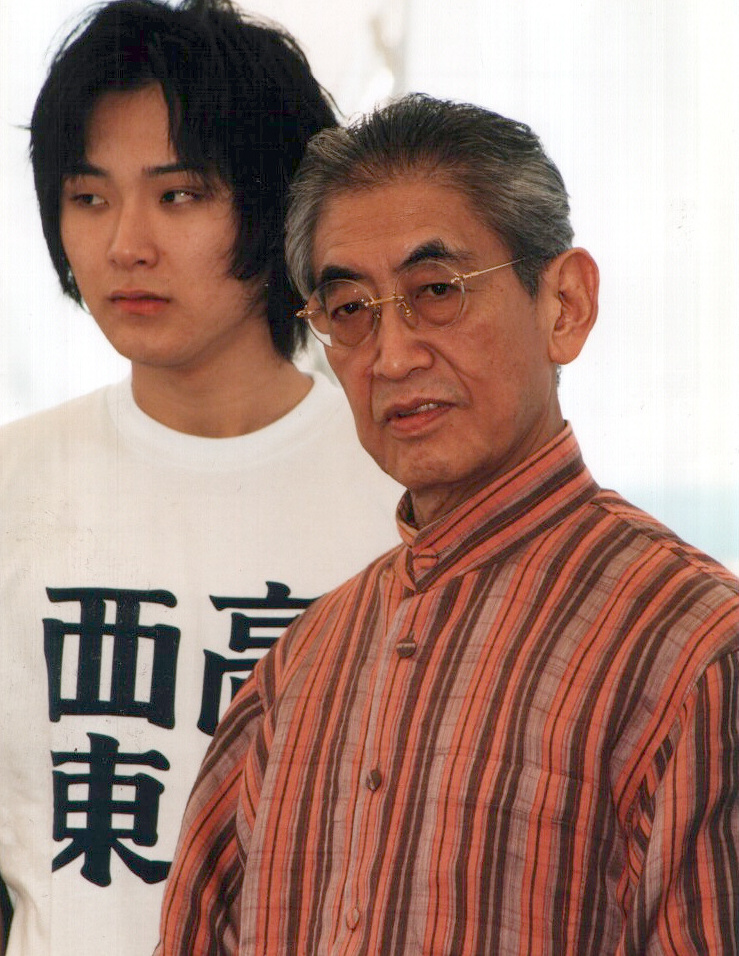
- Wikimedia Commons, "File:Nagisa Oshima and Ryuhei Matsuda at Cannes in 2000.jpg" - source page for the photographic image used in this article.