House of Wax is remembered as a Vincent Price horror landmark, but its real industrial story starts in the projection booth. Warner Bros. did not merely release a wax-museum thriller in 1953. It sold a full theatrical apparatus: polarized glasses, dual-strip stereoscopic projection, color horror spectacle, WarnerPhonic sound, premium presentation, and an audience trained to expect that the movie would enter the room with them.[1][2]
That is why the film is more useful as a technology report than as a simple gimmick anecdote. The famous paddleball gag matters, and so do the melting wax heads, but the deeper lesson is operational. House of Wax turned 3-D from a novelty headline into a chain of dependencies. The image had to be photographed for depth, printed in paired left-eye and right-eye elements, projected in synchronization, viewed through glasses, supported by sound that made the auditorium feel wider, and booked into theaters willing to absorb extra cost and complexity.[1][2][4]
The sell was immersion, but the cost was coordination
The early-1950s background is familiar: television had made the ordinary night at the movies feel less inevitable, and studios were searching for reasons the theater still had to be a destination.[6] 3-D arrived as one answer, but it was never only an image format. It was a promise that the theater could do something the living room could not. AFI's production history shows how intensely the presentation was managed, down to the distribution of polarized viewers and debates over whether higher admission prices were scaring away teenagers.[1]
The operational pressure was real. The Library of Congress essay on the film explains that House of Wax used the same broad projection system as Bwana Devil: two synchronized film elements, one for each eye, projected through polarizing filters. That made the standard short reel-change rhythm impossible because both projectors were already occupied. The practical workaround was longer 6,000-foot reels plus an intermission between them.[2]
That detail changes the way the movie should be remembered. The "third dimension" was not a magic property stored inside a film can. It was a live alignment problem. If the pair of prints drifted, if the filters misbehaved, if the house light or screen brightness was wrong, if glasses were scratched or uncomfortable, the technology could punish the viewer instead of exciting them.[5][6] The horror effect was therefore dependent on theater labor. A good House of Wax screening was also a successful booth performance.
WarnerPhonic was not a side feature
The most under-discussed part of House of Wax is sound. The Library of Congress account argues that the film was the first time most U.S. audiences heard stereophonic sound reproduced, even though earlier systems such as Disney's Fantasound and Cinerama had narrower or select-run exposure.[2] The film used WarnerPhonic sound, with three magnetic channels on a separate piece of film synchronized to the two image strips, plus optical backup and effects tracks on the picture prints.[2]
In other words, the 3-D image was paired with a spatial audio argument. Warner did not only want bodies and objects to push toward the viewer. It wanted sound to help the auditorium feel activated. AFI notes that contemporary reviewers often found the plot merely serviceable, while praising the 3-D photography and stereophonic sound; trade coverage even treated WarnerPhonic as the more consequential technical achievement.[1]
That split response is revealing. The film's story is a sturdy revenge-and-revelation machine, built around Professor Jarrod's ruined art, rebuilt museum, and murderous replacement of wax figures with human bodies. But critics and exhibitors were responding to the event around the story. Was the picture stable? Did the sound surround the room without becoming crude? Did the effect justify the upcharge? Those questions belonged as much to theater economics as to film style.[1][2]
De Toth and Marley made depth legible, not constant
The most durable 3-D films understand that depth is attention management, not just protrusion. The American Cinematographer article from the film's original production moment is especially valuable because it treats House of Wax as a cinematography problem. J. Peverell Marley, who took over the picture's photography after Bert Glennon became ill, had to make stereoscopic space dramatic without letting every foreground object steal the eye.[4]
That is the central craft problem of the format. In a flat frame, lighting, focus, blocking, and cutting can guide the viewer with familiar force. In 3-D, background, middle ground, and foreground compete more aggressively because each plane has spatial weight. Marley described the main challenge as dramatic rather than mechanical: the viewer's eye must be corralled toward the important part of the scene.[4]
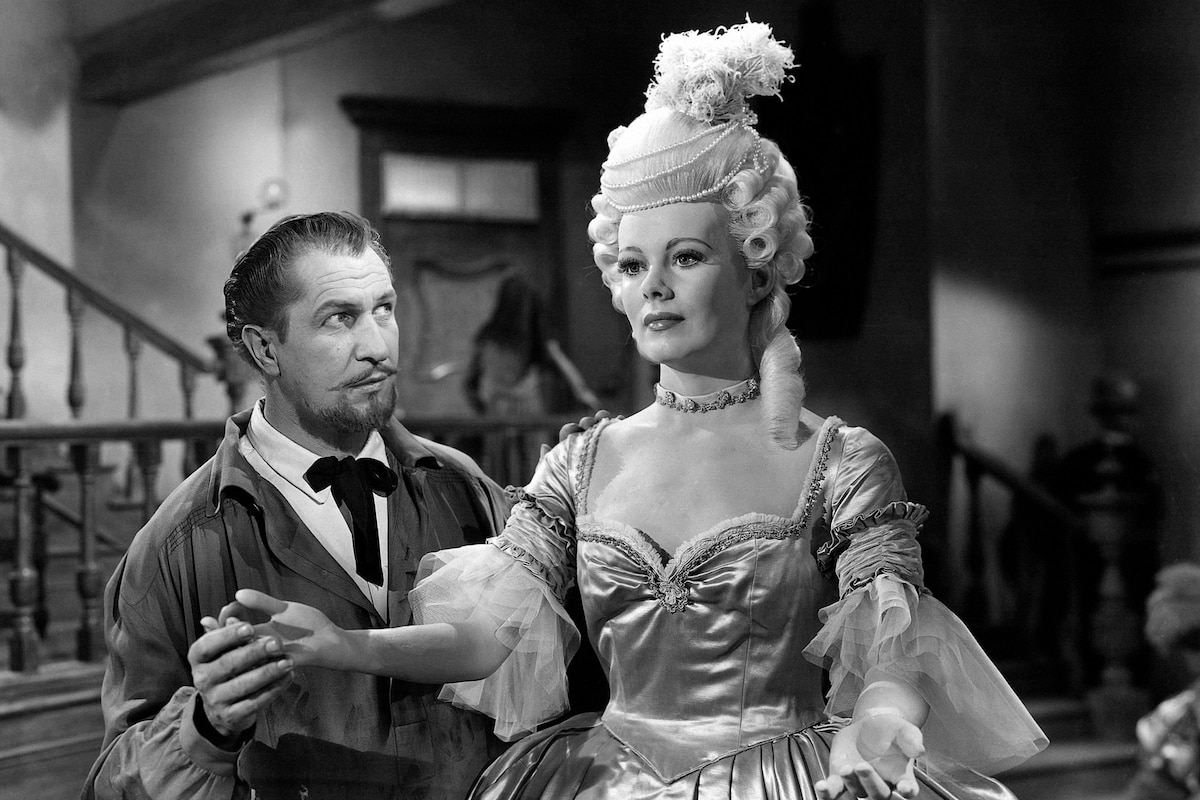
The wax museum was unusually suited to that problem. Figures, display cases, stairways, corridors, props, and costumed bodies could be arranged as planes of attention. Horror also gave the format permission to alternate between stable depth and deliberate assault. The paddleball barker exists to prove the advertised thrill. The museum fire and melting figures make the depth more grotesque because wax already imitates life. Film Comment's 3-D retrospective makes the point sharply: the burning-wax sequence depends on the uncannily lifelike quality of faces and loses some of its chill in 2-D.[5]
The result is not subtle in the ordinary prestige sense. It is disciplined in a showman's sense. The movie knows that some viewers came to be attacked by the image. It gives them that. But it also builds a museum world where sculpture, corpses, makeup, color, fire, and depth all belong to the same problem: how to make a body look present enough that artifice becomes frightening.
The movie succeeded before the system could scale
The box-office story is both impressive and fragile. AFI records that House of Wax became a major hit, ran unusually long at New York's Paramount Theatre, and helped exhibitors justify installing special stereophonic and 3-D equipment. The same entry notes the bottleneck: by June 1953 the film had nearly exhausted the supply of properly equipped theaters.[1]
That is the whole technology cycle in miniature. A new format can produce demand faster than the exhibition system can absorb it. The Library of Congress essay says the film helped establish 3-D as a commercial venture for studios in the early 1950s, while also noting the quick fizzle of the format and the relatively small number of domestic 3-D features made between 1952 and 1955.[2] Keith Johnston's study of British 3-D exhibition reaches a similar structural conclusion from another market: 1950s 3-D has often been treated as a brief, costly cul-de-sac, but the more useful history is the concrete exhibition problem of upgrades, glasses, pricing, and operator commitment.[6]
House of Wax therefore sits in a strange position. It proved the appeal of stereoscopic horror and spatial sound. It also exposed how fragile the first 3-D boom was when dependent on special projection, special accessories, trained booth work, and enough compatible venues to keep bookings expanding. The film was a hit, but the system around it was cumbersome.
That fragility should not reduce the movie to a failed technology story. The more interesting view is that House of Wax located a recurring bargain in cinema history. Premium theatrical formats work when the whole chain supports the experience: production, exhibition, marketing, seating, sound, and audience ritual. They fail, or shrink into novelty, when one part of that chain becomes too annoying for the pleasure it delivers.
The lasting lesson is theatrical friction
Seen now, House of Wax is not important because 3-D "won" in 1953. It plainly did not win in the way CinemaScope, standard color, or later surround sound became ordinary. Its importance is that it made the theater itself visible as a machine. Glasses, synchronization, intermission, sound channels, screen depth, premium pricing, and ballyhoo were not outside the movie. They were how the movie arrived.
That is why the film still matters whenever cinema tries to sell a new reason to leave the house. The attraction is never only the format. It is the format plus the operational promise that the viewer will feel the difference without fighting the apparatus. House of Wax got that promise right often enough to become the best-remembered 3-D film of its first commercial boom.[2] It also made the warning visible: immersion is only magical when the booth, the auditorium, and the movie are all in sync.
Sources
- AFI Catalog, "House of Wax" - production history, premiere and ticketing notes, reviewer response to 3-D and WarnerPhonic sound, box-office run, and equipped-theater bottleneck.
- Library of Congress National Film Registry essay, Jack Theakston, "House of Wax" - dual-strip projection, reel-change workaround, WarnerPhonic sound, box-office position, and 1950s 3-D context.
- TCM static still for "House of Wax" - source image used for the article's real photographic film still.
- American Cinematographer, Herb A. Lightman, "Terror in 3-Dimension: House of Wax" - May 1953 cinematography article on J. Peverell Marley, Natural Vision depth staging, attention management, fire effects, and WarnerPhonic technical notes.
- Film Comment, "3-D or Not 3-D?" - retrospective on 1950s 3-D aesthetics, projection problems, audience address, and specific comments on House of Wax depth effects.
- Keith M. Johnston, "Now is the Time (to put on your glasses): 3-D Film Exhibition in Britain, 1951-55," Film History 23, no. 1, 2011 - exhibition-history context for 3-D costs, glasses, upgrades, and exhibitor commitment.