The Hong Kong New Wave is easiest to misread when it is treated as a neat art-house rebellion against popular cinema. It was more unruly than that. The movement did not simply reject genre. It pushed genre outdoors, crowded it with local politics, sharpened its editing, and made familiar forms feel exposed to the weather of a fast-changing city. Crime films, melodramas, ghost stories, martial-arts fantasies, youth pictures, and social dramas all became ways to register pressure: colonial modernity, housing density, migration, television training, export markets, and anxiety over what Hong Kong could be before and after 1997.[1][4]
That is why the movement still feels contemporary. Many new waves define themselves by restraint or by one shared visual grammar. Hong Kong's did nearly the opposite. BFI's survey of Chinese cinema characterizes the New Wave through Ann Hui's tough-minded social realism and Tsui Hark's wildly inventive genre revisionism, with both challenging a predictable, studio-bound commercial industry through local specificity, boundary-pushing content, and stylization.[1] The useful word there is not "art." It is "local." These films made Hong Kong's rooms, streets, stairwells, neon, ports, apartments, television habits, and public moods harder to treat as generic backdrop.
A movement trained by television, not by purity
One reason Hong Kong New Wave films move so quickly between documentary edge and genre pleasure is that many of the filmmakers were shaped by television, overseas study, or both. Botang Zhuo's study of the movement, catalogued by the Internet Archive, frames it as historically, economically, and culturally significant, with attention to narrative, mise-en-scene, director education, and recurring tensions between East and West, rich and poor, and Hong Kong identity.[4] That background helps explain why the New Wave did not behave like a single manifesto. It was less a doctrine than a change in working temperature.
Television mattered because it trained filmmakers to work with speed, topicality, and public address. It also gave directors a practical relationship to the city. Instead of inheriting only soundstage habits, they learned how to make images out of actual social surfaces: buses, public estates, back alleys, news rhythms, waterfronts, shops, and schoolrooms. The result was not realism in a narrow, gray sense. It was a new permission to let commercial stories touch the city directly.
That permission altered genre. A thriller could carry social unease. A melodrama could become a map of class and migration. A fantasy could absorb industrial ambition and historical mythology. A youth film could use pop energy while hinting at an unstable future. Hong Kong cinema had long been commercially agile, but the New Wave made agility itself expressive. The films could turn on a dime because the place they came from was also turning.
Ann Hui made social realism cinematic, not dutiful
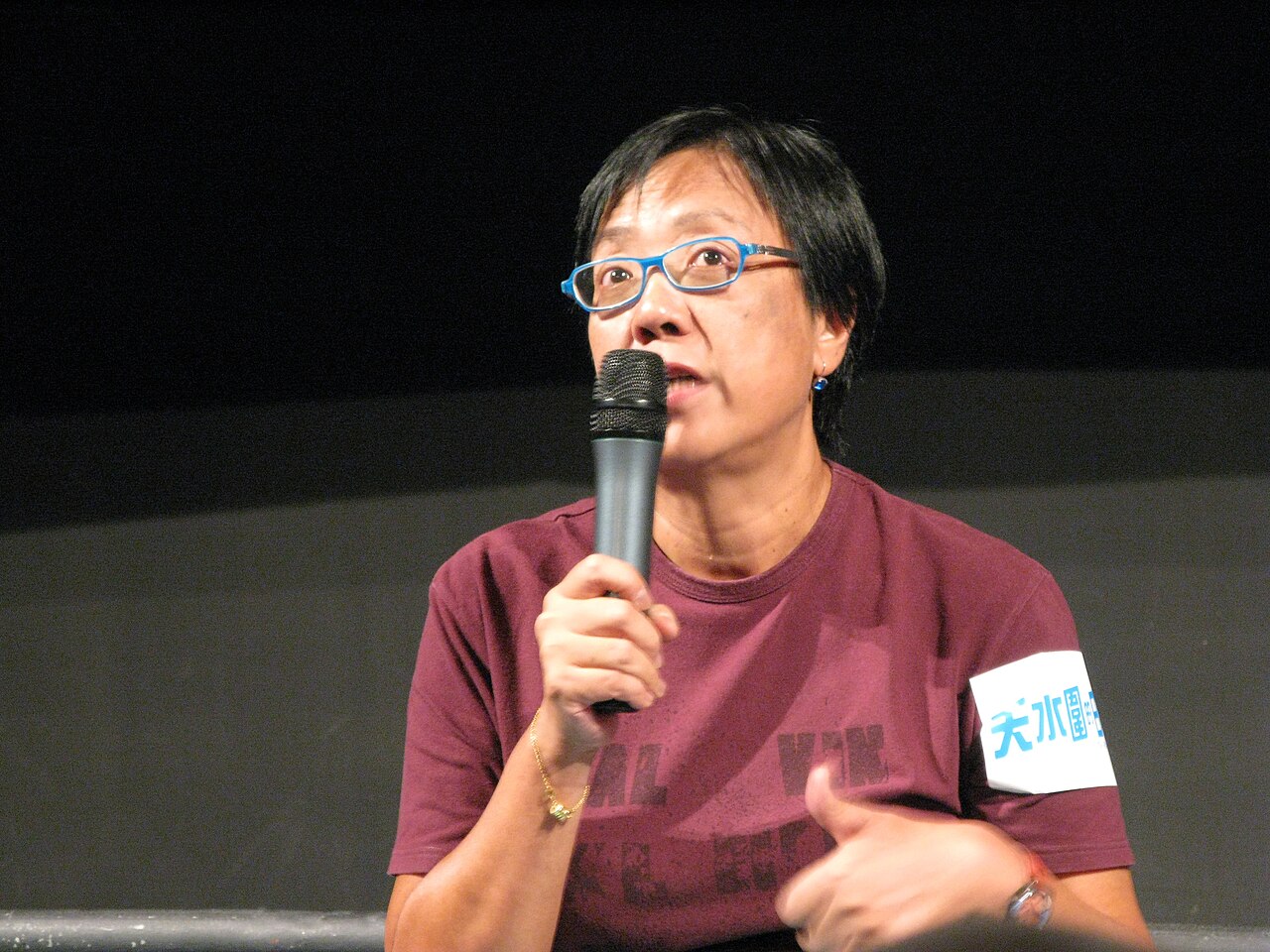
Ann Hui is central because her work shows that the movement's realism was not a retreat from style. BFI describes Hui as a prominent member of the Hong Kong New Wave whose films often explore familial strife, national identity, social issues, and cultural displacement, including her Vietnam trilogy: the television work Boy from Vietnam, The Story of Woo Viet, and Boat People.[2] That grouping is important because it shows Hui's cinema thinking across formats and borders rather than settling into a local-only frame.
Boat People became one of the movement's defining works because it turns witnessing into a moral trap. Criterion's film page calls it one of the major Hong Kong New Wave films and describes its story of a Japanese photojournalist invited to document postwar Vietnamese society before he discovers poverty and brutality beneath the official surface.[5] The premise is almost a thesis for Hui's cinema: looking is never neutral, and official images rarely survive contact with lived reality.
Hui's contribution to the New Wave was not simply that she chose serious subjects. It was that she made social attention dramatic. Family, displacement, aging, exile, and neighborhood life are not treated as worthy topics placed inside conventional scenes. They become the pressure that shapes how scenes move. A street or room in Hui can feel ordinary until the arrangement of people inside it reveals a whole social order. That is why her humanism is tougher than sentiment. It asks who gets seen, who gets managed, who gets displaced, and who is asked to keep living inside the aftermath.
Tsui Hark and Patrick Tam kept genre unstable
The other side of the movement is not the opposite of Hui. It is the same local pressure forced through more volatile forms. BFI places Tsui Hark at the movement's genre-revisionist pole, later noting how he carried wuxia into a lavish new era and became a leading figure in Hong Kong's 1980s and 1990s genre transformations.[1][2] Tsui matters here because he made inherited forms feel newly combustible. The point was not only to modernize swordplay, fantasy, or action. It was to make old forms collide with new technical ambition, new speed, and new cultural restlessness.
Patrick Tam clarifies the movement's tonal range. Metrograph's profile calls him an icon of the Hong Kong New Wave and argues that his films, like those of Tsui Hark and Ann Hui, boldly blend popular and more inscrutable elements.[3] That blend is the movement's real signature. A Tam film can move from genre legibility into abstraction, from romantic longing into violence, from pop surfaces into estrangement. The audience recognizes the frame, then the frame starts to wobble.
This is where Hong Kong New Wave differs from a simple "realism versus commercialism" story. The movement's force lies in refusing that split. Hui's social drama is formally alert; Tsui's spectacle is historically charged; Tam's genre play is emotionally unstable. Together they show a cinema that understood popular forms as working machines. You could open them, rewire them, speed them up, and let the city's contradictions run through the circuitry.
The Second Wave turned city speed into style
The late-1980s and 1990s Second Wave made the movement's afterlife more globally visible. BFI describes that second phase as led by filmmakers such as Wong Kar-wai and Stanley Kwan, whose lush, stylized films spoke to contemporary urban anxiety, velocity, and instability.[1] That description is useful because it shows continuity rather than rupture. The Second Wave did not abandon the earlier movement's local charge. It transformed it into a more sensuous grammar of time, memory, desire, and drift.
Wong Kar-wai's international reputation can make this lineage look inevitable now, but it was built on the same basic premise: Hong Kong space is never neutral. A snack bar, hallway, police beat, apartment stair, hotel room, or night street can become an emotional instrument. The Second Wave's difference is that the instrument often plays memory rather than direct social report. The city becomes less a location than a tempo. Characters do not merely live in Hong Kong; they are edited by its speed.
Stanley Kwan's place in the lineage matters for a related reason. The New Wave and Second Wave repeatedly returned to performance, gender, history, and public image. They asked how private lives get staged by family, industry, colonial memory, and urban spectatorship. That question runs from Hui's social attention through Tam's stylized longing into the later films' fascination with glamour, melancholy, and self-invention.
Why the movement still changes how genre reads
The durable lesson of Hong Kong New Wave is that genre becomes more powerful when it is made answerable to place. A crime film does not lose energy when it notices housing, labor, migration, or public fear. A melodrama does not become less emotional when it understands class and history. A fantasy does not become less spectacular when it carries the residue of cultural transition. The movement made genre porous without making it vague.
That porosity explains the movement's reach. BFI's broader Chinese-cinema survey links Hong Kong's New Wave and Second Wave to wider regional renaissances in Mainland China and Taiwan, while noting that these movements were different in method and tone.[1] The Hong Kong case remains distinct because it kept negotiating with a highly commercial industry. Instead of leaving the marketplace behind, it smuggled restlessness into the marketplace's own forms.
This is why the New Wave still matters to contemporary viewers who may meet it through very different doors: an Ann Hui social drama, a Tsui Hark fantasy, a Patrick Tam restoration, a John Woo crime film, a Wong Kar-wai romance, or a Stanley Kwan melodrama. The movement is not a shelf label for one look. It is a way of understanding what happens when filmmakers make genre absorb a city's contradictions at full speed.
Hong Kong New Wave made cinema feel less like a sealed product and more like a pressure system. Its films can be elegant, jagged, sentimental, furious, funny, excessive, documentary-minded, or operatic. What joins them is not surface sameness. It is the conviction that popular cinema can carry local knowledge without slowing down, and that a genre film can become historical evidence when the street, the room, and the crowd are allowed to push back.
Sources
- Noah Cowan, "A Century of Chinese Cinema: an introduction," BFI, 2014.
- John Berra, "10 essential modern directors from mainland China, Hong Kong and Taiwan," BFI, 2014.
- Samm Deighan, "Patrick Tam," Metrograph Journal.
- Botang Zhuo, Hong Kong New Wave Cinema: 1978-2000, Internet Archive catalog page.
- The Criterion Channel, Boat People film page.
- Wikimedia Commons, "File:Director Ann Hui @ Broadway Cinematheque.JPG," photograph by Rmlowe, 2008.