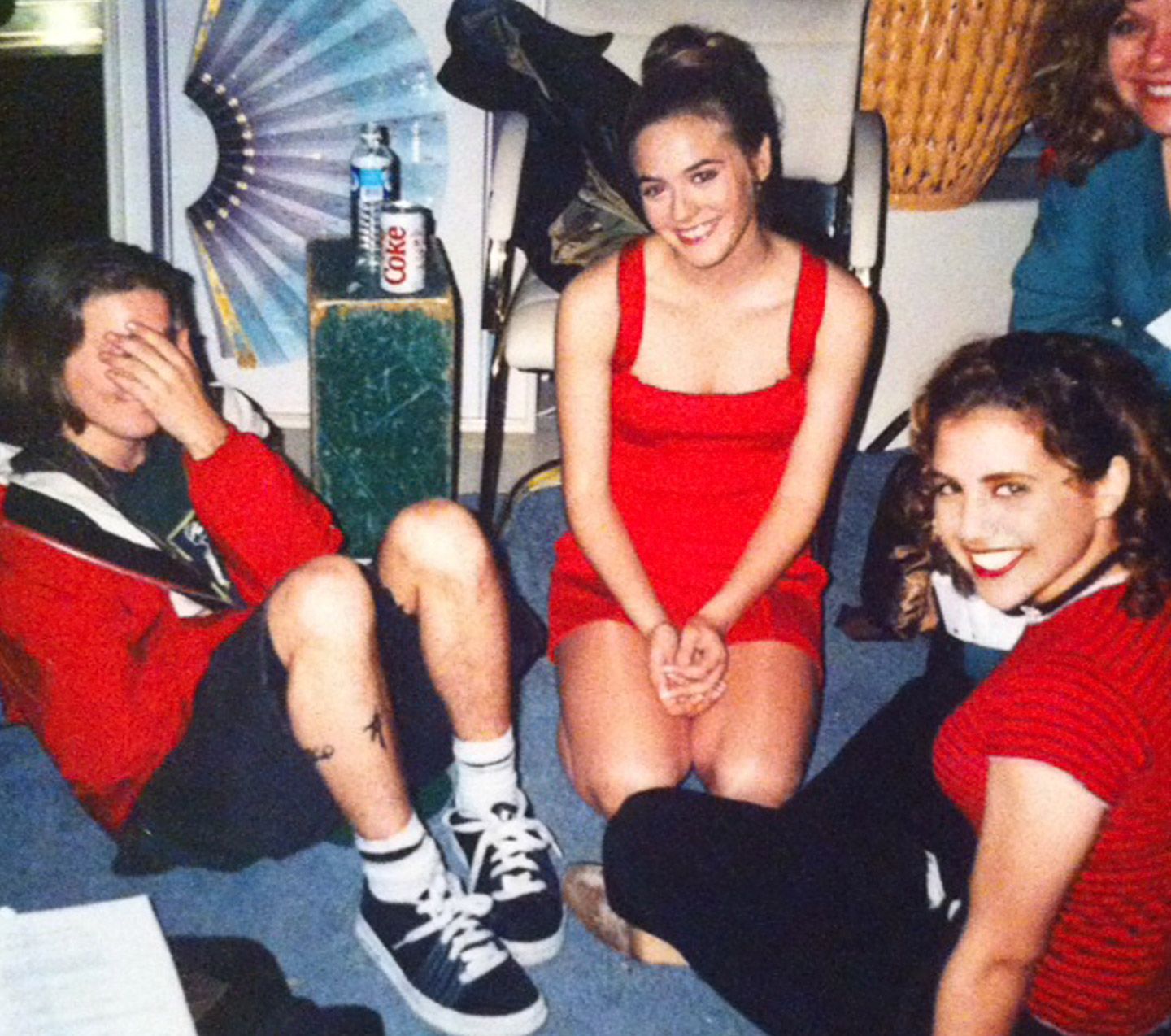
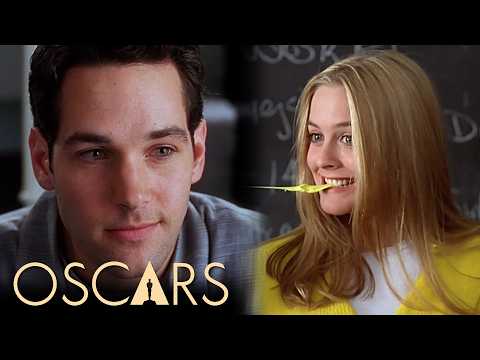
A film's first edit can happen before a camera rolls. The screenplay offers roles, but those roles are still open spaces: ages, voices, rhythms, bodies, and relationships waiting to acquire form. Casting begins to close those spaces. One actor makes a joke drier; another makes a transformation credible; two individually persuasive actors may produce nothing together. Long before an editor joins shots, a casting team is deciding which human possibilities the film will keep.
That is what makes the Academy's interview with casting director Marcia Ross worth more than its irresistible alternate-cast anecdotes. Ross sits beside the production binders for Clueless (1995) and 10 Things I Hate About You (1999), turning paperwork usually hidden from viewers into evidence of creative process.[1][3] The video arrived as the Academy began presenting an award for Achievement in Casting, which its rules define as collaboration with directors and producers in the creative consideration and selection of a film's acting ensemble.[2] The crucial words are creative and ensemble. Casting is neither clerical booking nor a contest to identify the best actor in isolation.
Ross's binders make a sharper argument. They preserve lists, readings, callbacks, availability checks, screen tests, and decisions that were later made to look inevitable. The finished movie conceals the discarded versions that enabled it. This annotated viewing restores that branching process—and shows why casting is a first edit, not a final verdict.
0:48–2:01 — the binder is an editing machine
Around 0:48, Ross opens the Clueless notebook and names what it contains: lists, availabilities, pre-reads, director sessions—everything required to get the film cast. Her metaphor is a funnel. A large field of actors narrows through successive encounters until one person remains for a role.[1] Yet the visible pages complicate that tidy shape. Names are highlighted, circled, revisited, or ruled out because someone is unavailable or uninterested. The funnel is not a ranking generated by one perfect audition. It is a series of judgments made under changing artistic and practical conditions.
This matters because availability is often treated as an embarrassing contamination of art. In the binder, it is simply one of the materials. A performance can be exciting and still be impossible to schedule; a director can prefer one actor and discover that another changes the surrounding cast for the better. Every narrowing alters the next comparison. Casting therefore resembles editing at its most creative: not selecting the abstract “best” fragment, but finding the fragment that gives adjacent choices their strongest meaning.
The Academy's preservation of Ross's Clueless and 10 Things binders makes that process unusually tangible.[3] A cast list records the answer. A production binder records the question changing.
2:01–3:22 — an audition can reveal the wrong role and the right film
At about 2:01, Ross recalls struggling to cast Christian in Clueless. Justin Walker originally read for Josh. Ross did not hear a failed Josh; she heard Christian, handed him different sides, and sent him back to read for writer-director Amy Heckerling.[1] The distinction is the heart of casting craft. If an audition only measures obedience to the label on the page, Walker has missed. If it asks what dramatic function this person could unlock, the same reading becomes discovery.
The following story about the small role of Cher's driving examiner extends the point. Ross's lists included celebrated possibilities, but she remembered Ron Orbach from the stage and the role became his.[1] Screen time is not a reliable measure of casting importance. A compact part can control an entire sequence's temperature; the examiner has to be severe enough to puncture Cher's confidence without pulling the comedy into another movie. Casting reads scale as well as talent.
This is what the Academy's formal language of “creative consideration” looks like in practice.[2] The casting director does not merely deliver candidates for yes-or-no approval. She interprets the script across people, redirects a useful performance, and proposes how one role can tune the film around it.
3:23–4:52 — chemistry is an event, not two résumés
The Clueless section then moves from individual fit to relation. Ross remembers Heckerling recognizing Alicia Silverstone in an Aerosmith video and believing she had found Cher. The longer oral history published by Vanity Fair adds another route: casting director Carrie Frazier had also urged Heckerling to see Silverstone in The Crush during an earlier version of the project.[4] These accounts do not cancel each other. They reveal discovery as accumulated attention—an image noticed, a recommendation carried forward, a performer remembered while the production changes hands.
More importantly, Silverstone did not simply arrive as a finished illustration of Cher. Ross says that her distinctive mispronunciations surfaced in readings and were incorporated into the film.[1] Performance wrote back into character. Casting here is not the last step of writing; it is where writing meets a voice capable of changing it.
Paul Rudd's screen test makes the relational dimension explicit. Ross recalls seeing Silverstone in Cher's now-famous skirt and knee socks for the first time and immediately registering the pair's chemistry.[1] “Chemistry” can sound mystical, but a screen test gives it an observable form: who listens, who changes tempo, whether teasing reads as hostility or affection, whether the camera turns two faces into a relationship. The unit being cast is no longer Cher plus Josh. It is the live current between them.
5:00–6:57 — callbacks test change, not just polish
Ross's 10 Things I Hate About You binder offers a useful counterexample to the myth of the flawless first reading. She remembers Heath Ledger's initial audition as unimpressive, then says he returned and became markedly better. Screen tests placed potential pairs together, and his strongest connection was with Julia Stiles.[1] The director, Gil Junger, then accepted a real production cost: Ledger had to return to Australia and would miss rehearsals. The decision weighed growth, relation, and scheduling rather than pretending any one factor could settle the role.
That sequence reveals what a callback can actually measure. It is not merely another chance to deliver the same scene more cleanly. It shows whether an actor absorbs direction, alters an approach, and becomes more legible beside a partner. The improvement between readings may be more predictive than polish at the first meeting.
The studio's concern about an ensemble of emerging actors added another constraint. Ross explains that recognizable performers were placed around the younger leads.[1] This is casting as architecture and risk allocation. Familiarity in one part of the ensemble can create room for discovery elsewhere. The casting director is composing not only characters, but the production's confidence in asking an audience to follow unfamiliar faces.
6:59–9:17 — cast the transformation, not the snapshot
The discussion of The Princess Diaries sharpens the difference between resemblance and dramatic capacity. Ross says Anne Hathaway needed to be credible as both the awkward Mia and the young woman who could inhabit a princess's public role.[1] A still photograph could suggest one end of that arc. The reading had to contain both.
This is easy to miss when people imagine casting as matching a face to a description. Many roles are movements rather than states: withdrawal to trust, innocence to knowledge, disguise to recognition, private self to public performance. The actor must make the distance traversable. Hathaway's comedy mattered, but so did the audience's ability to believe the same body could reorganize itself under attention.
Ross contrasts that search with Julie Andrews, for whom she says there was effectively no list, then returns to comparative testing when discussing Chris Pine opposite Hathaway in the sequel.[1] Some roles begin with a singular conception; others emerge through alternatives. Good casting does not fetishize an open search or a predetermined ideal. It knows which question the role is asking.
9:17–11:03 — the first edit remains provisional
Near the end, Ross describes looking for an actor who could make the multiple versions of Sandy Frink in Romy and Michele's High School Reunion cohere. She also remembers casting Will Ferrell and Chris Kattan in material that was ultimately cut.[1] The juxtaposition supplies an important limit to the “first edit” metaphor. Casting gives the film bodies and relations, but it cannot guarantee that the finished cut will keep every choice. Production keeps revising the design.
Ross closes by describing a less visible kind of continuity: when casting directors believe in an actor, they may keep bringing that person into rooms across multiple projects until the right role connects.[1] A single rejection is therefore not a comprehensive judgment, just as a trimmed scene does not prove its performers were wrongly chosen. Casting operates through institutional memory as much as sudden revelation.
That is also why Clueless makes such a rich case. The Library of Congress added it to the National Film Registry in 2025 and emphasized its supportive friendships, positive attitudes, dialogue, music, and portrait of teenage life.[5] Those qualities are distributed across an ensemble. Cher's confidence only becomes intelligible against Dionne's poise, Tai's volatility, Josh's skepticism, Murray's performance of cool, and the adults' competing forms of authority. The cast does not populate a preexisting world. Its differences create the world.
Ross's video turns “lightning in a bottle” back into labor. The lightning remains—no binder can manufacture chemistry—but lists, callbacks, redirected readings, memory, advocacy, and tests create the conditions in which it can be recognized. Casting is the film's first edit because it removes countless possible versions while arranging the human material that every later department will photograph, dress, light, record, and cut. It is not the final edit because those people will keep surprising the plan.
Sources
- Oscars, “What Really Goes Into Casting? Casting Director Marcia Ross Explains Her Work on 'Clueless' & More,” YouTube video, January 15, 2026.
- Academy of Motion Picture Arts and Sciences, “Rule Nine: Special Rules for the Casting Award,” 98th Academy Awards rules — official definition, eligibility, and evaluation process.
- Academy Press Office, “Academy of Motion Picture Arts and Sciences Announces New Acquisitions to the Academy Collection,” January 13, 2026 — records Ross's donation of the Clueless and 10 Things I Hate About You casting binders.
- Jen Chaney, “An Oral History of Clueless,” Vanity Fair, June 9, 2015 — production and casting recollections; source page for Nicole Bilderback's behind-the-scenes photograph.
- Library of Congress, National Film Registry descriptions, “Clueless (1995)” — official 2025 Registry entry and cultural-context note.