The Turn of the Screw keeps returning because Henry James did not build it around one unrepeatable image. He built it around a set of pressures that can migrate from page to stage, from black-and-white film to chamber opera, and from classroom argument to prestige horror without losing their bite.[1][2][3][4][5] A young governess arrives at Bly. Two children are exquisitely charming and increasingly unreadable. Two dead servants keep reappearing, or seem to. Every new version has to decide how much to show, how much to hide, and whether terror belongs to the ghosts, the house, the children, or the act of interpretation itself.[1][2]
That design is why the novella's afterlife feels unusually durable. Britannica's overview notes both the publication facts and the core ambiguity: the 1898 tale became famous not only as a ghost story, but as a site of recurring debate over the "reality" of the apparitions and James's intentions.[2] The story does not wear out after one solution because it never grants one solution cleanly. Instead it traps each adaptation inside the same demand the original makes of readers: you must decide how much faith to place in a witness whose testimony is vivid, urgent, and never independently settled.[1][2]
The opening already explains the portability. James does not begin at Bly. He begins "round the fire," with listeners passing around a manuscript and agreeing that a haunting involving children sharpens the dread.[1] That frame matters because it turns the whole novella into transmitted testimony. The story is always already an artifact received through another person's hands. Adaptation does not violate that structure. It extends it.
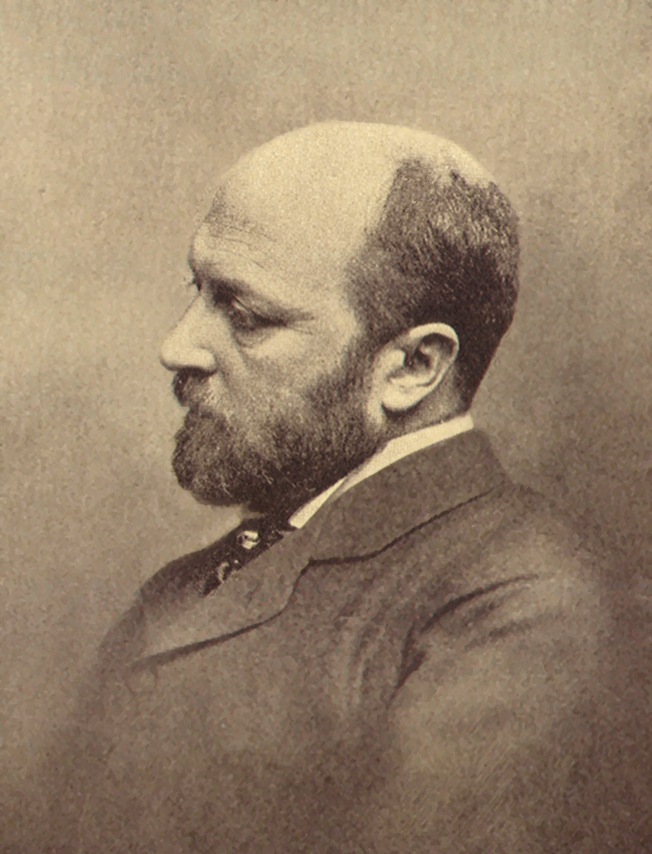
Image context: the cover uses an archival Henry James photograph rather than a manor-house facade or a later film still.[6] This article is about afterlife, but James's control remains the first fact. Every later version inherits not just characters and plot points, but a precision instrument for distributing uncertainty.
1) The frame narrative is already an adaptation engine
One reason The Turn of the Screw moves so easily between media is that its structure begins as retelling. The manuscript is introduced by Douglas at a Christmas gathering, which means the reader never encounters the governess's voice as pure immediacy.[1] It comes prefaced, carried, and vouched for. That built-in distance gives later adapters room to reposition the story without breaking it. A film can stress recollection, an opera can convert the manuscript into a sung prologue, and a stage production can treat the whole event as an act of possession by narrative itself. The original text has already licensed mediation.[1][5]
James reinforces that design by giving the governess a voice that feels both intense and self-conscious. Early in the novella she recalls the opening movement as "a succession of flights and drops," then soon reaches the emphatic claim "I was there!"[1] Those phrases matter because they make witness emotional before it becomes evidentiary. She does not sound neutral, and James does not want neutrality. He wants the reader to feel the attraction and danger of a narrator whose conviction is stronger than the proof available around her.
That is where the afterlife begins. A weak adaptation tries to solve the mystery in advance. A strong one understands that the real material is the strain placed on any medium that must externalize the governess's inward certainty. Once you stage or film the ghosts, you risk fixing them too completely. Once you refuse to stage them, you risk draining the tale of threat. The novella lasts because it keeps forcing that artistic dilemma anew.[1][2]
2) Bly works because the house never settles the evidence
Bly is one of literature's great portable houses because it is less an architectural object than an evidentiary field. James gives enough material for visual memory, but never so much that the place hardens into one canonical look.[1] What persists is the function of the house. It isolates the governess, turns stairways and windows into stages of recognition, and makes ordinary spaces carry too much attention. The result is a setting that later artists can Victorianize, modernize, strip bare, or flood with atmosphere while keeping the same dramatic job in place.[1][3][5]
The children are just as transferable. Miles and Flora are not frightening because they perform constant monstrosity. They are frightening because James makes them available to opposite readings at once: radiant innocence and theatrical concealment, sweetness and collusion, victimhood and unreadable knowledge.[1][2] An adaptation therefore does not need to preserve every period detail around them. It needs to preserve the unstable relation between charm and suspicion. That instability is the novella's true engine.
This is also why the ending keeps reverberating across versions. James closes with one of the harshest final sentences in nineteenth-century ghost fiction: Miles's "little heart, dispossessed, had stopped."[1] The line is physical, intimate, and irrecoverably late. Yet even here the novella withholds a final interpretive settlement. Was the boy destroyed by supernatural pressure, by the governess's zeal, by accumulated terror, by psychic overreading, or by some fusion of all four? Adaptation returns to the story because that last violence never becomes simple.
3) Screen and opera succeeded by changing medium, not pressure
The most durable afterlives of The Turn of the Screw have understood that James's ambiguity is a formal resource, not a problem to be cleaned up. BFI's account of Jack Clayton's The Innocents calls it a masterclass in fear and ambiguity, and Britannica goes further, describing the 1961 film as one of the finest screen adaptations of the novella.[3][4] That judgment makes sense because the film does not merely illustrate plot. It translates James's pressure system into black-and-white image, sound, and performance. Deborah Kerr's governess becomes more visibly fragile and sexually repressed than James's narrator, yet the film keeps the essential uncertainty alive: the camera offers apparitions and still refuses to make interpretation painless.[3][4]
What film adds is the ability to turn space and perception into immediate shock. James on the page can delay through syntax and report; cinema can delay through framing, depth, light, and offscreen sound. The Innocents succeeds because it does not treat visibility as resolution. It lets looking become another way of tightening the screw.[3][4]
Opera, by contrast, survives by making inner compulsion audible. ENO's guide to Benjamin Britten's 1954 chamber opera stresses exactly the elements that made the novella adaptable in the first place: a lonely country house, a young governess, two children, and ghosts whose status remains troublingly unsettled.[5] The opera does not replace ambiguity with certainty; it redistributes it into voice, motif, and recurrence. The manuscript becomes prologue, memory becomes vocal line, and psychological pressure becomes something the audience hears working on the body in real time.[5]
That movement into opera is important because it proves the tale is not medium-bound to prose hesitation. James's story can become sung drama and still preserve its core disturbance. What travels is not simply the ghost plot. What travels is the relation between testimony and proof, innocence and display, care and control.
4) The afterlife lasts because ambiguity here is an instrument
Readers often call The Turn of the Screw "ambiguous" as though ambiguity were only a polite label for indecision. That misses the craft. In James's novella, ambiguity is an instrument for regulating intimacy and fear.[1][2] The reader is held close enough to the governess to feel her urgency, yet never given enough independent ground to stand free of her. That is not vagueness. It is design.
Once seen that way, the tale's afterlife becomes easier to understand. Teachers keep assigning it because disagreement is built into the reading experience.[2] Filmmakers keep returning to it because the line between apparition and projection can be redrawn visually without being erased.[3][4] Opera companies keep reviving it because music can enlarge obsession without dissolving uncertainty.[5] Each medium discovers that the story has already anticipated adaptation by refusing to let its own evidence close.
That is why The Turn of the Screw has remained so alive. It is a ghost story, but it is also a theory of what happens when witness outruns verification. Bly can change century, decor, accent, and performance style. The governess can become more fragile, more severe, more eroticized, or more haunted by class and isolation. Miles and Flora can tilt toward innocence or toward eerie theatrical intelligence. The story still holds because James built no single spectacle that must be copied. He built a machine for making every later artist decide how terror should look when proof never quite arrives.[1][2][3][4][5]
Sources
- Henry James, The Turn of the Screw (Project Gutenberg HTML text).
- Encyclopaedia Britannica, "The Turn of the Screw" (publication context, frame narrative, and critical debate over the ghosts).
- BFI, "The gothic glamour of The Innocents" (institutional essay on Jack Clayton's 1961 adaptation and its ambiguity).
- Encyclopaedia Britannica, "The Innocents" (1961 film overview and adaptation context).
- English National Opera, "The Turn of the Screw" (opera guide covering Britten's adaptation and production framing).
- Wikimedia Commons, "File:HenryJamesPhotograph.jpg" (source page for the archival Henry James portrait used as the lead image).