Jacob's Room can look, at first glance, like a loose coming-of-age novel that happens to be written with unusual delicacy.[1][2] A boy grows up on the Cornish coast, goes to Cambridge, moves through London rooms, travels to Greece, meets women, drifts among friends, and then vanishes into the historical violence waiting behind the page.[1][2] That outline is not false. It is simply too stable for the book Virginia Woolf actually made in 1922. The novel's central formal decision is to deny Jacob Flanders the kind of completed interior center that would let readers say they finally "know" him.[1][2]
That denial is the source of the book's force. Britannica's concise description is right to call the novel experimental and to stress that Jacob is finally left behind as scattered objects in an abandoned room.[2] Woolf does not build toward revelation and then refuse it at the very end. She organizes the whole novel around partial access from the start: glimpses, letters, remembered talk, rooms temporarily occupied and then emptied, and a narrator repeatedly aware that people arrive as impressions before they ever become explanations.[1][2]
The publication context matters because the structure marks a threshold in Woolf's career. Britannica notes that Jacob's Room transformed personal grief over Thoby Stephen's death into a new "spiritual shape," while an Oxford University Press essay points out that the book's October 1922 publication was especially significant because it was the first of Woolf's own novels issued by the Hogarth Press.[3][4] That double fact helps explain the novel's confidence. It is both elegy and breakthrough. Woolf is mourning, but she is also testing how far a novel can go if it stops pretending that a life is best represented by continuous access to a protagonist's mind.
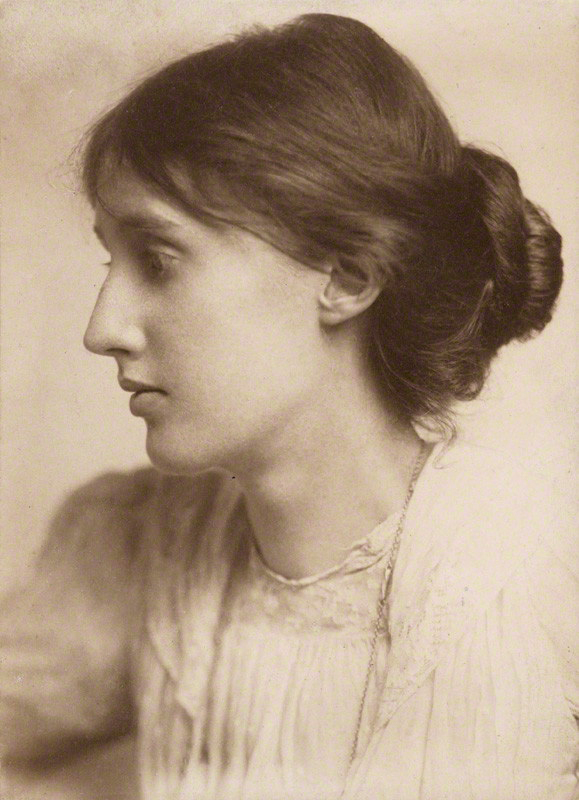
Image context: the cover uses an archival Woolf portrait rather than a later dust jacket or a symbolic empty room. That choice keeps the article close to the maker of the experiment. The novel's title promises possession, but its real method is subtraction: a room, a few objects, and a person becoming harder to hold the longer one looks.[5]
1. The book starts by teaching readers to live with partial knowledge
One reason Jacob's Room feels so modern is that Woolf never lets the reader settle into a secure evidentiary position.[1] Even early on, Jacob is less a fully disclosed person than a set of pressures moving through other people's attention: his mother's grief, schoolmasters' judgments, women's guesses, friends' talk, the social surfaces of Cambridge and London.[1][3] The novel gives him scenes, but it also keeps loosening the claim that scenes add up to possession.
That technique becomes explicit in one of the book's best-known sentences: "It is no use trying to sum people up."[1] Woolf places that sentence not as a slogan pasted on top of the narrative, but as a structural instruction. If summing up fails, then the novel cannot proceed by accumulating character data until Jacob stands complete before us. It has to find another method. What replaces summary is relation: hints, atmospheres, rooms, gestures, interrupted perceptions, the way one person's idea of Jacob does not quite fit another's.[1][2]
This is why the book can feel at once intimate and elusive. Jacob is constantly near the center of the page, yet the center stays porous. Woolf is not withholding a secret dossier that would finally clarify him if only the reader waited long enough. She is showing that a life in society is largely made of angled apprehensions. People are overheard, desired, judged, misremembered, idealized, and lost before they are ever secured in knowledge. The form honors that instability.[1][3]
2. Rooms are not settings in the ordinary sense; they are containers for vanishing
The title itself signals Woolf's deeper structural bet. A conventional title built around a man's name would suggest a portrait. Adding the room shifts attention from character to enclosure, from person to the space that might preserve traces after the person has moved on. Throughout the novel, rooms keep doing this double work.[1][2] They gather books, furniture, letters, and social occasions, but they also register vacancy more sharply than presence.
Woolf's repeated empty-room phrasing is crucial here. Near the end comes the line, "Listless is the air in an empty room," and the sentence lands with such force because the novel has been preparing that sensation all along.[1] A room seems as though it should stabilize identity. Here it does the opposite. It records how quickly personality turns into arrangement: a curtain shifting, flowers moving in a jar, a chair creaking though no one sits there.[1] What remains is not the sovereign self, but the pressure a self once exerted on matter.
That material logic is one reason the book's final antiwar force is so strong. Woolf does not need battlefield spectacle. She can let rooms, objects, and the after-image of use perform the historical damage. Britannica's biography page notes that Woolf feared she had moved very far beyond representation here.[3] She had, and productively so. The room becomes a representational alternative to heroic plot. Instead of dramatizing Jacob as a great singular destiny, the novel lets absence colonize domestic space.
3. Structure replaces plot with a network of observers
The middle movement of Jacob's Room is often described as wandering, but the wandering is designed.[1][2] Woolf substitutes a network structure for the firmer line a Victorian Bildungsroman would supply. Jacob passes through Cambridge, London, and the Mediterranean, yet what the reader receives is not one dominant arc of self-discovery. It is a circulation of impressions. Clara, Florinda, Bonamy, Betty Flanders, and many others carry pieces of the novel's knowledge without ever combining them into mastery.[1][2]
This is where Woolf's experiment differs from mere sketchiness. The book is not unfinished in the careless sense. It is composed out of distributed witness. Jacob exists as a social effect before he exists as a recoverable essence. The reader keeps being moved from one angle to another and learns that these angles are the form. That is why the book can feel both crowded and hollow at once. There are many social contacts, but no final chamber where Jacob's meaning waits intact.
The result is a novel that behaves almost like biography written after the papers have already been scattered. Woolf would later become fascinated by modern forms of life-writing, and you can feel that pressure here already.[3] The letters to Jacob's mother, the talk around his rooms, the broken social afterimages all suggest that a life may be legible only in remnants. A conventional plot would turn those remnants into preparation for climax. Woolf lets them stay fragmentary and makes fragmentation itself the design.
4. War enters as an exposure of the form's hidden truth
Readers sometimes say that war arrives late in Jacob's Room. Historically that is true; structurally it is only half true.[1][2] The novel has been organized from the beginning around loss, interruption, and belated apprehension. World War I does not suddenly impose emptiness on an otherwise complete life. It reveals that incompletion was the book's governing truth from the outset.
That is why the ending is so devastating. Woolf does not give a grand death scene, a patriotic summation, or even much direct narration of military experience.[1][2] She gives us the room and the remains, culminating in the cry "Jacob! Jacob!" beside the ordinary fact of his shoes.[1] The emotional violence comes from scale. A life that has resisted summary is not finally monumentalized by the war; it is reduced again to objects, names, and the ache of no answer.
This is also why calling the novel simply antiwar is accurate but insufficient.[2][3] The antiwar feeling does not come only from political opinion added onto the plot. It comes from structure. Woolf has spent the entire novel training readers to notice how little of another person can be fully held, and then history ratifies that fragility with brutal finality. The war does not give the book its subject. It exposes the cost of the subject the book already had: the irrecoverability of a life once time and distance have done their work.
5. Why the architecture still matters
Jacob's Room remains bracing because it asks a question that fiction still struggles with: what if a person is most truthfully represented not by maximum access, but by patterned insufficiency?[1][2][3] Woolf answers by turning absence into architecture. Rooms, fragments, talk, and objects do not fail to become character; they become the medium through which character is available at all.
That is the achievement of the book's form-and-structure design. Woolf refuses the false comfort that more pages of psychology would deliver more truth. Instead she builds a novel in which every enclosure leaks, every witness is partial, and every effort to sum up a life arrives late.[1][3] The title ends up sounding almost ironic. Jacob never wholly occupies "his" room. The room survives as the form in which his ungraspability can still be felt.
Read this way, Jacob's Room is not a rehearsal for the later masterpieces so much as a masterpiece of transition in its own right.[2][3][4] It finds a structure equal to grief without turning grief into sentimental monument, and it finds an antiwar language without relying on battlefield display. Its emptiness is not decorative modernist haze. It is one of Woolf's clearest formal arguments: a life can vanish, and the novel can still tell the truth by arranging what the vanishing leaves behind.
Sources
- Virginia Woolf, Jacob's Room (Project Gutenberg HTML text).
- Encyclopaedia Britannica, "Jacob's Room" (overview of the 1922 novel's experimental structure and ending).
- Encyclopaedia Britannica, "Virginia Woolf" (biographical context on Woolf's nonlinear narrative methods and the novel's relation to grief over Thoby Stephen).
- Emily Tobin, "Virginia Woolf: author, publisher, feminist." OUPblog, Oxford University Press (noting Jacob's Room as the first of Woolf's own novels published by the Hogarth Press).
- Wikimedia Commons, "File:Woolf by Beresford 4.jpg" (source page for the lead photograph).