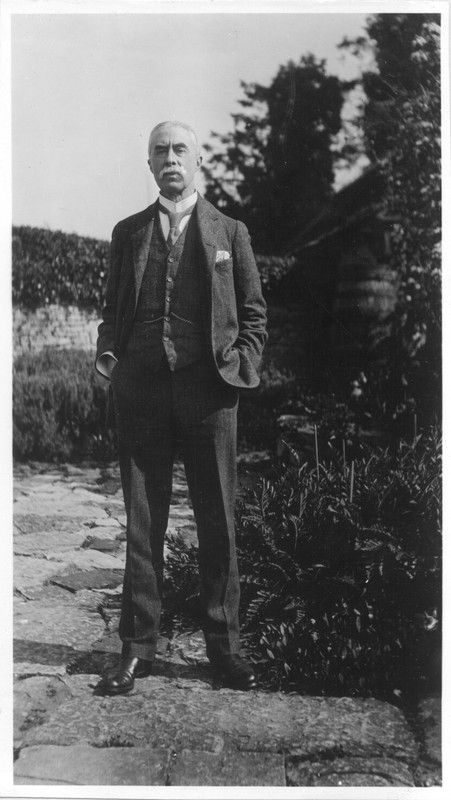
A friend has had enough of the poetry. Terence eats well, drinks well, and still produces verses that make everyone miserable. Surely a man with that appetite could supply something fit for dancing. The opening complaint in A. E. Housman's “Terence, this is stupid stuff” sounds like friendly heckling, but its sharpest accusation concerns friendship itself: what sort of companion makes his companions feel worse?[1]
The reply eventually offers a king who survives poison. Before that grand demonstration, however, it makes a smaller promise: “I will friend you, if I may.” The qualification matters. A poem might prepare someone for suffering; it cannot guarantee the result. Housman's most affecting defense of difficult reading comes in the moment when confidence gives way to an offer of help.[1]
This is poem LXII, near the end of A Shropshire Lad, the collection Housman published at his own expense in 1896. Trinity College's Wren Library holds an autograph copy he gave it in 1926.[1][2] The position makes the quarrel feel belated in a useful way. Readers have already spent almost an entire book among loss, doomed youth, and failed love. The imagined listener finally voices the objection that may have been gathering in their own minds.
Housman gives that objection energy. The first stanza rattles through rhyming couplets; its accusations are comic, physical, easy to repeat. The listener complains of a stomach upset, then turns a dead cow into a ridiculous exhibit against melancholy verse. Mourning has apparently become contagious enough to kill the audience. The exaggeration makes the speaker entertaining company, even while he asks for entertainment.[1]
That creates a delightful difficulty for Terence. His critic is already using verse to make misery amusing. Housman lets the complaint perform the very mixture the poem will defend: dark material carried by pleasurable rhythm. We need not agree with the listener to enjoy his arrival. The poem makes room for resistance before it asks for assent.
Terence's answer keeps the party going. If immediate cheer is the object, he points toward beer, then compresses literary history into “malt does more than Milton can.” The joke borrows the declared ambition of Paradise Lost: in Book I, lines 25–26, Milton undertakes to vindicate divine providence and God's dealings with humanity.[1][3] Terence gives that enormous task to the brewery. A drink can briefly make the world seem acceptable without explaining anything about it.
The speed of the substitution is part of its wit. Theology requires an argument; beer supplies a sensation. Putting them into a competition exposes an ambiguity in what we ask consolation to do. Do we want reasons for accepting our circumstances, or simply a period in which acceptance feels possible? Terence's joke catches both desires in the same glass.
He also admits to having drunk from it. In the second stanza's account of Ludlow fair, the voice moves into personal embarrassment: missing neckwear, beer carried home inside the drinker, a contented collapse into mud. Morning restores both the world and the self. “I was I” is the wonderfully unhelpful discovery.[1] No fresh identity has arrived with the daylight. Even the wet clothes remain to be dealt with.
The admission changes the temperature of the argument. Terence has tried the easy remedy and enjoyed it. His authority comes partly from having occupied the position he now questions. David Sundstrand's critical account emphasizes this movement into shared experience and confidence.[4] We are more likely to listen because the speaker has supplied evidence against his own dignity.
Then the third stanza turns toward preparation. Its claim is severe: trouble is dependable enough that one should practice meeting it. But the poem does something stranger than simply exchange alcohol for moral instruction. Terence describes his verse as another bitter brew, made through painful labor and offered to someone who may later occupy his emotional position.[1] The drinks resemble each other at the point of taking them in; their proposed value unfolds on different schedules.
Beer promises relief now. The verse asks to be kept for a future that the reader cannot yet fully imagine. That delay gives the offer its tenderness. A poem read in safety may become legible again under pressure, when a once-remote feeling acquires a familiar shape. This is a possibility the metaphor opens, rather than evidence that reading reliably makes anyone resilient.
Here the earlier accusation returns transformed. The listener has treated friendship as a duty to preserve the group's good mood. Terence answers by making a verb out of being a friend. His proposed service extends beyond the present gathering, into a time when companionship may be harder to find. The conditional ending of his promise leaves the recipient's experience open. He can offer words; he cannot determine what they will do.
The final stanza is much more triumphant. In Terence's tale, Mithridates gradually accustoms himself to poisons and then confounds those who try to kill him. The poisoners' alarm becomes a comic spectacle.[1] Taken as a model for reading, the story imagines manageable encounters with bitterness preparing someone for a larger encounter. It gives the defense a memorable finish, with the sufferer still standing.
Yet a fable's neat result is stronger than the promise made just before it. Human distress does not arrive in standardized doses, and a poem cannot arrange our future trials. Terence even marks the king's story as something passed along to him. We can enjoy its victorious rhythm while hearing the earlier qualification still at work. The speaker's willingness to help persuades more quietly than his example of invulnerability.
The collection's next and final poem, LXIII, returns to an image of poems offered and initially ignored, then left for future readers to find.[1] It makes an apt neighbor for this argument. The writer does not control the moment of recognition. Someone may come upon the work later, in circumstances the writer cannot see. Housman's bitter verse leaves that meeting possible: a voice kept available for the day it is needed.
Sources
- A. E. Housman, A Shropshire Lad, poems LXII and LXIII; 1919 edition with an introduction by William Stanley Braithwaite, digitized by Project Gutenberg. Primary text for the stanza readings and the collection's closing sequence.
- Trinity College Library, Cambridge, “Photograph of the Month: A. E. Housman,” April 2, 2016. Source of the archival portrait, shelfmark F.A I.135, photograph 3, and the publication and manuscript-gift context.
- John Milton, Paradise Lost, Book I, lines 25–26, The John Milton Reading Room, Dartmouth College. Primary text behind Housman's joke about the consolations of malt and Milton.
- David Sundstrand, “Terence, This Is Stupid Stuff by A. E. Housman,” EBSCO Research Starters, 2022. Critical discussion of the conversational form and Terence's admission of his own drunkenness.