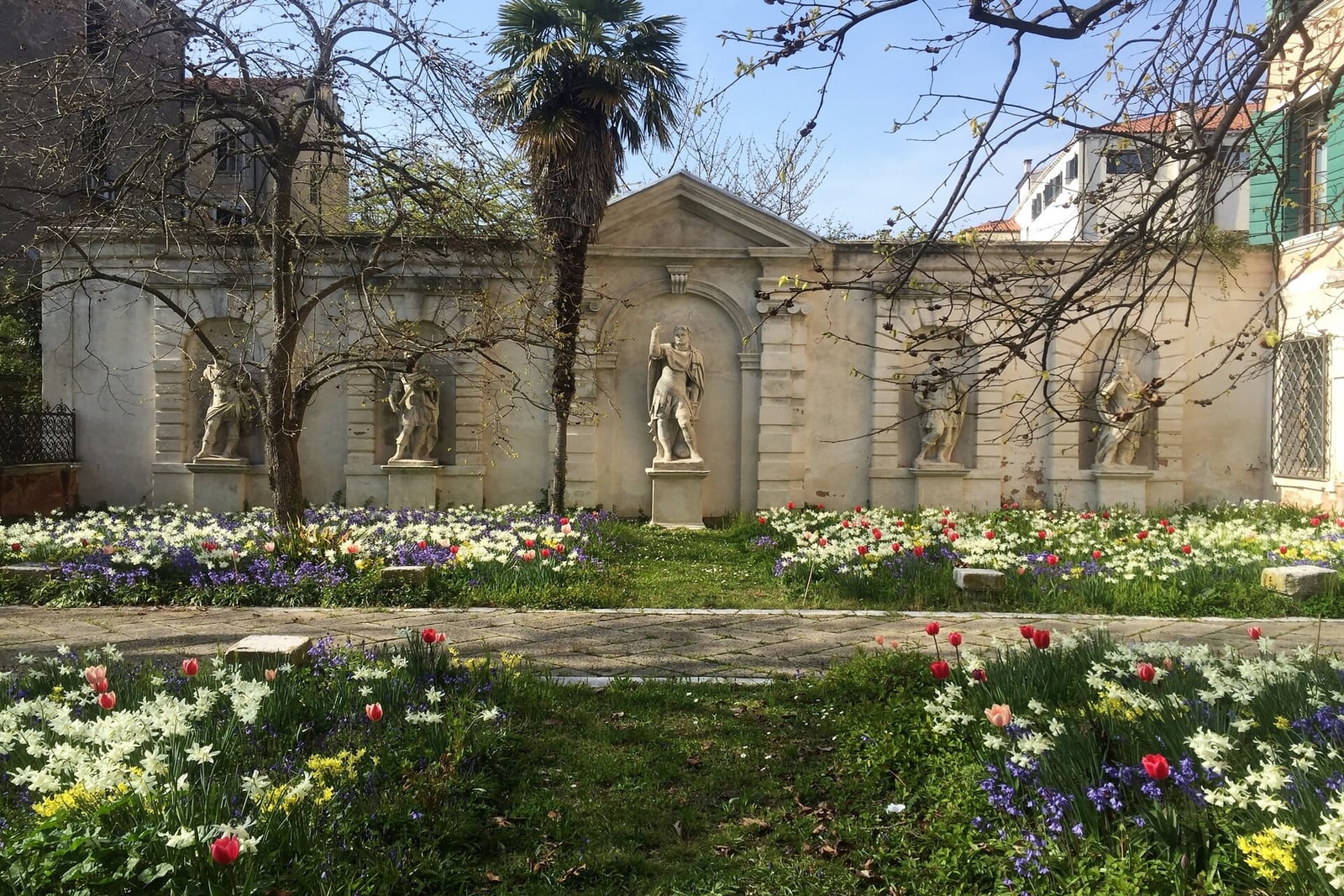
A man rents rooms in a Venetian palace and promises to fill its neglected garden with flowers. The offer sounds almost extravagantly considerate. He will pay for the planting; the two women who live there will receive the bouquets. But the flowers have an assignment. Their admirer wants private papers belonging to the dead poet Jeffrey Aspern, and he expects beauty to get him past a locked door.[1]
In Henry James's The Aspern Papers, objects keep changing their terms. Flowers become an advance payment for intimacy. A miniature portrait passes from keepsake to merchandise to gift. Letters that the narrator regards as a literary inheritance become, in someone else's hands, material that can be destroyed. Following these movements reveals the story's particular cruelty: the collector can imagine almost every exchange except one in which another person decides what something is worth.
This essay discusses the ending and follows the 1888 book text, in which Juliana Bordereau's niece is named Tita. The novella first appeared in three installments of The Atlantic Monthly, from March to May 1888, before its book publication that year.[1][2]
Flowers that expect an answer
The garden begins as an alibi. In chapter II, the narrator presents himself as a lodger whose passion for flowers explains his interest in the house. By chapter IV, he has hired a gardener, although he privately prefers the plot's existing weeds and disorder. Cultivation is work he undertakes to make his invented identity credible.[1]
Then the vocabulary gives him away. He plans to “batter the old women with lilies” and “bombard their citadel with roses.” The flowers retain their delicacy while his verbs turn them into ammunition. James lets the narrator enjoy the joke without quite hearing its accusation. His supposedly gracious offering imagines the recipients as defenders whose resistance must eventually give way.[1]
Even the origin of the bouquets matters. Impatient with the gardener, he considers buying flowers elsewhere, then worries that the women might see through their shutters that the blooms have not been grown on the premises. The fraud needs real horticulture. This is an excellent little trap in James's construction: the narrator's false purpose obliges him to perform genuine care for a garden.[1]
That garden also gives the fiction a specific Venetian texture. Garden Route Italia associates The Aspern Papers with Palazzo Soranzo-Cappello, whose grounds connect a court, garden, and orchard. The photograph shows the surviving place, not a reconstruction of the fictional household. Its greenery helps make the narrator's pretext imaginable: in this setting, a garden can be something worth approaching a stranger's door to obtain.[3]
The flowers eventually exceed their employer's instructions. After Juliana dies, the narrator returns to find Tita gathering them. She stands with her hands full, her eyes reddened from crying, and welcomes him. The scene brings together bereavement, pleasure, and an expectation of company. Reading it beside the earlier floral bombardment, we can see the gap: he has cultivated access; she has experienced attention.[1]
A face with a price
In chapter VII, Juliana produces a small oval portrait of Aspern and asks what a collector might pay. The narrator recognizes the face immediately but pretends not to. His hand trembles; he hopes she will miss it. For someone who has built his approach around other people's feelings, he is suddenly anxious about the evidence supplied by his own body.[1]
Juliana says Aspern gave her the picture. This object therefore holds a relationship before it holds a price. Offering it for sale allows her to decide how, and on what terms, that private past will enter his possession. She names a thousand pounds. Whether she is testing him, enjoying his discomfort, or seeking money cannot be settled simply by accepting his account. What is visible is that she controls the presentation and he cannot keep his desire entirely hidden.[1]
After her death, Tita offers him the same miniature. The narrator finds this harder to interpret than a demand for money. He looks at Aspern's face partly to avoid looking at hers. The direction of his gaze makes the portrait's function almost painfully exact: it permits closeness to the dead man while interrupting a living encounter.[1]
The novella's historical background sharpens that imbalance. In her review of the Clairmont correspondence, Anne Barton describes James's imaginative debt to Claire Clairmont, who had known Byron and Shelley. Barton also stresses how difficult it had been to recognize Clairmont independently of the celebrated men around her.[4] That history does not make Juliana a documentary portrait of Clairmont. It does expose the habit James's fiction tests: treating a surviving woman chiefly as the route to a famous man's past.
Papers that leave the bargain
Tita's suggestion that marriage could put the papers within the narrator's reach makes explicit the personal attachment he has tried to keep conveniently vague. He recoils. Later, he returns with a willingness to reconsider, but Tita has already destroyed the letters. She tells him she burned them “one by one” in the kitchen.[1]
Those three words slow the destruction down. A collection he imagines acquiring all at once becomes a sequence of individual acts beyond his supervision. The kitchen also changes the scale. Documents he has elevated into treasures of literary history have remained physical things in someone's household, subject to a decision made there.
It would be too easy to turn the burning into an uncomplicated victory. Tita has suffered, and the loss cannot be reversed. We hear her account through the man it devastates; James does not give us a separate view into her mind. Yet the action does establish a limit. His conviction that the papers matter has not conferred ownership. Neither money spent nor flowers delivered guarantees the result he wants.[1]
The miniature survives. He sends Tita money while claiming to have sold it, but keeps it “above my writing table.” What might have become a memorial to his treatment of her instead renews his anguish over the missing letters. The last sentence returns to the collection he failed to complete.[1]
The three objects have taken different routes: flowers from him to the household, a portrait from the household to him, letters out of circulation altogether. He can reimburse Tita for the picture and preserve his private shrine. The harder reckoning—what his gifts encouraged her to believe—remains outside the frame.
Sources
- Henry James, The Aspern Papers, 1888 book text, Project Gutenberg — chapters II and IV on the garden; VII on the miniature; IX on Tita, the burning, and the final portrait.
- Wikisource, The Aspern Papers — bibliographic guide linking the March–May 1888 Atlantic serialization and the first book editions.
- Garden Route Italia, “Giardino di Palazzo Soranzo-Cappello” — the garden's literary association, spatial history, and photographs credited to Giuseppe Rallo and Debora Tosato.
- Anne Barton, “An Affair to Remember,” The New York Review of Books, April 4, 1996 — James's use of Claire Clairmont and the difficulty of seeing her beyond Byron and Shelley.