The musicians have resumed playing, but the guests can no longer understand music. They hear people tugging at strings and blowing through reeds. Someone complains, “How badly they play!”[1] (chapter II) In Leonid Andreyev’s “Lazarus,” the first casualty of contact with the resurrected man is the ability to find pleasure in an ordinary human arrangement of sounds.
That small failure is more disturbing than a ruined empire. A melody still reaches the ear; the reason for listening has disappeared. Andreyev imagines death crossing back into life as a change in attention. The familiar world remains available, yet it no longer seems worth wanting.
Published in Russian in 1906 as “Eleazar,” the story asks what resurrection might cost the people who witness it.[2] This reading follows Archibald J. Wolfe’s translation in the 1920 collection When the King Loses His Head and Other Stories and discusses the ending.[1] Its most difficult question arrives there: if attachment to other people can restore the desire to live, how can that recovery end in cruelty?
A truth that cannot become a lesson
Lazarus offers no account of the beyond. Before Augustus, he repeats, “Once I was dead.”[1] (chapter VI) The statement gives the emperor a fact without an explanation he can command or use.
Its past tense should contain the experience. Was usually establishes a distance between a former condition and the present. Here, it cannot. Death has become the speaker’s enduring qualification, the thing that prevents him from answering a question about who he is now. His return has supplied a witness whose testimony cannot take the form the living expect.
This helps explain why the story advances through encounters. Each visitor brings a practice for making life intelligible: conversation, art, philosophy, government. Lazarus’s presence tests the confidence invested in that practice. The terrifying possibility is that a person can learn something which destroys the conditions under which learning feels useful.
The sage’s cry, “I cannot think!” makes the failure explicit.[1] (chapter V) A thinker might ordinarily answer a difficult proposition with another proposition. Here the capacity to distinguish, weigh, and proceed has itself come under attack. Andreyev gives the sage an exclamation at the point where we expect an argument. Thought survives just long enough to report its interruption.
The story makes this an imaginative ordeal, rather than evidence about an actual afterlife. Its authority comes from making a particular fear perceptible: that seeing everything under the aspect of its disappearance could empty the present before anything has physically vanished.
What the sculptor cannot keep
Aurelius returns from visiting Lazarus and makes a disturbing sculpture. His friends destroy it, preserving a beautifully worked butterfly. He subsequently abandons his art.[1] (chapter IV)
The butterfly makes the episode resist a simple equation between despair and lost ability. A recognizable delicacy remains inside the work. The artist has not become uniformly clumsy. Something can still be beautifully made even when the larger form no longer reassures its audience.
His friends separate the pleasing fragment from the object that contains it. Their intervention offers a miniature philosophy of consolation: keep whatever can still be admired, and break the rest. It also raises a question about judgment. Are they rescuing beauty, or refusing to see what their friend has made? The story gives us reason to feel both the affection and the violence of the gesture.
When Aurelius later hears talk of love and beauty, he answers, “But all this is a lie.”[1] (chapter IV) All is the dangerous word. It allows no difference between a claim that art lasts forever and the modest experience of finding a particular thing beautiful. Once permanence becomes the standard, every temporary pleasure can be dismissed as fraudulent.
My reading is that the story exposes the severity of that standard even while letting us feel its force. A butterfly need not survive eternity to have a shape worth attending to. Yet saying so from outside Aurelius’s experience is easy. Andreyev gives the objection a place in the scene without pretending it can cure him.
The emperor remembers a responsibility
Early English reception recognized this tension between despair and resistance. In his introduction to Savva and The Life of Man, Thomas Seltzer treats Lazarus as an embodiment of death, but argues against classifying Andreyev’s work as simply pessimistic. For Seltzer, the persistence of human defiance matters even within catastrophe.[3]
Augustus supplies a difficult test of that reading. The emperor’s confidence fails before Lazarus, but thoughts of the people in his care help him recover.[1] (chapter VI)
The change shifts the basis of value. Imperial grandeur depends on comparison: how large the dominion, how durable the monument, how powerful the ruler. Concern for someone vulnerable asks a different question. What does this person need from me while we are both here?
That question does not require the empire to be eternal. Indeed, another person’s fragility may make the obligation more pressing. Augustus finds a reason to return to life within the very condition that seemed to discredit it. Mortality can establish a claim upon him.
This is the essay’s hopeful possibility, but the story immediately makes it uncomfortable. The recovering emperor orders Lazarus’s eyes burned out.[1] (chapter VI)
Protection has become a justification for mutilation. A ruler who can imagine the vulnerability of his people excludes the vulnerable man before him from that concern. His renewed capacity to care is selective, and his power makes that selectivity terrible. Readers have to judge a recovery that is psychologically effective and morally compromised at once.
The life left outside the answer
At the end, the blinded Lazarus continues toward the setting sun.[1] (chapter VI) After so much abstraction, the image returns us to a body attempting to reach warmth and light.
It also changes the pressure of the title. Lazarus has been the object through which other people discover the limits of their convictions. Now the figure they fear has difficulty finding his way. The story leaves us looking at someone whom the emperor’s recovered love of life has injured.
We might want to extract a usable lesson: attend to others, accept finitude, keep listening to music. Andreyev makes each of those responses imaginable. Then he asks whose life our answer has made room for. The emperor can eat again. The sculptor’s friends have saved their butterfly. Lazarus walks alone.
Sources
- Leonid Andreyev, “Lazarus,” chapters I–VI, translated by Archibald J. Wolfe, in When the King Loses His Head and Other Stories (1920), Project Gutenberg — primary text and translation used throughout.
- Julie Thompson, “Lazarus by Leonid Andreyev,” EBSCO Research Starters (2022) — original publication title and date, characters, and narrative context.
- Thomas Seltzer, introduction to Leonid Andreyev’s Savva and The Life of Man, 1920 edition, copyright 1914, Project Gutenberg — early English critical reception of death, symbolism, and resistance in Andreyev’s work.
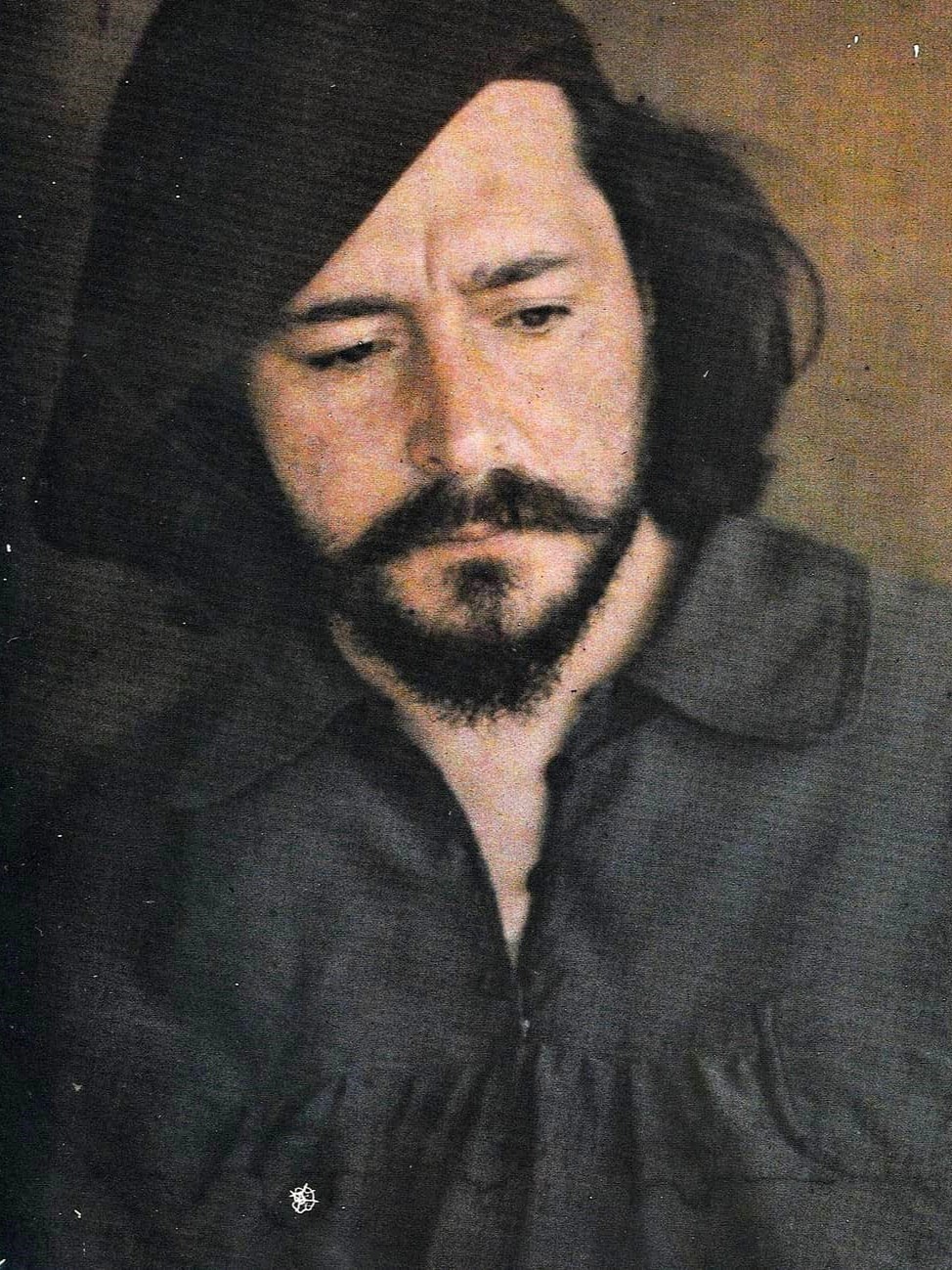
- Wikimedia Commons, “1912c Leonid Andreyev Autochrome self-portrait.jpg” — archival photograph, author attribution, and January 1912 publication identification.