Lyndall learns to read a household as a ledger before she learns much from books. Em will inherit the ostrich farm; Lyndall, her orphaned cousin, will inherit no land, income, or reliable guardian. Her conclusion is seven words long: “I will have nothing. I must learn.”[1]
That sentence contains the method she carries through Olive Schreiner's The Story of an African Farm. Lyndall listens to every promise—schooling, beauty, chivalry, marriage, protection, nursing—and asks what it costs, who controls it, and what claim the giver will make later. She is often remembered as the novel's dazzling young feminist because she can turn those calculations into speeches. But Schreiner makes the character more than a set of positions. Lyndall's intelligence was formed under pressure; it can expose a bad bargain faster than it can create a good relation.
Published in 1883 under the name Ralph Iron, Schreiner's first published novel was an immediate success and became a canonical work of South African literature.[2] Its heroine still feels startling because she does not mistake vulnerability for innocence or defiance for safety. Her tragedy is not that she fails to understand the world. It is that she understands the ownership clause hidden inside almost every form of shelter available to her.
The child makes a ledger
Young Lyndall's severity first appears beside an act of care. After Tant Sannie strikes Em and locks both girls in a room, Lyndall refuses to join Em's panic. Later, when Em is almost asleep, she quietly brings powder for the bruise. Only then does she resolve to oppose whatever holds power and aid whatever is weak.[1]
The sequence prevents a simple reading of her as cold. Lyndall does not lack tenderness; she distrusts any display that leaves the structure of harm untouched. Crying will not unlock the door. Powder will ease Em's face. Strength, if Lyndall can acquire it, might alter who is able to strike whom. Feeling becomes useful when it changes a condition.
Property makes the lesson durable. Em offers to share some future sheep, but Lyndall understands that generosity is not the same as a right. A gift can be withdrawn, reduced, or made to prove the recipient's gratitude. Education looks like a more portable asset, so she decides that Tant Sannie will send her away to school and eventually makes it happen.[1]
This is the first pattern in her character: she tries to convert dependence on a person into command of a resource. Books, money, a name, and wages can travel. Affection belongs to someone else.
School narrows the room
The novel skips the four years Lyndall spends away. When she returns, the farm's objects seem smaller, the ceiling feels low, and she has acquired fashionable clothes, a heavy ring, and a sharper account of education. The finishing school, she says, can “finish everything but imbecility and weakness.”[1] It trains girls to occupy less mental space while presenting compression as polish.
Yet Lyndall does not call the years useless. She has met people, seen other ways of living, and learned more during holidays than the curriculum offered.[1] The distinction is characteristic. An institution may fail at its declared purpose while still yielding routes, observations, and contacts to someone alert enough to take them. She extracts experience from the machinery that tried to shape her.
Mandy Treagus places the novel among colonial Bildungsromane whose aspirational heroines collide with the plots available to them.[3] Lyndall makes that collision visible inside her own body: a cultivated voice in a prescribed costume, returning to a room that can no longer contain what she has learned to want. Her development is real, but the social world has no matching adult role ready for her.
At the gate, politics becomes lodging
Lyndall's longest analysis begins not in a drawing room but at a farm gate. She and Waldo watch male and female ostriches share the work of tending eggs. The birds give her a concrete counterexample before she asks Waldo to consider the position of women.[1]
Her argument then moves through material scenes. A young man walking alone can reach a strange farm, receive coffee, tobacco, and a bed, and continue the next morning. A young woman arriving at the same door will be interrogated and placed among the household's racialized laborers—or outside with the dogs. Beauty can buy attention, but that power expires. Marriage can supply economic security, but without love it turns economic need into an intimate sale. On a crowded coach, polite men protect the attractive young Lyndall while an older woman is told to wait; Lyndall, not one of the men, makes room.[1]
These examples reveal why she is such an absorbing talker. She does not argue from a vaporous idea of freedom. She follows bodies through doors, vehicles, jobs, and nights. Who may travel without explanation? Who is given a room? Whose age changes the value of courtesy? Her politics is a map of access.
It is also a map drawn from Lyndall's position. The Black and Khoisan workers around the farm are rarely granted comparable interior lives, and the novel uses the degrading racial vocabulary of its colonial setting. Heidi Barends notes both the force of the book's feminist aspirations and the critical argument over its racism and exclusions, while making a case for broader, transracial possibilities in Lyndall's thought.[4] The tension should remain visible. Lyndall can identify gendered dependence with extraordinary precision while treating racial hierarchy as part of the scenery through which her own fall in status is measured.
She hears ownership inside an offer
Two men make Lyndall's reasoning clearest because she responds to their offers in opposite ways. Gregory Rose adores her and initially says that he wants only to serve. Lyndall proposes a nominal marriage and asks for the social cover of his name. She believes she can control a man she does not love without granting him access to her inner life.[1]
The unnamed stranger presents the reverse problem. Lyndall loves him, which makes him dangerous. He is clever enough to recognize her tactics and strong enough to resist them. She refuses his marriage proposal because legal possession would reinforce the emotional power he already has. She would rather travel with him under an agreement that either may end.[1]
It is tempting to sort these choices into independence and manipulation, but Schreiner keeps them entangled. Lyndall is willing to use Gregory's devotion as an instrument and unwilling to let the stranger use her love in the same way. That asymmetry is not a flaw accidentally attached to an otherwise exemplary heroine. It is what makes her a character. She has learned that unequal people cannot rely on noble intentions, so she tries to arrange every bond in advance. Her ethical blind spot is the cost of being the arranger.
She also understands that desire changes the bargaining table. When the stranger renews his proposal after her pregnancy has made her socially vulnerable, he begins to describe her lack of wealth and position. Lyndall supplies the implication he leaves unfinished: she has “lost the right of meeting me on equal terms.”[1] She can hear pity becoming leverage before he finishes the sentence.
Her refusal is therefore not a fantasy that she needs no one. She proposes a relation with care in it and an exit from it. What she cannot trust is protection converted into a permanent title over the protected person.
Care arrives under the wrong description
The novel's most unsettling answer to Lyndall comes after her child dies and illness confines her to a rented room. Gregory finds her, disguises himself as a woman, and is hired as her nurse. Lyndall rejects his offer to work without money. She will accept only a service for which she pays, at the rate she paid the previous nurse.[1]
Even in extremity, she converts favor into wages. The arrangement works at the level of touch: Gregory learns how to lift her without pain, feeds her, watches through sleepless nights, and obeys small requests without demanding recognition. One influential reading describes his movement into nursing and women's clothes as a form of selfless androgyny that both complements and critiques Lyndall's defiance of gender roles.[5]
But the scene does not resolve her problem cleanly. She accepts Gregory's care because she believes it comes from a woman under an explicit contract. He knows that the relation is also his concealed love. The nursing is gentle; the identity beneath it is withheld. Lyndall finally receives intimate help that does not announce ownership, but only because she cannot give informed consent to the actual bond.
That contradiction sharpens rather than defeats her earlier insight. In this world, care becomes possible when masculinity removes its public claims and performs paid, feminized work. Yet the novel cannot imagine that care arriving through mutual knowledge. Gregory must become unrecognizable before Lyndall can safely let him near.
What she cannot contract for
Near the end, Lyndall still tries to make futurity out of objects. She orders her clothes placed where she can see them, calls for books, plans a journey, and insists on holding a volume without help.[1] These are not merely denials of death. They are also the habits of someone who has always built agency from portable things and definite instructions.
Her character arc does not move from proud theory to a lesson in submission. Nor does the ending prove that independence itself was fatal. It tests the reach of analysis. Lyndall can identify the difference between inheritance and a gift, learning and finishing, courtesy and access, marriage and possession, charity and paid work. What she cannot manufacture alone is a durable institution in which dependence does not cancel equality.
That is why the novel's ending feels less like punishment than exposure. The available shelters all come with a human owner: Tant Sannie's farm, a husband's name, a lover's protection, a nurse's hidden identity. Lyndall keeps finding the clause and refusing the deed. Her brilliance lies in making the terms legible. Her isolation shows how little legibility can do when no one has yet built another place to live.
Sources
- Olive Schreiner, The Story of an African Farm, Project Gutenberg HTML edition—primary text for Part I, Chapters 1–8, and Part II, Chapters 4, 8, 9, and 12.
- Meg Samuelson, “Writing women,” in The Cambridge History of South African Literature (Cambridge University Press, 2012)—publication, pseudonym, reception, and canonical context.
- Mandy Treagus, Empire Girls: The Colonial Heroine Comes of Age (University of Adelaide Press, 2014)—open-access study of Lyndall, colonial formation, and the available plots of development.
- Heidi Barends, “Olive Schreiner's The Story of an African Farm: Lyndall as Transnational and Transracial Feminist,” English Academy Review 32, no. 2 (2015)—gender, marriage, motherhood, empire, race, and the debate over exclusion.
- Laura Stempel Mumford, “Selfless androgyny: Gregory Rose as ‘virile woman’ in Olive Schreiner's The Story of an African Farm,” Women's Studies International Forum 8, no. 6 (1985)—Gregory's nursing, disguise, and place in the novel's feminist design.
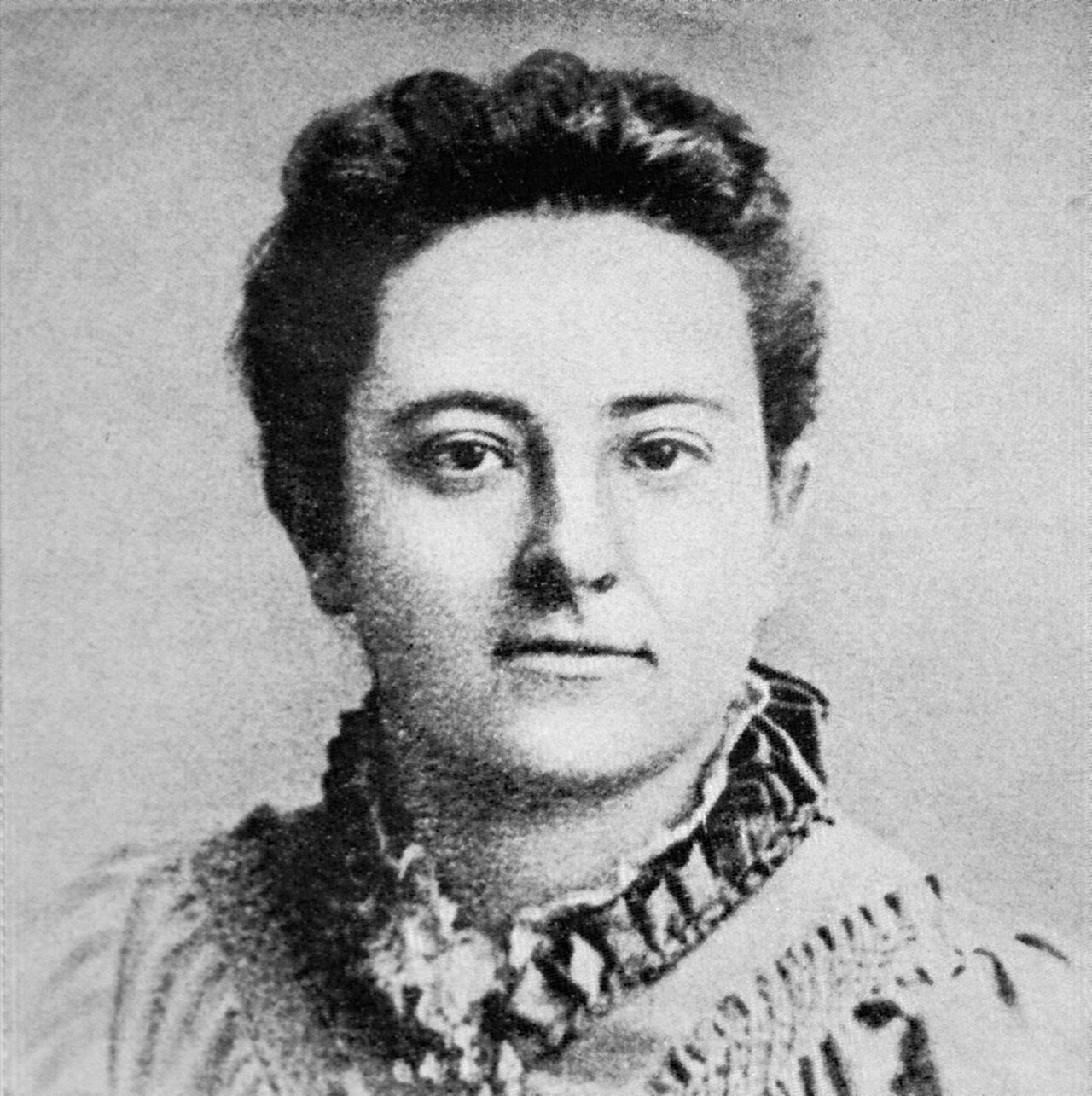
- Wikimedia Commons, “Olive Schreiner00.jpg”—catalog record for the archival photograph made in Menton, France, in 1889.