American realism did not move in one line. Put The Rise of Silas Lapham beside Sister Carrie and you can feel the form changing under your hands. Howells, writing in 1885, builds a novel about a man with money trying to cross into a social world that still believes manners, lineage, and conscience can slow the market down.[2][4][5] Dreiser, publishing in 1900 in a book famously suppressed until 1912, writes after that older confidence has already started to fray. His city runs on plate-glass windows, wages, restaurants, theater lights, and the steady conversion of wanting into motion.[1][3]
That difference is why this pairing matters. Both novels are about ascent. Both ask what happens when money, appearance, and desire start rearranging a life. But they price mobility differently. Howells makes arrival look architectural: a Back Bay house, a dinner invitation, a family alliance, the right relation between new wealth and old forms.[2][4] Dreiser makes arrival look circulatory: trains, sidewalks, store windows, furnished rooms, stage entrances, and the recurrent shock of seeing what the city says can be bought.[1][3]
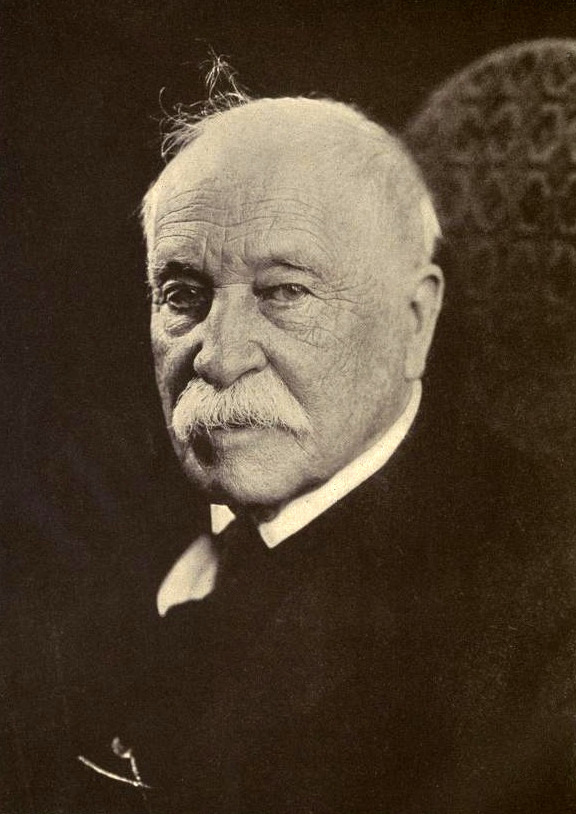
Image context: the cover uses a real archival portrait of Howells from Wikimedia Commons rather than an illustration or generated stand-in. That choice suits the article because this comparison begins from Howells's older realism, where social pressure still gathers in faces, interiors, and public composure before Dreiser's faster urban machine takes over.[6]
1) The openings already announce two different mobility systems
Howells opens with publicity. Bartley Hubbard arrives to interview Silas Lapham for the "Solid Men of Boston" series, and the title phrase does a great deal of work before the plot has even started.[2] Lapham is already visible, measurable, and reportable. Success in this novel first appears as profile: a self-made paint magnate translated into a newspaper category. The question that follows is not whether he can make money. He already has. The question is whether money can survive contact with Boston form.
Dreiser opens with a young woman in transit and a sentence that sounds less settled and more exposed: "When a girl leaves her home at eighteen, she does one of two things."[1] The line is blunt, provisional, and already pitched toward drift rather than standing. Carrie arrives in Chicago with a small bag, a little cash, and a nervous appetite for whatever the city might contain.[1] From the start, the comparison is sharp. Lapham begins as a man being written up. Carrie begins as a body entering circulation.
That distinction shapes the novels all the way through. In Silas Lapham, mobility is a problem of conversion: can business success become social legitimacy without moral loss?[2][4][5] In Sister Carrie, mobility is a problem of appetite meeting environment: what happens when desire learns to read the city faster than conscience can organize it?[1][3]
2) Houses in Howells do the work that windows do in Dreiser
No object matters more in Howells's novel than the house on the Back Bay. Lapham keeps imagining it as proof that the market can be turned into residence, finish, and recognition.[2] He has paint, land, plans, contractors, views, and the ordinary vanity of a man who wants material success to settle into something that looks permanent. The Boston world he courts does not reject money outright. It subjects money to humiliating tests of proportion, breeding, speech, and ease.[2][4][5]
Dreiser gives Carrie a different visual grammar. She learns the city through surfaces that do not ask to be inherited before they are desired. Dreiser keeps returning her to "show windows," broad plate glass, dressed women, restaurants, and the glittering pressure of public interiors.[1] Very early she realizes how much the city holds, "wealth, fashion, ease," and the phrase is less social philosophy than sensory shock.[1] Chicago and then New York do not invite her to belong. They teach her to want by putting goods and gestures behind glass.
This is the most useful comparative hinge. Howells locates aspiration in the effort to become settled inside an already coded social frame. Dreiser locates aspiration in repeated visual contact with consumable life. Lapham wants a house that will certify him. Carrie wants entry into a stream of visible ease that keeps changing its storefront. One novel is about installation; the other is about acceleration.[1][2]
3) Howells moralizes embarrassment; Dreiser naturalizes drift
Because Howells remains the great theorist of realism as moral social observation, Silas Lapham keeps tightening around embarrassment, conscience, and self-measurement.[2][4][5] Lapham is comic, proud, energetic, and often moving, but the book never lets him forget that business success is not the same thing as formed judgment. His awkwardness at dinners, his susceptibility to display, and finally his refusal to profit from a dishonest land sale make the novel ask a classic Howells question: what kind of inner accounting should govern outward rise?[2][4]
Dreiser's method is colder and looser at once. Carrie is not innocent, but neither is she arranged for moral punishment in the older sense. She drifts toward Drouet, then Hurstwood, then the stage, because the city keeps presenting movement as the nearest answer to discomfort.[1][3] Dreiser even pauses to register the spell of cash itself: "Ah, money, money, money!"[1] That exclamation matters because it belongs less to abstract greed than to urban relief. Money buys shoes, dinners, rooms, air, and delay. In Dreiser, material means are not simply corrupting temptations. They are the medium in which freedom and exposure become hard to separate.
Set side by side, the novels show realism changing key. Howells still believes social comedy can clarify a moral center, even if the route there is bruising.[2][4][5] Dreiser lets the environment do more of the judging. Hurstwood sinks. Carrie rises. Neither motion restores a stable ethical order. The city has too many exits, too many inducements, and too little patience for the old lesson that money can be made to stop and explain itself.[1][3]
4) Their endings disagree about what counts as arrival
Howells ends by stripping Lapham of the social ascent he wanted and granting him a more austere kind of stature.[2][4] Bankruptcy humiliates him, but refusing the dirty rescue deal also restores a moral coherence the Back Bay dream had started to erode. In other words, the novel makes descent double as clarification. Lapham cannot keep the house-world he wanted, yet he recovers an ethical measure that Boston society never quite owned in the first place.[2][4][5]
Dreiser ends in the opposite register. Carrie reaches celebrity, money, and a room of her own, but Dreiser refuses to call that completion.[1][3] The famous rocking-chair image matters because success has not cured desire; it has refined its restlessness. The city's escalator keeps moving even when Carrie appears to have arrived. That is Dreiser's hardest insight. In a consumer metropolis, attainment does not close the circuit. It enlarges the appetite.
Read together, the novels offer two diagnoses of American modernity. Howells asks whether the market can be disciplined into character. Dreiser asks what happens after circulation outruns discipline. Between them lies a shift from a realism of placement to a realism of flow. Lapham climbs toward a house and loses it. Carrie keeps riding the mechanism and discovers that motion itself has become the home she cannot leave.[1][2][3][4]
Sources
- Theodore Dreiser, Sister Carrie. Project Gutenberg ebook 233.
- William Dean Howells, The Rise of Silas Lapham. Project Gutenberg ebook 154.
- Encyclopaedia Britannica, "Sister Carrie."
- Encyclopaedia Britannica, "The Rise of Silas Lapham."
- Encyclopaedia Britannica, "William Dean Howells."
- Wikimedia Commons, "File:W. D. Howells.jpg" (source page for the lead photograph).