The power of Germinal begins before anyone gives a speech. Zola opens on an open plain under a sky “dark and thick as ink,” with Etienne Lantier walking through wind, cold, and joblessness toward a pit he does not yet understand.[1] By the time politics arrives in the novel, the body has already learned the argument. Hunger is in the weather, the road, the cough, the empty pockets, the blackness of the fields, and the mechanical breathing of industry. That is why Germinal still feels larger than a strike novel. It treats deprivation as an atmosphere before it becomes a doctrine.[1][2]
That atmosphere matters in the context of Zola's broader project. Britannica describes the Rougon-Macquart cycle as an attempt to vary social and professional milieus under the Second Empire so that environment and historical moment do real explanatory work.[3] Germinal, first serialized in Gil Blas beginning on 26 November 1884 and published as a novel in 1885, pushed that method into one of its harshest settings: the northern coal basin, where wage labor, family subsistence, mechanized extraction, and political language are all forced into close proximity.[2][4] The result is a book in which ideas never float free of physical conditions. Every theory has to pass through cold lungs, weak soup, flooded galleries, unpaid credit, and exhausted bodies.
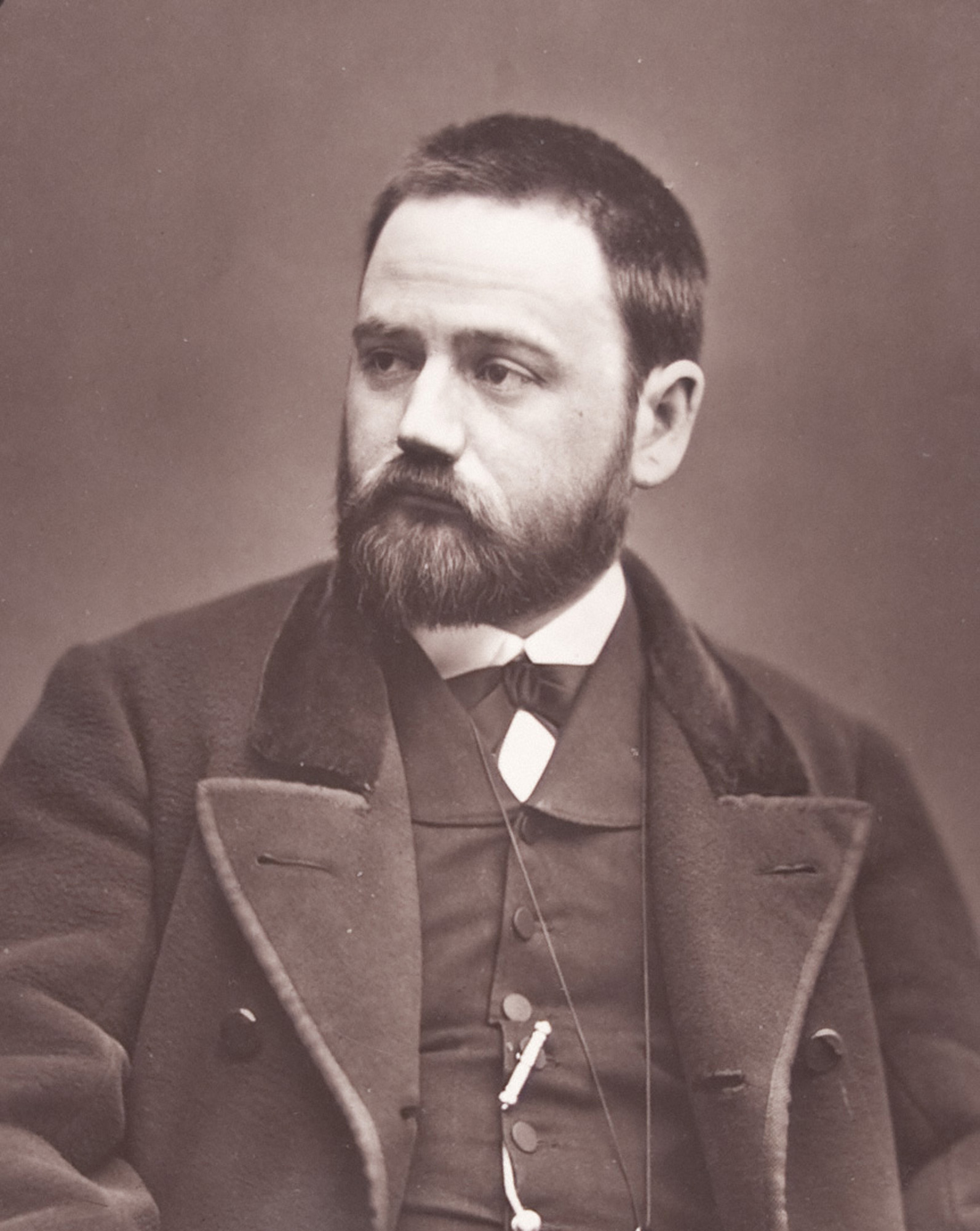
Image context: the cover uses a real circa-1865 photographic portrait of Zola from Wikimedia Commons. A documentary portrait suits this essay better than symbolic mining imagery because the point is not scenic coal-pit drama by itself. It is Zola's method of looking: exact, unsentimental, and patient enough to show how economic pressure settles into rooms, tools, animals, and breath.[3][5]
1. Hunger in Germinal is social weather
The early pages make this plain with unusual force. Etienne arrives at the mine already emptied out by unemployment. He has spent the week wandering from workshop to workshop, hiding from a watchman, sleeping badly, and reaching the road with “not a penny, not even a crust.”[1] When he and the old carman talk in the wind, their exchange is almost embarrassingly simple: must one die of hunger; if only there were bread.[1] Zola does not yet need ideological vocabulary. The novel's first collective language is complaint stripped to subsistence.
What matters philosophically is that famine does not remain inside the speaker. The March wind itself seems to roll up “a cry of famine,” and the squalls appear to bring “the death of labour.”[1] Hunger moves from stomach to landscape. It becomes something spatial, shared, and impersonal, a condition carried across the whole plain before it is organized by any party, pamphlet, or committee. That is one of Zola's strongest insights. Revolt does not begin when people suddenly discover injustice in the abstract. It begins when material pressure acquires common visibility, when suffering stops feeling private and starts sounding environmental.
Britannica's capsule description of the novel emphasizes relations between bourgeoisie and working class, and that is right so far as it goes.[2] But Germinal works because it does not reduce class to two argumentative positions facing each other in daylight. Zola first makes class a distribution of exposure. Some people own ventilation, time, wages, and reserves. Others inhabit cold, debt, stoppage, and the fear of the next reduction. The novel's politics grows out of that unequal climate.
2. The mine is a machine, a monster, and a burial system at once
Once Etienne reaches Le Voreux, the book gives hunger a structure. The mine is introduced through sound and rhythm before it becomes a map. Its pump has a “thick, long breathing” like “the monster's congested respiration.”[1] Britannica notes Zola's comparison of the coal mine to a devouring monster and his use of animal and botanical imagery; the description is exact, because the pit never stays merely industrial in the reader's mind.[3] It behaves like a machine, but it also absorbs the old language of appetite, digestion, and predation.
That doubleness is central to the novel's philosophy. A machine can be criticized as an economic instrument. A monster must be endured as a total environment. Zola keeps both frames active. The mine is owned, managed, and calculated. It is also something the workers descend into as if entering a throat, a gut, or a grave. On the way down, Etienne and the others pass through blackness, water, and constriction until “the cold became icy” and they were “buried in black humidity.”[1] The word “buried” matters. Extraction is described through entombment. To earn fuel for the surface world, the miners must accept a half-funereal condition beneath it.
The novel deepens that idea by refusing to isolate human suffering from the rest of the underground system. The old white horse Bataille, after ten years below ground, has forgotten daylight so thoroughly that he can only half-recall the sun in obscure dreams.[1] That detail is more than pathos. It tells us that the mine rewrites memory itself. Below ground, time becomes repetitive, circular, and subterranean. One works, coughs, hauls, stoops, and returns. What disappears is not only health, but horizon.
3. Rumor turns need into tempo
Because Zola builds the world this way, speech in Germinal carries a special charge. Ideas do not arrive in clean lecture form. They circulate through taverns, settlement rooms, wage talk, glances, resentments, and repeated stories. Rumor matters because rumor is the first medium equal to mass precarity. A family can hide shame for a while. A whole district cannot hide a pay cut, a stoppage, or the fact that boiled cabbage leaves are no longer enough.[1]
This is where the strike in Germinal becomes philosophically interesting. Britannica notes that the novel weighs the strike and its aftermath against contemporary movements such as Marxism, anarchism, and trade unionism.[2][3] Zola includes those languages, but he never lets them become pure explanation. Each doctrine is tested against appetite, pride, sexual rivalry, debt, fatigue, and fear. Collective action emerges because hunger has already synchronized bodies. Theory gives shape to the crisis; it does not invent the pressure that produced it.
That is why the novel keeps returning to crowd movement. Zola had a genius for masses in motion, but he does not use crowds as decorative spectacle here. He uses them to show that misery gains force when it learns a rhythm. Complaint becomes repetition. Repetition becomes expectation. Expectation becomes a march. Germinal understands politics as tempo as much as belief: the moment when dispersed suffering begins keeping time with itself.
4. The title's spring is buried, not pastoral
The deepest irony in the novel sits in its title. “Germinal” names a month in the French Revolutionary calendar, but it also carries the sense of germination, sprouting, beginnings under soil.[4] Zola's genius was to yoke that spring word to one of the darkest industrial landscapes in nineteenth-century fiction. There are no lyrical green fields at the center of the book. There is coal dust, mud, flooding, crouched labor, and the long education of anger.[1][2]
Yet the title prevents the novel from collapsing into static misery. If life is buried, it may still be gathering force. If people are treated as fuel, they may still become history. This is not optimism in a soft register. Zola is too exact for that. He knows that strikes fail, bodies break, children starve, and institutions reassert themselves.[1][2] But he also knows that buried pressure can change category. A season below ground may return above ground as speech, refusal, memory, and future organization.
Seen this way, Germinal is not only a social novel about labor conditions. It is a philosophical novel about latency. What remains unseen while it is forming? What kind of time does oppression produce? How long can suffering be treated as mute matter before it begins to move as collective life? Zola's answer is severe. Nothing guarantees justice. But the same world that buries people also stores force inside them.
That is why the novel lasts. Its politics is inseparable from its sensory method. Wind, cough, dust, mud, darkness, machinery, and appetite all become ways of thinking. Hunger in Germinal is never a private moral trial from which noble conclusions are later drawn. It is the common medium that teaches people where they stand, what they endure, and how the ground beneath apparent order may already be preparing another season.[1][2][3][4]
Sources
- Emile Zola, Germinal, translated by Havelock Ellis, Project Gutenberg full text.
- Encyclopaedia Britannica, "Germinal" (work overview and place in the Rougon-Macquart cycle).
- Encyclopaedia Britannica, "Émile Zola" (Rougon-Macquart context, environment, imagery, and the novel's legacy).
- Gallica / Bibliothèque nationale de France, "Germinal" (serialization note, manuscript and preparatory dossier context, and BnF resource page).
- Wikimedia Commons, "File:Emile Zola MOPA.jpg" (source page for the lead photographic portrait by Etienne Carjat).