A man crosses London in a hansom cab, determined to extricate himself from an affair. “I will get out,” Hugh Scarlett tells himself in the first chapter of Red Pottage. By the end of the second, he has accepted a bargain that may cost him his life. Mary Cholmondeley knows how to make a reader turn the page. She also knows how easily a spectacular predicament can monopolize our attention.[1]
Published in 1899, the novel follows that predicament into a larger story about two women: Rachel West, whose recovered wealth has not erased her experience of poverty, and Hester Gresley, a novelist living with her clergyman brother. Their friendship supplies a particularly rewarding way into the book. Keep watching what each woman understands about the other, and the quieter scenes begin to acquire the pressure of the opening confrontation.[1][2]
This guide discusses the opening nine chapters. The later reversals are best discovered in the novel itself.
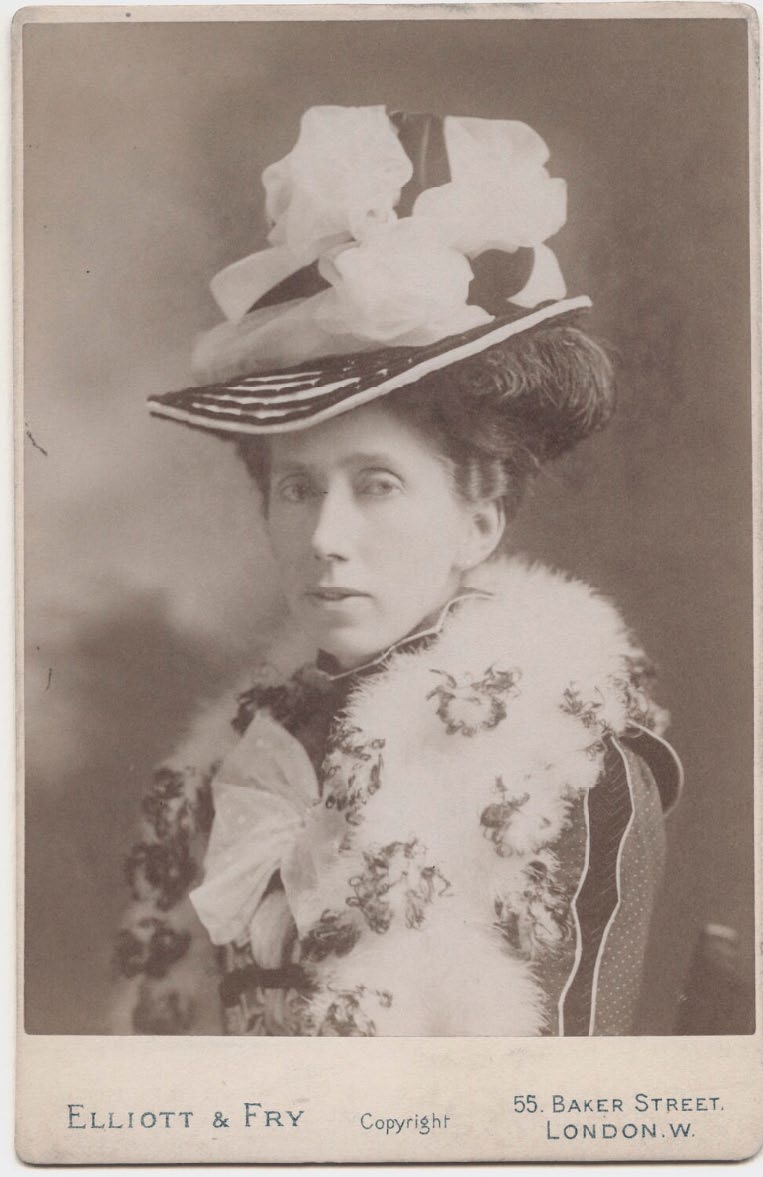
Listen to the language of escape
The first useful thing to notice is how little Hugh's desire to escape tells us about his willingness to change. In chapter II, he sees Rachel at a party and immediately imagines her as his future wife. Her strength will uphold him; her presence will rescue him from his own weaknesses. He has scarcely begun to know her before assigning her a job.[1]
The narrator lets this romantic excitement run until it exposes its own presumption: Hugh thinks Rachel could hardly be “so wicked as to refuse him.” The sentence turns a proposal he has not yet made into a moral obligation she has not accepted. His admiration is sincere enough. That sincerity makes the entitlement more revealing. On a first reading, pause here: Rachel has entered Hugh's imagination as the answer to his needs before she has entered a conversation with him.[1]
Soon afterwards, Lady Newhaven's husband confronts Hugh about their affair. Two paper lighters become the instruments of a lottery: whoever receives the shorter must die within an agreed period. Lord Newhaven extends that period to accommodate the pheasant shooting. The grotesque courtesy makes the scene both chilling and ridiculous. Its social polish allows an appalling demand to sound like an arrangement between reasonable men.[1]
Chapter IV tells us Hugh drew the short lighter. The book therefore releases one piece of information very early; we can turn our attention to what he will do with it. As you read on, listen for occasions when characters present their own wishes as terms someone else ought to accept. That habit connects the opening scandal to rooms where nothing initially looks so dangerous.[1]
Give the childhood friendship its full weight
Chapter VI steps away from the immediate crisis to tell the history of Rachel and Hester. Give this apparent detour time. Its small details establish a relationship in which the women have been recognizing each other's capacities since childhood.[1]
In the gardens of Portman Square, Hester invents castles, dragons, and conversations between sparrows. Rachel loves animals without making them speak. When Hester finally visits her friend's house, Rachel shows her a dormouse; Hester makes up a poem about it. The exchange is funny and affectionate, but it also gives the future novelist a first audience. Rachel brings something living to their friendship. Hester answers with language.[1]
Their families' fortunes change. Rachel loses her parents and the money on which her upbringing depended. Hester offers half her own modest allowance. Rachel accepts, and the narrator makes an unexpected judgment: “The greater generosity was with Rachel.” Accepting help gives Hester the comfort of being useful. The scene makes generosity a relationship, with dignity and vulnerability on both sides.[1]
Later in the same chapter, Hester visits Rachel's cramped London room and despairs of being unable to transform her circumstances. Rachel asks whether affection and sympathy count for nothing. She makes clear that these are things she needs from Hester even if money should cease to be a problem. Beside the window, there is barely room for both women between the bed and the typewriter. The physical compression gives their conversation an intimacy that the crowded society party lacked.[1]
Hester leaves with a sudden recognition of her imaginative power; a year later, her first book appears. The sequence invites us to connect her literary awakening with the experience of listening to her friend. This is a reading of how the chapter arranges its scenes, rather than a claim that compassion automatically makes a novelist. Hester's gift was visible in the childhood games. The encounter gives that gift a new urgency.[1]
Watch who may open the post
When the novel reaches Hester's brother's vicarage in chapter IX, attend to the domestic rules. Hester has learned that she must wait for James Gresley to unlock the letter-bag, even to obtain her own letters. She must also leave the newspaper untouched until he has seen it, although he commonly waits until evening to read it.[1]
These are excellent comic irritations. They also show authority making itself felt through control of ordinary objects. The newspaper sits unread because priority matters more than use. The post becomes a ceremony in which an adult woman receives access to what already belongs to her.[1]
Cholmondeley sharpens the joke when James wants help with his own writing. He asks Hester to correct the punctuation, grammar, and spelling of his article on dissent. Her abilities are available for his purposes, even while the household struggles to accommodate her independence. Watch that distinction as the story develops: people may find a woman's talent useful without granting her the freedom to choose its use.[1]
The novel gives James a physical voice suited to this arrangement. When contradicted, he becomes louder and keeps talking until the opposition stops. Listening to that voice after Rachel and Hester's conversation makes the difference between the households audible. One encounter allows a person to revise her understanding. The other rewards endurance and submission.[1]
Carry the friendship back into the scandal
The book's original reception makes sense of its mixture of pleasures and discomforts. The Victorian Fiction Research Guide records rapid demand after publication and reports that Cholmondeley declined serialization because she wanted the story judged as a whole. Carolyn W. de la L. Oulton's introduction to the modern New Woman Fiction edition recalls the congratulations and hostile letters the novel attracted. Its social observations plainly reached readers beyond the satisfactions of suspense.[2][3]
For a first encounter, read the chapters in order and let their changing pace work. The opening makes you curious about an outcome; the friendship teaches you to notice what an outcome might cost. Whenever someone proposes to rescue, advise, or correct another person, ask how much room the recipient has to answer.
Hugh's imagined marriage, Hester's offered money, and James's locked letter-bag all involve one person claiming a role in another's life. Their differences emerge through the responses they permit. Rachel can tell Hester what she actually needs. In a novel crowded with forceful speakers, that freedom to answer is worth listening for.
Sources
- Mary Cholmondeley, Red Pottage, Harper & Brothers, 1900 — Project Gutenberg text; chapters I–II, IV, VI, and IX supply the passages discussed here.
- Victorian Fiction Research Guides, “Mary Cholmondeley” — biographical introduction, publication history, refusal of serialization, and contemporary reception.
- Carolyn W. de la L. Oulton, ed., Mary Cholmondeley, Red Pottage (1899), volume 9 of New Woman Fiction, 1881–1899, 2011 — publicly available introductory excerpt on the novel's reception.
- National Portrait Gallery, “Mary Cholmondeley,” NPG x4612 — Elliott & Fry albumen cabinet card, early 1900s; identification and date of the photograph.
- Eduardo Zinna, introduction to Mary Cholmondeley's “Let Loose,” Ripperologist 158, October/November 2017, p. 33 — reproduction of the Elliott & Fry portrait used here.