Keawe has escaped damnation, and breakfast tastes wonderful. He talks, eats, plans the journey home. His wife, Kokua, can hardly speak and takes no food. He is too happy to notice. During the night she has secretly bought the enchanted bottle that threatened his soul; the danger he celebrates escaping is sitting beside him at the table.[1]
This is the cruelest bargain in Robert Louis Stevenson's “The Bottle Imp,” because nothing has gone wrong with its terms. The bottle has changed hands correctly. The price has fallen as required. Someone is safe. Someone else is terrified. Stevenson makes the distance between those two experiences the story's moral subject.
This essay discusses the ending.
First published in 1891 and collected in Island Nights' Entertainments in 1893, the tale belongs to Stevenson's Pacific years. He visited Hawaii's Kona coast in 1889, the country where Keawe builds his coveted house.[2][3] The story also traveled between languages: Stevenson collaborated with the missionary Arthur Claxton on a Samoan translation published in 1891.[2]
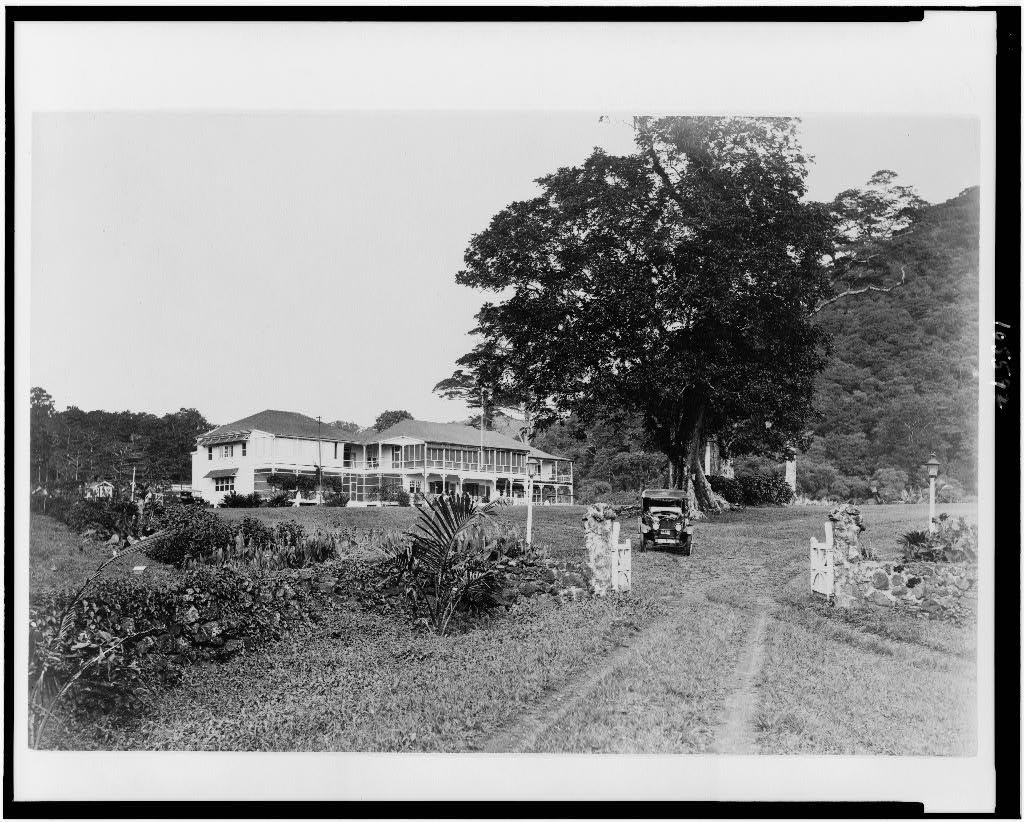
That reported question deserves care. As Roslyn Jolly observes, the surviving accounts of Samoan responses come through Stevenson and European associates, rather than directly from the readers themselves.[2] Still, the anecdote catches a question the fiction repeatedly invites: when a beautiful house appears, what has made it possible?
The cheaper it gets, the more it costs
The bottle grants wishes, but it cannot extend its owner's life. Anyone who dies possessing it goes to hell. Escape requires a sale for coined money at a price lower than the previous purchase. Giving it away will not do; selling at a profit brings it back.[1]
This rule gives the story its wonderfully perverse suspense. A falling price usually makes a desirable object easier to acquire. Here it uses up the opportunities to escape. Each satisfied seller leaves the next buyer less room. The danger grows as the sum becomes almost too small to bother counting.
Stevenson establishes that unequal exchange before he explains the magic. In San Francisco, Keawe looks through a rich man's clear window and envies the owner's house. The owner looks out and envies Keawe. Glass makes each visible to the other without making either man's circumstances understood. The ensuing sale moves the trouble from the man indoors to the man outside.[1]
Keawe's own dream house is more than an emblem of greed. Its broad balconies catch the breezes; its rooms contain bright pictures, musical boxes, and puzzles. Stevenson makes the pleasure tangible enough for us to want him to enjoy it. But the money and land arrive through the deaths of his uncle and cousin. Keawe and his friend Lopaka suspect the bottle's intervention. The narrative lets their suspicion darken the inheritance without showing the imp committing either death.[1]
The resulting discomfort exceeds the familiar warning to be careful what you wish for. Keawe did not wish his relatives dead. He nevertheless accepts the house their deaths make possible. Once the benefit has arrived, he finds language that permits him to keep it. The bottle supplies wealth; its owner supplies the explanation that makes possession bearable.
Love enters the arithmetic
After selling the bottle, Keawe falls in love with Kokua and discovers that he has leprosy. He refuses to expose her to the illness. To obtain a cure and marry her, he seeks the bottle again, only to discover that its next price is one cent. Believing no smaller payment possible, he buys it anyway.[1]
His motives have changed, but the terms have not. The same object can serve acquisitiveness and devotion. Stevenson denies us an easy way to tell a good act from a bad one merely by identifying who has dealt with the devil.
Kokua initially answers the predicament with knowledge. A cent is not the world's smallest coin: French centimes will allow further sales. She gets them moving toward Tahiti. Her education gives the plot another stretch of road, and her practical intelligence matters as much as her loyalty. Yet smaller coins only create more possible buyers. They cannot make the danger disappear.[1]
When no buyer comes forward, she arranges for an old stranger to purchase the bottle for four centimes and resell it to her for three. “A soul for a soul,” she tells herself.[1] The balanced phrase resembles an exchange rate, but she is volunteering for the loss. She wants the burden to stop traveling at her own door.
Stevenson makes the physical effort of that decision hard to overlook. Kokua trembles while waiting for the intermediary. When he returns, her hand recoils from the bottle. Courage takes place in a body that desperately wants safety; it does not abolish fear.
The old man complicates the bargain further. He declines to use the bottle to cure his cough, then offers to keep it when he sees her terror. Kokua refuses to leave him with the danger.[1] The transaction contains two people prepared to suffer for another. That generosity will soon be invisible to Keawe.
At breakfast he dismisses the unknown buyer as a wicked fool. It is an extraordinarily convenient judgment: if the new owner deserves his fate, the former owner need feel no sorrow. Kokua objects that another person's ruin should trouble him. Keawe becomes angry because, the narrator tells us, he feels the justice of what she says.[1] His cruelty is an effort to protect his happiness from knowledge he already possesses.
The bottle leaves; its danger remains
The correction comes through another act of looking. Keawe peers into the house and sees Kokua with the bottle. His first fear is that his own sale has somehow failed. Only afterward does he understand what she has done.[1] Stevenson allows that selfish reflex to arrive before recognition. Love has to work through it.
Keawe now repeats her plan, using a boatswain as intermediary: the sailor will buy for two centimes, and Keawe will buy from him for one. The lovers have become rivals in accepting the final loss. Their devotion cannot jointly rescue them while the bottle keeps its rule.
Then the boatswain refuses to sell. He likes the bottle. When Keawe warns him about hell, he replies, “I reckon I'm going anyway.”[1] For someone who believes his future already settled, the threatened penalty has lost its power. The same prospect that terrifies the lovers makes little difference to him.
This is a comic release, but the sailor's estimate of his destiny remains his own. We are given no divine judgment confirming it. Nor does Keawe simply seize the chance to abandon him: he urges the sailor to sell for the sailor's sake. That plea marks a change from breakfast, when another owner's supposed wickedness was an excuse to stop caring.[1]
Jolly's reading preserves the discomfort of this resolution. She disputes the idea that ever smaller currencies promise an endless escape; in her account, the dwindling coinage means somebody must ultimately bear the consequence, even though the protagonists avoid it.[2] The lovers' rescue has not repealed the bargain.
Stevenson's narrator is unusually candid about the boundary of the happy ending: “there goes the bottle out of the story.”[1] It has left the account we are following. It has not been broken, emptied, or rendered harmless. The next sentence returns Keawe to Kokua and gives them lasting peace in the Bright House.
We can welcome that peace. Both have become willing to surrender it for the other. But the little sentence about the departing bottle keeps another life just beyond the final page. The story ends where our affection is strongest, while its dangerous object continues down the street.
Sources
- Robert Louis Stevenson, “The Bottle Imp,” in Island Nights' Entertainments, Project Gutenberg — primary text, especially the San Francisco sale, Kokua's purchase, the breakfast conversation, and the final exchange with the boatswain.
- Roslyn Jolly, “Stevenson's Pacific Transnarratives,” International Journal of Scottish Literature 9 (2013), pp. 5–25 — publication and translation context, mediated Samoan reception, and the currency argument; especially pp. 15–17, 23–24, notes 28 and 41.
- Richard Dury, “Robert Louis Stevenson in Hawaii,” The RLS Website, Edinburgh Napier University — the 1889 itinerary and the Kona-coast places used in the story.
- Library of Congress, “Robert Louis Stevenson's home at Pago Pago, American Samoa [i.e., Vailima, Upolu, Samoa],” item 93501596 — Pan Pacific Press archival photograph, catalogued as “[193-?],” reproduction number LC-USZ62-105592.