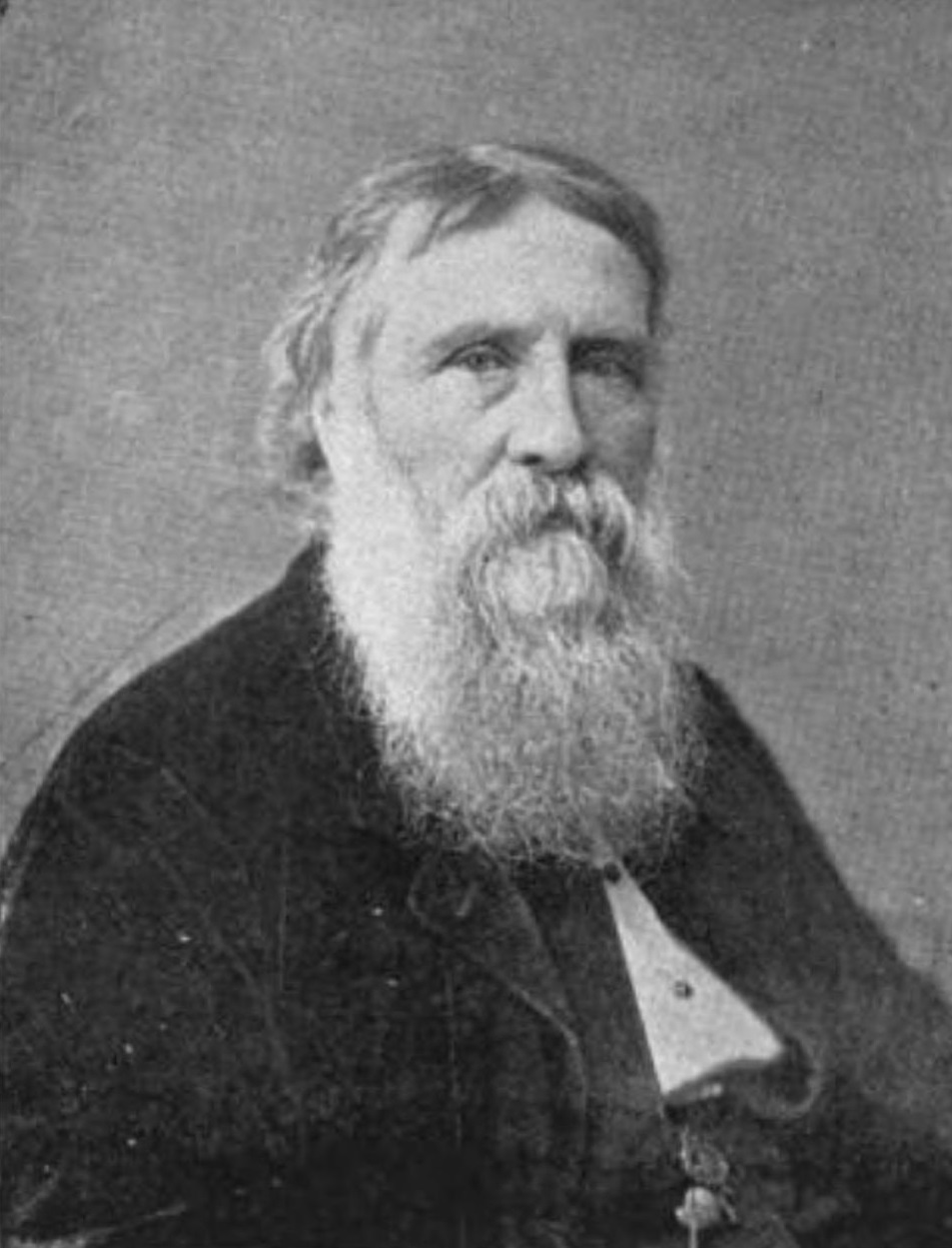
George MacDonald places Princess Irene in a house “half castle, half farm-house,” halfway up a mountain. The address is also a diagram. Above Irene is a tower where an impossibly old grandmother spins; below her are mines, natural caverns, and a goblin kingdom. A lesser fairy tale could turn that vertical arrangement into a ready-made moral key: light above, evil below, safety in the middle. The Princess and the Goblin spends thirty-two chapters ruining the key.[1]
Its good miner, Curdie, earns his knowledge underground. Its princess must descend into the same dark to rescue him. Its goblins were once surface dwellers, while its royal house is physically vulnerable to labor and violence below. Even the grandmother's thread does not carry Irene upward toward its maker. When the two plots finally need one another, it runs into the mountain.
That route is the novel's central formal pleasure. MacDonald first separates Irene and Curdie by height, class, and method, then gives each child a clue the other cannot initially read. Their adventures become one story only when guidance from the tower and knowledge from the mine stop competing as explanations. The invisible thread is not merely a symbol of faith. It is the line that edits two narrative tracks together.
The house begins in the middle
The book appeared in 1872.[3] A National Library of New Zealand catalog record preserves an edition with thirty illustrations by Arthur Hughes, a useful reminder that its stairways, caverns, and thresholds also had a visual print life.[2] “Half castle, half farm-house” puts Irene between ranks as well as elevations. She is a king's daughter living among nurses, servants, animals, and working families on the mountain.
The book's first six chapters stay largely with her. She loses herself by climbing a neglected staircase, finds the spinning woman in the tower, returns to a nurse who cannot accept the story, fails to locate the tower again, and finally meets Curdie outdoors. Those movements establish Irene's way of knowing. She proceeds through misdirection, trust, return, and the willingness to admit fear. A staircase can be present one day and unavailable the next; an encounter can be true without becoming repeatable on demand.[1]
MacDonald then lowers the narrative. Chapters VII through IX enter the miners' work and follow Curdie alone as he listens through rock, breaks into a goblin home, and spies on their palace assembly. Here space is legible through craft. Curdie distinguishes distant blows, follows excavations, tests passages, memorizes weaknesses, and keeps a physical route back. The mines may be dark, but they are not vague. They are a workplace whose sounds and gradients can be interpreted by someone trained to notice them.
The alternation therefore does more than manufacture suspense. Irene's chapters ask what can be trusted when it cannot be demonstrated. Curdie's chapters ask what can be inferred from material evidence. Each track gives the child what the other lacks, but MacDonald delays their cooperation long enough for both methods to expose their limits.
The vertical map is morally unstable
The temptation to read the architecture as a simple Christian ladder is understandable. The grandmother in the high room spins a nearly invisible guide, tends a fire of roses, and sees more of the plot than anyone below. Modern criticism has often approached the book through MacDonald's theology. Aubrey Plourde argues, however, that its design repeatedly postpones the complete spiritual progress that its symbols seem to promise: doors fail to open, routes divert, and belief remains an intermittent process rather than a prize permanently won.[3]
The population underground also prevents an innocent heaven-and-hell diagram. Human miners and goblins occupy adjacent systems of tunnels. Both groups read the mountain, strike rock, and alter the flow of water. The opening legend even remembers the goblins as people driven from the surface after a conflict with royal authority. The narration then translates generations underground into bodily distortion and moral decline.[1]
That account carries a troubling Victorian logic. Rachel Johnson reads the goblins through contemporary discourses of degeneration and the marginalized colonial subject.[4] The novel's form can make borders between castle, mine, and goblin country productively porous without making its description of the goblins harmless. Their imagined physical “devolution” turns displacement into a mark on the body, then invites the story to treat those bodies as a collective danger.
Holding that problem in view sharpens the structural reading. “Above” never means simply virtuous: the king's predecessors belong to the goblins' grievance, the household dismisses a miner's warning, and the castle's foundations become the target of a tunnel. “Below” never means simply corrupt: Curdie's family lives by the mine, and his expert hearing eventually saves the king. The mountain is a set of contested layers, not a labeled moral chart.
Two clue chapters make a hinge
The book announces its most elegant pairing in chapter titles. Chapter XVIII is “Curdie's Clue”; chapter XX is “Irene's Clue.” Between them, the goblins debate what to do with the captured miner. The matched headings ask readers to compare not only two objects but two theories of direction.[1]
Curdie's clue is a practical tether. While exploring, he anchors a cord to secure his return through tunnels that otherwise defeat memory. It is exactly the right miner's tool: visible, measurable, and attached to a known point. Yet the goblins' creatures find the pickaxe serving as its anchor and carry it away. Curdie faithfully rolls up the string only to be led deeper into their country, where he is captured. The device fails because its stable endpoint has moved: following evidence works only while the point of reference remains trustworthy.
Irene's clue begins with a ring and a filament too fine to see. Her grandmother tells her to follow wherever it leads and “must not double the thread.”[1] Irene assumes it will take her up the familiar stair. Instead it runs out of the house, across the mountain, into a stream's opening, down rough steps, and through total darkness. When it disappears into a heap of stones, she briefly treats obstruction as abandonment. Only by moving the stones does she discover that the apparent dead end is work waiting to be done.
On the other side is Curdie. The invisible guide has not brought Irene to a private revelation; it has brought her to another person's prison. That turn keeps the thread from functioning as a shortcut around action. Irene's back aches, her fingers bleed, and she must coordinate her digging with Curdie's push from inside. Faith here does not cancel matter. It tells her where sustained material effort belongs.
The rescue also crosses the story's expected class and gender lines. Curdie first appears as the capable boy who guides a frightened princess home after dark. In the mountain, Irene becomes the guide and Curdie follows. Neither role is erased. He retrieves his pickaxe, recognizes goblin spaces, and helps them survive the route; she alone can feel the line. Their joined plot works because leadership changes with the evidence available.
Joining the plots does not join perception
A conventional fairy-tale structure might reward cooperation with immediate agreement. MacDonald refuses. After their escape, Irene leads Curdie all the way from the mine to the tower, expecting visible proof to settle everything. She sits in her grandmother's lap. Curdie sees a bare garret, straw, an old apple, and a shaft of sunlight. “I don't see any grandmother,” he says.[1]
The scene is more important than a simple test that Curdie fails. Irene has just asked him to trust her experience; moments earlier, she had to trust his account of what he could and could not see. Her grandmother's answer—“You must give him time”—prevents Irene's privileged perception from becoming a license for contempt.[1] The child who believes more is asked to understand the child who cannot.
Formally, the episode keeps the two plot lines joined without making them identical. Curdie's empirical knowledge remains real: the goblin plan, their tunnels, their vulnerable feet, and the underground water do not vanish because he misses the vision. Irene's knowledge remains real too: the thread found him when his own clue failed. Their disagreement is not stray characterization after the adventure. It protects the novel from collapsing its two modes of knowing into one.
The wider history of the literary fairy tale helps explain the risk MacDonald is taking. A University of Michigan exhibition places his work amid nineteenth-century writing that moved beyond heavily didactic stories of exemplary children neatly rewarded or punished.[5] The Princess and the Goblin certainly teaches, but it makes instruction arrive through asymmetry. Irene cannot make Curdie see. Curdie cannot turn every truth into an object. Neither child finishes the book by rendering the other unnecessary.
Water makes every floor answer to the others
The final movement converts the mountain's architecture into hydraulics. The goblins plan to release underground reservoirs into the lower human mine. The miners, warned by Curdie, build a wall across the intended passage. Water reverses into goblin country and finds another outlet: the tunnel the goblins have cut beneath the king's house.[1]
The result is not a battle staged on one level. It is a chain of consequences through the whole vertical system. Work done in the mine redirects water through the goblin kingdom; excavation beneath the house makes the royal interior flood; Irene hears the approaching current first; Curdie identifies it by putting his ear to the floor; the king trusts the miner quickly enough to evacuate everyone uphill. Survival requires the tower's warning, the mine's expertise, and royal action in sequence.
There is no comfortable return to the original map. The house halfway up the mountain proves no safer than the passages beneath it. Many goblins are drowned by the water they meant for the miners, an ending whose severe collective punishment should resist easy celebration. Above the torrent, the grandmother's lamp remains visible; below it, Curdie can finally recognize the light without claiming that his earlier doubt was voluntary.[1][3]
That is why the thread matters most as structure. It does not simply stand for a belief readers are told to possess. It crosses the divisions the book has patiently built—high and low, royal and working, visible and felt, rescue and rescued—without pretending those divisions never existed.
MacDonald sends the invisible thread underground because the shortest path to certainty would make a poorer story. Irene and Curdie reach one another by routes that first look wrong. The novel's deepest formal promise is not that every good child sees the same thing. It is that different kinds of knowledge can become answerable to the same danger.
Sources
- George MacDonald, The Princess and the Goblin, Project Gutenberg illustrated HTML text—chapter sequence and primary text used for the structural reading.
- National Library of New Zealand, “The princess and the goblin / with thirty illustrations by Arthur Hughes”—institutional catalog record for an illustrated edition.
- Aubrey Plourde, “George MacDonald's Doors: Suspended Telos and the Child Believer,” Victorian Literature and Culture 49, no. 2 (2021)—open-access study of architecture, diversion, faith, and incomplete development.
- Rachel Johnson, “Goblinization: a Reading of the Colonial Subject and Degeneration in The Princess and the Goblin (1872) and The Princess and Curdie (1883),” Worcester Research and Publications (2008)—historical framing for degeneration and marginalization.
- University of Michigan Library, “Literary Fairy Tales in the 19th Century,” Curiouser and Curiouser exhibition—context for MacDonald within the changing Victorian literary fairy tale.
- Wikimedia Commons, “Picture of George MacDonald”—source page for the archival portrait published in The Bookman no later than 1895 and used as the article image.