Most coming-of-age novels change their protagonist while keeping the narrative instrument largely stable. Joyce does something riskier in A Portrait of the Artist as a Young Man. He keeps changing the instrument too. Britannica's compact description gets at the essential fact: each of the novel's five sections is written in a third-person voice that reflects Stephen Dedalus's age and emotional state, beginning in childlike simplicity and ending in dense, abstract, Latin-tinged prose.[2] That is not ornament added to a Bildungsroman. It is the novel's deepest structure. Stephen does not merely grow inside the style. The style grows, stalls, overheats, and breaks loose with him.
That is why the book still feels like a threshold text rather than a polished monument. It was serialized in The Egoist in 1914-15 and published in book form in 1916, but its real modernity lies in how it makes development audible.[2] Syntax shortens, then thickens. Sensory fragments give way to clerical thunder, then to theory, then to the quick private notation of the diary. Joyce is not simply telling us that Stephen becomes an artist. He is making us hear the cost of that becoming.[1][4][5]
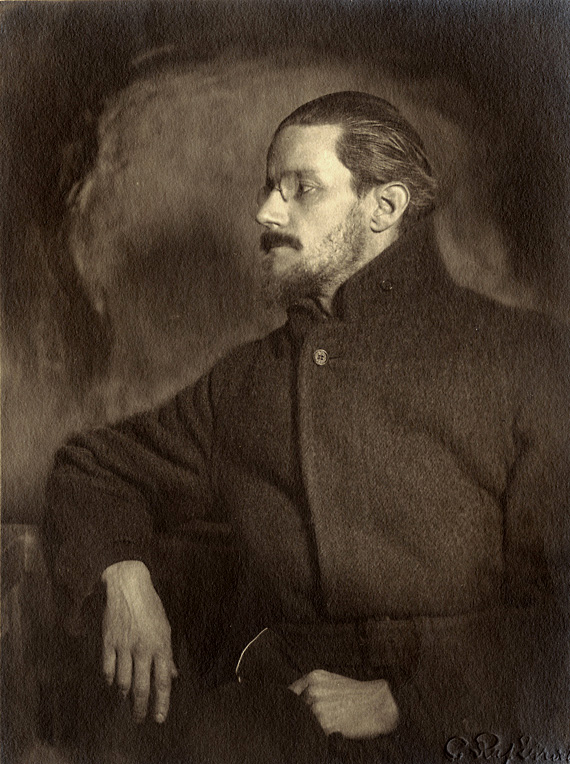
Image context: the cover uses a real archival photograph of James Joyce from around 1918. That choice suits the article because Joyce's achievement in Portrait depends on technical control that can easily disappear behind fluency. The novel sounds spontaneous only if one overlooks how carefully each stage of Stephen's life has been given its own acoustic and grammatical weather.[6]
1) The novel opens in remembered sound before it opens in narrative explanation
Joyce's famous opening does not begin with social overview, genealogical clarity, or authorial distance. It begins with nursery rhythm, repetition, and the tiny sonic enclosure of family speech.[1] The point is larger than the often-cited "baby tuckoo" charm. The early pages make consciousness feel less like a stable viewpoint than like a bath of voices, smells, textures, punishments, songs, and half-grasped rules. Stephen's world arrives in chunks because that is how it can yet be held.[1][2]
This is where Joyce separates himself from more conventional retrospective fiction. A lesser novel could have translated childhood into polished adult sentences while merely reporting that the child once felt confused. Joyce instead lets confusion shape the sentence itself. School fear, bodily shame, and devotional pressure are not summarized from a safe distance; they are rendered through a diction narrow enough to feel immediate and fragile.[1] Derek Attridge's account of Joyce's early modernist style is useful here because it stresses Joyce's unusual attention to verbal surface, to the way individual words and syntactic turns begin to reflect a consciousness rather than merely describe it.[4] In Portrait, that attentiveness becomes developmental. The prose starts close to sensation because Stephen's mind is still mostly receiving before it can order.
2) The school and family chapters make style into a pressure chamber
As Stephen grows, the prose does not simply become more "mature." It becomes more stratified. Family arguments over politics and religion, school discipline, class shame, and Jesuit authority all enter the sentence as competing registers.[1][3] Joyce's own biography matters here, not because the novel can be reduced to autobiography, but because the educational and devotional environments are historically concrete. Britannica notes Joyce's years at Clongowes and Belvedere under Jesuit schooling, as well as the mixture of Catholic formation and family instability that marked his youth.[3] The novel turns that world into vocal conflict.
What changes technically is that Stephen begins to hear institutions as styles. Priests, schoolboys, nationalists, family members, and textbooks all speak in formats that carry their own pressure. Stephen's mind is formed not just by ideas but by intonations, slogans, punishments, jokes, and borrowed formulas.[1][3] That is why the prose can feel crowded even before it becomes fully elaborate. The sentence is learning how many authorities are already inside it.
This crowdedness is also why Portrait should not be mistaken for a simple liberation narrative. The book does not move in a straight line from innocence to freedom. It moves through accumulations of language that must first be inhabited, then endured, then partially escaped. The style records those stages by changing its balance between sensory nearness and rhetorical weight.[1][5]
3) The retreat sermon is the book's great lesson in acoustic coercion
The most overwhelming stylistic block in the novel is the retreat sermon on hell.[1] Readers often discuss the chapter for its religious terror, but its formal importance is just as large. Joyce lets sermon rhetoric flood the novel so completely that the prose seems temporarily colonized by clerical cadence: enumeration, repetition, amplification, threat, bodily detail, and cosmic scale all pile up until Stephen's imagination can scarcely find air.[1] The issue is not only what the priest says. It is what prolonged exposure to that voice does to the shape of inner life.
This is a crucial step in Stephen's development because it shows that language can seize the mind before the mind can answer back. The hell sermon is persuasive not by argument alone but by rhythm and accumulation. It works through acoustic saturation.[1] That is why Stephen's subsequent piety feels less like a simple conversion than like a temporary submission to a total style. The novel has to pass through this engulfment because the future artist first needs to discover how words can dominate consciousness before he can try to use words differently.
The sermon chapter also shows how Joyce can reorganize subjective time without relying on simple linear summary.[1][4] Under rhetorical assault, time seems to thicken; thought becomes repetitive, enclosed, almost editorially trapped. Style here is not decorative prose. It is an atmosphere with disciplinary force.
4) The aesthetic chapter does not free Stephen from rhetoric; it gives him a new one
When Stephen begins speaking the language of aesthetics, readers can feel the exhilarating lift. Suddenly the prose is filled with categories, distinctions, etymologies, and large claims about beauty, epiphany, and artistic impersonality.[1] Yet Joyce does not present this language as pure arrival. The technical triumph of the chapter is that it sounds both impressive and provisional. Stephen has found a discourse that is more self-chosen than the sermon, but it is still a discourse under strain.
The primary text makes that instability visible. Stephen can pronounce on "the creation of the beautiful" and later define the artist's personality as refining itself out of existence, but these formulations come wrapped in performance, ambition, anxiety, and the need to win seriousness in conversation.[1] The Cambridge Companion chapter on Stephen Hero and Portrait is helpful because it frames the novel as a transformed Bildungsroman in which artistic development deviates from the expected social script rather than fulfilling it.[5] In prose terms, that deviation means Stephen's theory sounds like both emancipation and self-invention under pressure.
This is why the aesthetic chapter should not be read as the point where the novel settles into adult mastery. Joyce lets the language become more abstract, but he also makes abstraction audible as an event in character. Stephen's vocabulary lengthens; his syntax becomes more hypotactic and self-conscious; his speech reaches for systems. Yet the very intensity of that reaching shows incompletion. He is not speaking from a finished artistic plateau. He is trying out a voice large enough to carry his break with family, church, and nation.[1][2][5]
5) The final diary entries cut the prose loose
The boldest formal turn comes at the end, when third-person narration gives way to the diary. This is not simply a convenient way to close with intimacy. It changes the book's whole pressure system. After so much shaped narration, ideological weather, and rhetorical mass, the diary arrives in dated, clipped, forward-leaning entries that feel lighter and more dangerous at once.[1][2] Stephen's language is now recognizably his, but it is not serene. It is sharpened by haste, argument, self-address, and the excitement of imminent departure.
That ending matters because it refuses the rounded finish many coming-of-age novels promise. Joyce does not end by proving that Stephen now possesses a fully mature style. He ends by showing a style that has become portable. The diary can move. It can travel to Paris. It can carry fragments, invocations, plans, moods, and defiance without needing the stabilizing frame that earlier chapters required.[1] The result is liberation, but liberation in a precarious key.
Seen this way, the novel's real subject is not artistic destiny in the abstract. It is the problem of earning a sentence that no longer belongs wholly to family anecdote, school discipline, church terror, or inherited public language.[1][3][4] A Portrait of the Artist as a Young Man still feels alive because Joyce makes that problem formal at every stage. Stephen's mind changes dialect as it grows. Childhood hears. Adolescence is harried. Piety echoes. Theory strains. The diary launches. What survives is not one steady narrative voice, but a record of how a voice is fought for.[1][2][5]
Sources
- James Joyce, A Portrait of the Artist as a Young Man. Project Gutenberg ebook 4217.
- Encyclopaedia Britannica, "A Portrait of the Artist as a Young Man."
- Encyclopaedia Britannica, "James Joyce."
- Derek Attridge, "Modernist Style in the Making: Dubliners and A Portrait of the Artist as a Young Man," chapter page for Forms of Modernist Fiction.
- Cóilín Parsons, "Stephen Hero and A Portrait of the Artist as a Young Man," chapter page for The Cambridge Companion to James Joyce.
- Wikimedia Commons, "File:Revolutionary Joyce Better Contrast.jpg" (source page for the lead photograph).