Wilkie Collins opens The Woman in White as if he were filing evidence. Walter Hartright does not begin by promising atmosphere, romance, or even mystery. He begins with procedure: "As the Judge might once have heard it, so the Reader shall hear it now," and a few lines later he explains that the story will be told "by more than one pen" so the truth can be traced through successive witnesses.[1] That choice is the novel's real masterstroke. The book is famous for Anne Catherick in white, for doubles and madhouses and villainy, but its deepest source of pressure is structural. Collins turns panic into paperwork.
That is why the novel still feels more modern than its costume-drama reputation suggests. Britannica is right to note that the book was serialized in All the Year Round from November 1859 to July 1860 and became the work that made Collins famous.[2] But serial popularity alone does not explain its staying power. What lasts is the way the novel keeps making documents unstable. Letters arrive too late, diaries stop at the point of danger, names in registers carry hidden legal force, and testimony only becomes persuasive when another voice partially confirms it.[1][2][4] Fear in this book does not descend from above. It accumulates through records.
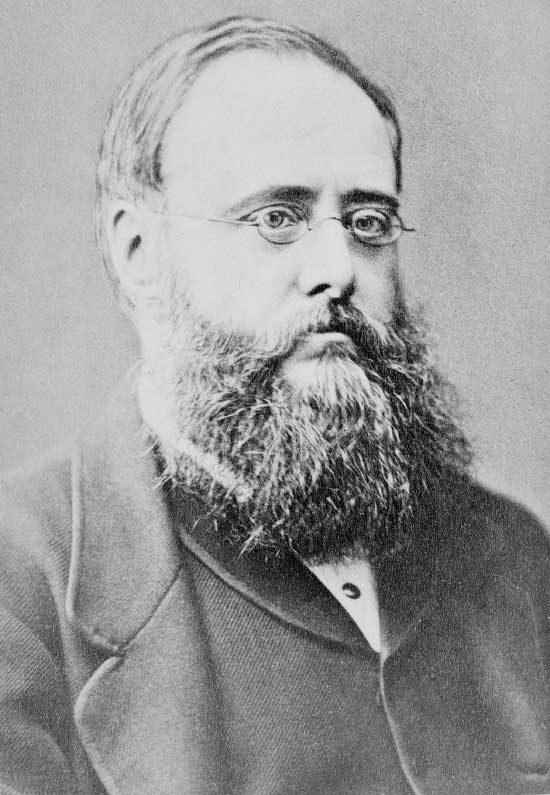
Image context: the cover uses a real archival portrait of Wilkie Collins from 1871. That choice suits this essay because The Woman in White works less like a dream narrated in one breath than like a case file assembled by a writer who knows exactly when to let one document speak and when to cut it off.[5]
1) The opening frame makes narration itself part of the plot
The novel tells us from the start that it will operate like a hearing. Walter insists that no important circumstance will rest on hearsay and that each participant will speak only from direct experience.[1] This sounds like a guarantee of clarity. In practice it creates a more interesting problem. Every narrator brings not only information, but also bias, vanity, fear, loyalty, class habit, and self-protection. The formal promise of truth immediately generates a field of partial truths.
That matters because Collins is building suspense without an omniscient safety net. If the story were told by one master narrator, the mystery could remain atmospheric but would lose its special friction. In the actual novel, the reader must keep adjusting the scale of trust. Walter is earnest and observant, yet he is also emotionally entangled. Marian is brilliant and practical, but her diary is written under pressure and then interrupted by illness and surveillance. Even minor speakers alter the emotional temperature of the record.[1][4] The form keeps reminding us that evidence is never free of the hand that delivers it.
2) Marian's diary turns the middle of the novel into a siege of paper
The clearest demonstration of Collins's structural intelligence arrives in Marian Halcombe's diary.[1] Up to that point, the book has moved through encounter, courtship, and the tightening machinery around Laura Fairlie's marriage. Marian's sections change the kind of suspense the novel can produce. We are no longer simply watching events happen. We are watching a highly intelligent witness try to stay ahead of events by writing them down before hostile forces can control the record.
That is why Marian matters beyond her reputation as one of Collins's great characters. Her diary converts domestic space into an intelligence operation. Rooms, corridors, weather, overheard fragments, times of day, and the management of servants all become part of a written defense against erasure.[1] When Count Fosco and Sir Percival Glyde move to contain knowledge, Marian answers first with observation and then with inscription. The novel's central struggle therefore becomes a struggle over who gets to write what happened.
This is also where the sensation form shows its discipline. Cambridge's account of Collins and the sensation novel stresses the genre's chain of circumstance, secrecy, impersonation, and delayed disclosure.[4] Marian's diary is where those elements stop being just plot ingredients and become a formal system. The reader feels danger because the diary is both a source of knowledge and a vulnerable object. A page can be hidden, stolen, interrupted, or rendered too late. Suspense attaches itself to the survival of a written sequence.
3) The book's great revelations depend on records, not supernatural shock
Readers remember the midnight encounter with Anne Catherick because it is theatrically vivid.[1][2] Yet the novel's largest turns do not finally rest on apparition. They rest on documents. Sir Percival's power depends on a secret in the parish register. Laura's dispossession becomes possible because identity can be manipulated on paper as well as in person. The conspiracy works by exploiting the authority of official recordkeeping and the vulnerability of women inside that system.[1][2][3]
This is where the form and the social world lock together. Britannica's summary of Collins notes the inheritance plot and the novel's use of multiple narrators.[2] Those are not separate features. The point of multiple narration is that legal and social truth have become hard to separate. A forged or hidden document can outweigh lived experience unless somebody reconstructs the chain. Collins therefore makes the reader experience institutions in their most frightening form: not as dramatic violence alone, but as the ability to convert lies into paperwork that looks final.
One of the book's sharpest scenes of structural compression comes late, when Walter realizes that a blank space in the copied register "told the whole story."[1] That moment is pure Collins. Instead of a grand confession, he gives the reader an absence with legal consequences. The gap in the record becomes more explosive than a room full of speeches.
4) Serial form gives the novel its stop-start pulse
It also matters that The Woman in White first reached readers in weekly parts.[2][4] Collins's chapter endings are not merely cliff-hangers in the cheap sense. They are pressure valves. A witness reaches the edge of knowledge; a revelation is postponed until another narrator takes over; a recovered paper changes the meaning of an earlier scene. The stop-start rhythm teaches the reader to live with deferral.
This is one reason the book feels so different from a later single-detective puzzle. The structure does not move in a straight line from clue to solution. It advances by relay. Each handoff produces both progress and loss: you learn something new, but you also lose the previous narrator's field of vision. Serial publication amplified that effect in real time, yet the design remains audible on the page even now.[2][4] Collins does not simply ask what happens next. He asks whose version of "next" will control the record.
5) Why the form still works in 2026
The novel lasts because it understands that fear grows when truth has to travel through institutions, private papers, and compromised witnesses before it can call itself true.[1][2][4] That is a recognizably modern structure. We still live among transcripts, screenshots, archives, metadata, partial testimonies, and official records whose authority may exceed their honesty. Collins's brilliance was to discover that such materials could do more than certify a plot. They could become the plot's nervous system.
Read this way, The Woman in White is not just an early sensation novel and not just a pre-detective classic.[2][3][4] It is a book about narrative custody. Who holds the page. Who interrupts the page. Who gets buried by the page. Walter's opening courtroom language is therefore more than a flourish.[1] It tells us that the real mystery will concern the handling of truth itself. Anne's white dress may start the panic, but paper is what keeps that panic alive.
Sources
- Wilkie Collins, The Woman in White. Project Gutenberg ebook 583.
- Encyclopaedia Britannica, "The Woman in White."
- Encyclopaedia Britannica, "Wilkie Collins."
- Tamar Heller, "Collins and the sensation novel," in The Cambridge Companion to Wilkie Collins. Cambridge Core chapter page.
- Wikimedia Commons, "File:Wilkie-Collins.jpg" (source page for the lead photograph).