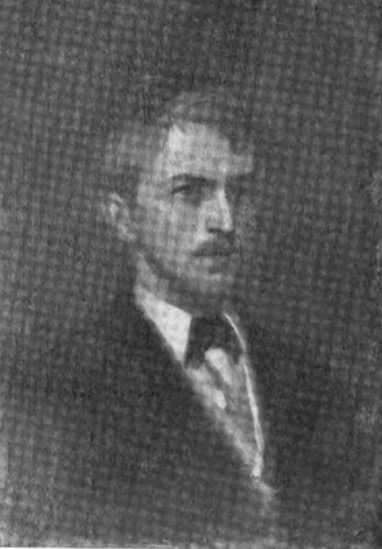
Stephen Crane's "The Open Boat" begins with one of the most exact refusals in American fiction: "None of them knew the color of the sky."[1] The sentence does not say the sky was absent. It says the men cannot afford to look at it. Four survivors of a shipwreck sit in a small dinghy off the Florida coast: the captain, injured and still commanding; the cook, bailing and hoping; the correspondent, watching and rowing; and Billie, the oiler, who does the hardest continuous work.[1][2] Above them is weather. Around them is water. In front of them is land that keeps looking near and staying unreachable.
That opening sentence is the story's method in miniature. Crane does not make nature grandly hostile. He makes it difficult to read. The men are not fighting a villainous sea; they are trapped inside a world that has no obligation to answer their need. Britannica's summary rightly identifies the story's rough seas, shifting point of view, and revelation of nature's indifference.[2] But the indifference is not abstract philosophy pasted onto an adventure plot. It arrives as cramped muscles, wet clothes, salt water, misjudged distance, a shark fin, a wave that comes at the wrong angle, and the humiliating fact that a lighthouse can be visible without becoming rescue.
The story came out of Crane's own disaster. In 1897, while trying to travel as a correspondent to cover the Cuban insurrection, he survived the sinking of the Commodore and reached shore in a dinghy with the captain, cook, and oiler.[3] The biographical fact matters, but only if it does not shrink the fiction into testimony. Crane's achievement is not that he records danger accurately. It is that he turns danger into a structure of attention. The story keeps asking what can be known when the body is tired, when hope becomes mechanical, and when the mind keeps wanting the universe to mean something back.
The boat is a room without walls
The dinghy is tiny enough to make social life unavoidable. The men cannot retreat into private heroism. Every gesture affects the others. A careless movement can capsize them; a failure to row can exhaust someone else; a word can either conserve morale or spend it foolishly.[1] That is why the story's brotherhood is so persuasive. It is not sentimental. It is produced by logistics.
Crane names the men by role rather than by full personality: captain, cook, correspondent, oiler. At first that looks like reduction. It is also the condition of survival. Each man becomes legible by what he can do in the boat. The captain watches and directs even though he is hurt. The cook bails, argues, and keeps practical hope alive. The correspondent learns the hard rhythm of rowing and looking. Billie, the only one with a personal name, rows with a steadiness that gradually makes him the story's quiet center.[1]
That division of labor gives the story its moral shape. Nobody delivers a noble speech about fellowship. Fellowship is the repeated passing of oars, the shared attention to waves, the small trust that someone else will keep the rhythm while you are spent. Crane's phrase about the men's "subtle brotherhood" is powerful because it appears inside strain, not outside it.[1] The brotherhood is not a belief system. It is a temporary social fact created by the sea's pressure.
The boat also changes scale. From shore, the men might be a speck. From inside the dinghy, the entire universe is reduced to the next wave, the next stroke, the next judgment about whether land is closer or only more visible. This is one reason the story remains so modern. It understands that crisis does not always feel dramatic to the people inside it. It often feels procedural: bail, row, duck, sleep if possible, wake, interpret, repeat.
The sea refuses metaphor even while inviting it
Crane's sea is full of possible meanings, and the story distrusts all of them. The waves can look like "wild horses," but the comparison does not tame them.[1] The shark can feel like an omen, but it is also simply a shark. The gulls settle with unnerving calm on the water and on the men's heads, not because they symbolize evil, but because they belong to the environment more easily than the men do.[1]
This is where Crane's naturalism becomes more than a school label. The story keeps exposing the human need to convert danger into message. The correspondent especially wants a moral pattern. If he is going to suffer, he wants suffering to be recognized by some cosmic witness. He imagines the absurdity of coming so close to shore only to drown, and his mind begins to repeat complaint in the form of a question: why be allowed to come this far if not to be saved?[1]
The story's answer is brutal because it is not really an answer. The sea does not refute him. It continues. The shore does not explain itself. It remains partly accessible and partly indifferent. Even the life-saving station the men hope for turns out not to operate according to the story their need has invented.[1][2] They can see people; the people can see them; recognition still fails to become rescue quickly enough.
Crane's style keeps this from turning into a lecture. He does not say, "The universe is indifferent." He lets the men experience failed interpretation. A house, a windmill, a lighthouse, a figure on shore, a waving coat: each object seems briefly readable, then slides back into uncertainty.[1] The story's terror lies in that gap between seeing and being answered.
Billie gives the ending its injury
Billie the oiler matters because he is the least rhetorical figure in the boat. He works. He rows. He is named, but not explained. While the correspondent's consciousness carries much of the story's pressure, Billie's labor carries the boat's physical rhythm.[1] That makes the ending feel less like irony than like an injury to our sense of narrative proportion.
When the men finally try for shore, Crane withholds the reward pattern that adventure fiction has trained readers to expect. The injured captain survives. The cook survives. The correspondent survives. Billie, the strongest rower, is found dead in the shallows.[1] The story does not arrange this as punishment, sacrifice, or lesson. It simply places his body where the surf has put it.
That is the hardest part of Crane's indifference. It is not that everyone dies. It is that survival and death are not distributed according to visible merit. Billie did the work readers were most likely to trust. His death breaks the comforting assumption that effort and outcome will finally recognize each other.
The correspondent's late awareness, therefore, is not triumph. It is chastened interpretation. After the rescue, the men feel that they can be "interpreters" of the sea's voice.[1] The word is strange and a little unstable. What exactly have they learned to interpret? Not a doctrine. Not justice. Not even hatred. They have learned the tone of a world that can be intensely present without being morally available.
Why the story still cuts
"The Open Boat" still works because it refuses two easier versions of survival writing. It refuses heroic mastery, in which courage makes the world orderly. It also refuses pure nihilism, in which nothing matters because nature does not care. Crane's middle position is more exacting. The sea does not care, and the men's conduct still matters. The universe does not reward Billie properly, and Billie's labor remains meaningful.
That double vision is why the story's compactness feels so large. In a few pages, Crane turns a dinghy into a moral laboratory without making it artificial. The men are small, but not trivial. Their cooperation matters even though it cannot command the outcome. Their interpretations matter even though most of them fail. Their brotherhood matters because it is temporary, bodily, and made under pressure.
The opening sentence says they do not know the color of the sky.[1] By the end, that ignorance has become the story's discipline. Crane teaches the reader to look where the men have to look: not upward toward explanation, but sideways at labor, fear, fatigue, and the person rowing beside you. The sky may remain unreadable. The oar stroke is still real.
Sources
- Stephen Crane, The Open Boat and Other Stories. Project Gutenberg HTML text, used for textual reference and short quoted phrases.
- Encyclopaedia Britannica, "The Open Boat" - publication context, plot summary, shifting point of view, and natural indifference.
- Encyclopaedia Britannica, "Stephen Crane" - biography, Crane's 1897 Commodore shipwreck, and career context.
- Wikimedia Commons, "File:Stephen Crane in May 1895 Edition of The Bookman.jpg" - source page for the archival lead photograph.