Elizabeth Gaskell's North and South is often remembered as if it were two books uneasily stitched together: a condition-of-England novel about mills, strikes, and class conflict, plus a marriage plot between Margaret Hale and John Thornton.[1][2][3] That split misses the force of the novel. Gaskell does not place industrial argument on one side and feeling on the other. She writes a world in which economic structure enters the nerves, the household, the street, the dinner table, and the vocabulary people use to judge one another.[1][2] The philosophical pressure of the book lies there. It asks how people are supposed to recognize one another when they meet first as employer and worker, southerner and northerner, lady and manufacturer, master and "hand," all before they meet as persons.
That is why the famous geographical contrast matters less as scenery than as a problem of moral training. Early on, Margaret describes Helstone as "like a village in a poem."[1] The phrase is exact because Helstone is not merely pretty countryside. It is a whole model of life in which value appears personal, local, and legible through habit. When Mr. Hale announces the move "to Milton-Northern," Margaret immediately hears not just distance but a different social ontology.[1] Milton is the place where smoke, cotton, wage pressure, and crowd movement make relation feel impersonal before it can become intimate. Gaskell does not want the reader to pick one side as simply human and the other as simply mechanical. She wants the shock of transfer itself. Margaret must learn that modern industry is not outside moral life. It is one of the places where moral life is now decided.
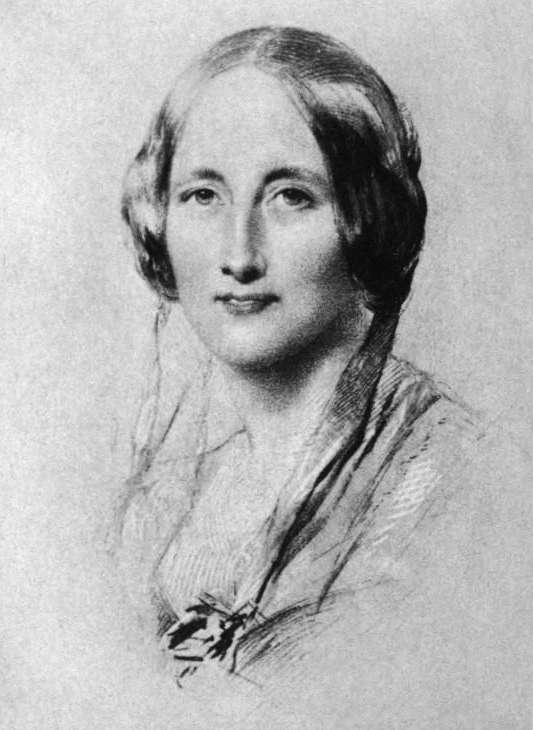
Image context: the cover uses a real photographic portrait of Elizabeth Gaskell from Wikimedia Commons.[5] That choice suits this essay because the novel is never content with system language alone. Again and again Gaskell brings social conflict back to speech, bearing, injury, and the hard work of looking directly at another person.
1) Helstone and Milton are rival theories of what a social world feels like
Readers sometimes flatten the north-south contrast into one easy opposition: pastoral South, industrial North.[1][2] Gaskell is subtler than that. Helstone gives Margaret an emotional grammar, but it also leaves her underprepared for the scale and antagonism of Milton. She arrives with moral intelligence, sympathy, and courage, yet she initially reads manufacturers as "tradesmen" and the smoky town as moral diminishment.[1] The novel does not mock that reaction; it exposes its limits.
Milton, by contrast, is not simply a place of ugliness. It is a place where forces usually hidden in gentler settings become visible: dependency, bargaining power, exhaustion, competition, and the strain of living by production cycles.[1][2] Mr. Hale feels something almost like grandeur in "the power of the machinery of Milton, the power of the men of Milton," because the town reveals human coordination at industrial scale.[1] Gaskell's point is not that mills are beautiful in the same way as woods. It is that modern life has created a new arena in which dignity and damage are both intensified.
2) Thornton's error is not that he sees economics; it is that he naturalizes antagonism
John Thornton matters because Gaskell refuses to make him a cardboard capitalist.[1][2] He is disciplined, intelligent, self-made, and often more serious than the southern gentry who look down on trade.[1][3] The novel grants him real force. But it also makes his vocabulary philosophically revealing. Explaining labor conflict, he says that "there comes a struggle between masters and men," and later insists that "the battle is pretty fairly waged between us."[1] Those are not throwaway metaphors. They show a mind that has made antagonism feel normal.
Thornton's strength is that he sees production clearly. His blindness is that he mistakes market conflict for the whole truth of social relation. Once the novel frames the town as a battlefield, everyone arrives already typed by position. The worker becomes a pressure source, the master a defensive strategist, Parliament a meddler, sympathy a form of naivete.[1] Gaskell does not deny that conflict exists. She denies that conflict should be the only language available for understanding it.
This is where the romance plot becomes philosophically useful rather than decorative. Margaret is drawn to Thornton not because he escapes Milton's hardness, but because he partly embodies it. He is the novel's best test case for whether recognition can revise economic perception without dissolving judgment.[1][2] Gaskell wants to know whether intelligence can survive contact with pride, and whether pride can survive being forced to see those it would rather classify from a distance.
3) Margaret's central act is not softness. It is cross-class attention under pressure.
The easiest way to sentimentalize North and South is to say that Margaret simply teaches Thornton kindness.[1][2] That is too small. What she repeatedly does is interrupt abstraction. She asks questions at the dinner table, notices the worker Bessy Higgins and her illness, enters the strike crisis bodily, and keeps insisting that positions called "master" and "man" are inhabited by lives rather than functions.[1][2][4]
That does not make her politically omniscient. At times she misjudges the town, romanticizes the South, or underestimates the historical anger carried by workers.[1] But Gaskell builds her as someone willing to cross into rooms where categories break down. The riot scene matters for that reason. Margaret does not solve industrial conflict there. She exposes herself to it. Her body enters the gap that ideology has widened. The gesture is risky, imperfect, and socially compromising, but philosophically exact. Gaskell keeps arguing that no durable judgment is possible if classes meet only as theories.
This is also why the novel remains harder than many summaries suggest. Margaret does not preach universal harmony. She forces contact, and contact in this book is often bruising. Recognition is not a euphemism for agreement. It is the precondition for any argument that is not already deformed by contempt.
4) Nicholas Higgins is how the novel keeps justice from collapsing into paternal feeling
If Thornton embodies disciplined capital, Higgins embodies organized worker anger.[1] Gaskell does not smooth him into grateful labor. He is sharp, suspicious, proud, and often right to be so. Through him the novel remembers that "masters and men" is not only bad phrasing; it names a world built on unequal exposure to hunger, dismissal, and bodily wear.[1][2]
That is why the late movement between Thornton and Higgins matters so much. Mr. Hale imagines that many difficulties arise because "the mutual interests of both masters and men should be well understood by both."[1] In a weaker novel that line would announce easy reconciliation. In Gaskell it works more cautiously. Mutual understanding is necessary, but it comes late, after death, strike failure, humiliation, and repeated proof that good intentions do not cancel structural power.[1][2]
Higgins keeps the book from mistaking civility for justice. Thornton can learn to listen, but he cannot become innocent. Higgins can enter conversation, but he does not forget what gave that conversation urgency in the first place. Gaskell's moral achievement is that she lets both changes happen without pretending that industrial relation has ceased to be unequal.
5) The novel's real philosophy is that modern life must be argued through persons, not around them
That is why North and South still reads as more than an industrial romance.[1][2][3] Gaskell understands that modern society produces new scales of interdependence while also producing new habits of depersonalization. People become classes, inputs, political problems, accents, regions, and income positions. The novel's answer is not to retreat into pastoral memory. Helstone cannot absorb the historical force represented by Milton.[1] Nor is the answer to celebrate industrial hardness as maturity. Thornton's battle-language is too costly for that.[1]
Instead Gaskell proposes a stricter ethic: argument must pass through recognition. A strike, a wage dispute, a dinner conversation, a proposal, a shared bereavement, a worker's illness, a master's self-discipline, a woman's refusal to flatter economic power, a man's delayed revision of his own categories: all these become part of one field.[1][2][4] Feeling in the novel is not private weather floating above structure. It is one of the places where structure becomes legible.
That is the reason the ending still matters. Margaret and Thornton do not arrive there by escaping Milton into pure romance. They arrive by learning, unevenly and painfully, that value cannot stay imprisoned inside inherited regional prejudice or inside industrial self-justification.[1][2] Gaskell does not abolish north and south. She makes each direction answer to the other. The result is a novel whose deepest claim is still difficult: modern justice begins when sentiment stops being decorative and starts becoming a form of serious social knowledge.
Sources
- Elizabeth Gaskell, North and South. Project Gutenberg full text.
- Encyclopaedia Britannica, "North and South."
- Encyclopaedia Britannica, "Elizabeth Cleghorn Gaskell."
- Elizabeth Gaskell's House, "Elizabeth's Writings."
- Wikimedia Commons, "File:Elizabeth Gaskell.jpg" (lead image source page).