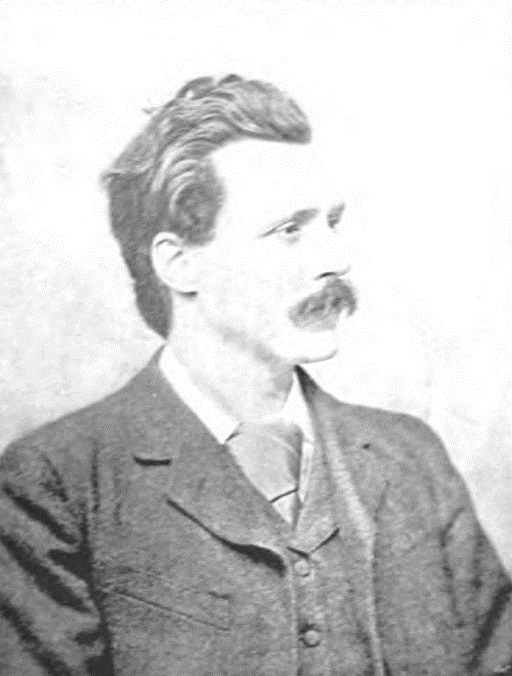
George Gissing's New Grub Street and Jack London's Martin Eden are both novels about becoming a writer, but neither one believes that authorship is best understood as self-expression. In Gissing, writing is already a trade before the hopeful writer enters the room. In London, writing begins as hunger for beauty and recognition, then discovers too late that recognition is controlled by the same public machinery that made failure humiliating. Put together, the two books make a severe argument: literary ambition injures people not only when it withholds success, but when it teaches them to measure their inner life by market response.[1][2]
The contrast is sharp because the novels begin from different emotional temperatures. New Grub Street, published in 1891, is set among London writers, reviewers, publishers, scholars, and journalists who know the economics of print too well. The Literary London Society's account of the novel rightly places it in the world of Victorian hack work and publishing upheaval, a setting Gissing knew intimately.[3] Martin Eden, published in book form in 1909 after serialization, begins with a sailor stumbling into bourgeois culture and discovering books as if they were a new element. Library of America places the novel beside London's social writings, which is the right company: its artist plot is also a class plot and a social argument.[4]
Gissing writes from inside disillusionment. London writes toward it. That difference is why the novels make such a useful pair.
Two ways to enter the literary machine
In New Grub Street, Jasper Milvain states the new dispensation without embarrassment: "Literature nowadays is a trade."[1] The line is famous because it sounds brutal and sane at once. Jasper is not a fool. He understands periodicals, networking, topical timing, payment streams, and the need to produce saleable copy. His phrase "skilful tradesman" makes authorship sound less like vocation than inventory management.[1] The novel's discomfort comes from the fact that Jasper is often right about the external world.
Edwin Reardon, his opposite, has talent but cannot convert talent into reliable production. Gissing refuses to sentimentalize him. Reardon is not simply a martyr to art; he is proud, anxious, slow, self-punishing, and often miserable company. Yet the book's pity gathers around him because the system has almost no use for the kind of seriousness he possesses. He has a literary conscience, but conscience does not pay rent, protect marriage, or keep a manuscript from becoming another deadline.
London's Martin enters the machine by a more romantic door. He wants education, beauty, Ruth Morse, and the larger self he imagines those things will make possible. When Ruth asks about fame, Martin says the important thing is the "process of becoming so."[2] Early on, that sounds generous: fame is not the final idol, only the path toward becoming worthy. But the phrase is already dangerous. If becoming requires public recognition, then inward formation has been made dependent on outward acceptance.
That is London's great trap. Martin's first artistic awakening feels bodily and ecstatic. He sees beauty before he can explain it. He reads with ferocious appetite. He writes because language appears to offer a way out of class confinement. Yet the manuscripts return, the editors remain impersonal, the magazines speak through silence, and self-education becomes a private furnace. He is not crushed by idleness. He is crushed by disciplined effort that receives no intelligible answer.
Gissing knows the market first; London lets Martin learn it
The deepest formal difference between the novels lies in who understands the marketplace soonest. Gissing gives the reader the map early. Jasper explains the business logic; Reardon embodies its casualties; Alfred Yule and Marian Yule show scholarship under economic pressure; Whelpdale converts failure into practical schemes. The book's structure is almost ecological. Every character occupies a niche in the print economy.
That ecology makes New Grub Street feel cold, but the coldness is part of its intelligence. The novel understands that literary production is never only the writer and the page. It includes rent, illness, marriage prospects, social introductions, reviews, circulating libraries, editing work, inheritance, exhaustion, and the speed at which one can make prose behave. Gissing's achievement is not merely to say that commerce corrupts art. He shows that commerce decides which temperaments get to survive long enough to call themselves artists.[1][3]
Martin Eden is more violent because Martin has to learn the market as a betrayal of his own myth. The novel lets him believe, for a time, that intensity can force the gate. He reads systematically, writes obsessively, counts possible payments, and measures himself against educated people who often understand less than he does. The tragedy is not that he lacks discipline. It is that discipline becomes fused with resentment. Every returned manuscript teaches him that beauty, effort, and social value do not naturally align.
Brissenden's advice cuts through this confusion. He tells Martin to "Love Beauty for its own sake" and to "leave the magazines alone."[2] The counsel sounds like aesthetic purity, but in the novel it is also a survival warning. The magazines are not simply bad judges. They are a machinery that can make the writer crave the wrong proof. Martin cannot take the advice because publication has become the external sign that his transformation is real. He needs the world that rejected him to certify that he has surpassed it.
Gissing's Reardon and London's Martin therefore suffer in opposite directions. Reardon cannot make himself marketable enough to live. Martin becomes marketable after the timing of desire has been ruined. Reardon is destroyed by non-recognition while he still needs money and dignity. Martin is destroyed by recognition after he has lost the capacity to believe in its meaning.
Class turns craft into a test of personhood
Both novels are especially good at showing how class makes literary ambition cruel. For Reardon, class pressure is domestic and humiliating. Poverty enters through rooms, meals, medical vulnerability, marital strain, and the shame of not being able to provide. The failure to write quickly enough becomes a failure of masculinity, husbandry, and social presence. A bad chapter is not just an artistic problem; it is a household event.
For Martin, class pressure begins as aspiration. Ruth's home gives him a glimpse of cultivated life, but it also turns culture into an entrance exam. Grammar, manners, reading, dress, and table behavior become signs by which he can be admitted or refused. His literary ambition is inseparable from that desire to cross a social threshold. He wants to become a writer partly because writing promises a self that cannot be dismissed as merely rough, working-class, or accidental.[2][4]
This is where the comparison becomes most painful. In Gissing, the marketplace reduces writers to output. In London, the marketplace first appears to offer a route beyond class, then reveals that it can only reward Martin after he has been made spiritually unfit for reward. The public that ignored him when he needed response praises him when praise has become grotesque. Success arrives, but not as rescue. It arrives as irony.
Neither novel believes that artistic worth can be cleanly separated from material conditions. Gissing is harsher about money because his London literary world is already professionalized. London is harsher about self-making because Martin's dream is that a person can build himself by force of will and reading. Both books dismantle their central fantasy. Reardon's fantasy is that seriousness should matter enough. Martin's is that effort should eventually make the world answer truthfully.
The two endings share a bitter logic
The end of New Grub Street does not need melodrama to be devastating. Its world keeps functioning. Jasper's adaptability is rewarded; the literary machine remains intact; the people most injured by it do not become arguments strong enough to stop it. That is Gissing's bleakness. The market does not have to hate literature. It only has to prefer writers who can keep changing shape.
The end of Martin Eden is more absolute, but it belongs to the same moral universe. Martin wins the public name and loses the inward reason for wanting it. The magazines, publishers, acquaintances, and admirers arrive too late to restore proportion. What was once aspiration becomes nausea. What was once a path out of class becomes evidence that the social world never understood what it was judging.
Read side by side, these novels refuse the comforting story that the writer's pain is redeemed by publication. Publication may pay, expose, distort, certify, or arrive too late. It may reward Jasper's timing, fail Reardon's seriousness, ignore Martin's apprenticeship, then crown Martin after the crown has become useless. The injury is not simply rejection. It is the long education in seeing oneself as a product before one has finished becoming a person.
That is why New Grub Street and Martin Eden still feel contemporary without needing to be updated. Their publication worlds are historically specific: late Victorian London and early twentieth-century American magazine culture. Their deeper structure is familiar anywhere creative labor is asked to perform as identity, commodity, proof, and livelihood at once. Gissing gives us the marketplace as weather. London gives us the soul that mistakes weather for destiny. Between them, authorship stops looking like a romantic calling and starts looking like a dangerous way to ask the world what a life is worth.
Sources
- George Gissing, New Grub Street, Project Gutenberg eBook page and HTML text.
- Jack London, Martin Eden, Project Gutenberg eBook page and HTML text.
- Literary London Society, "George Gissing: New Grub Street (1891)," context on the novel's London publishing world and Victorian hack writing.
- Library of America, Jack London: Novels and Social Writings, edition page listing Martin Eden alongside London's social writings.
- Wikimedia Commons, "File:Photograph of George Gissing.jpg," source page for the archival George Gissing portrait used as the article image.