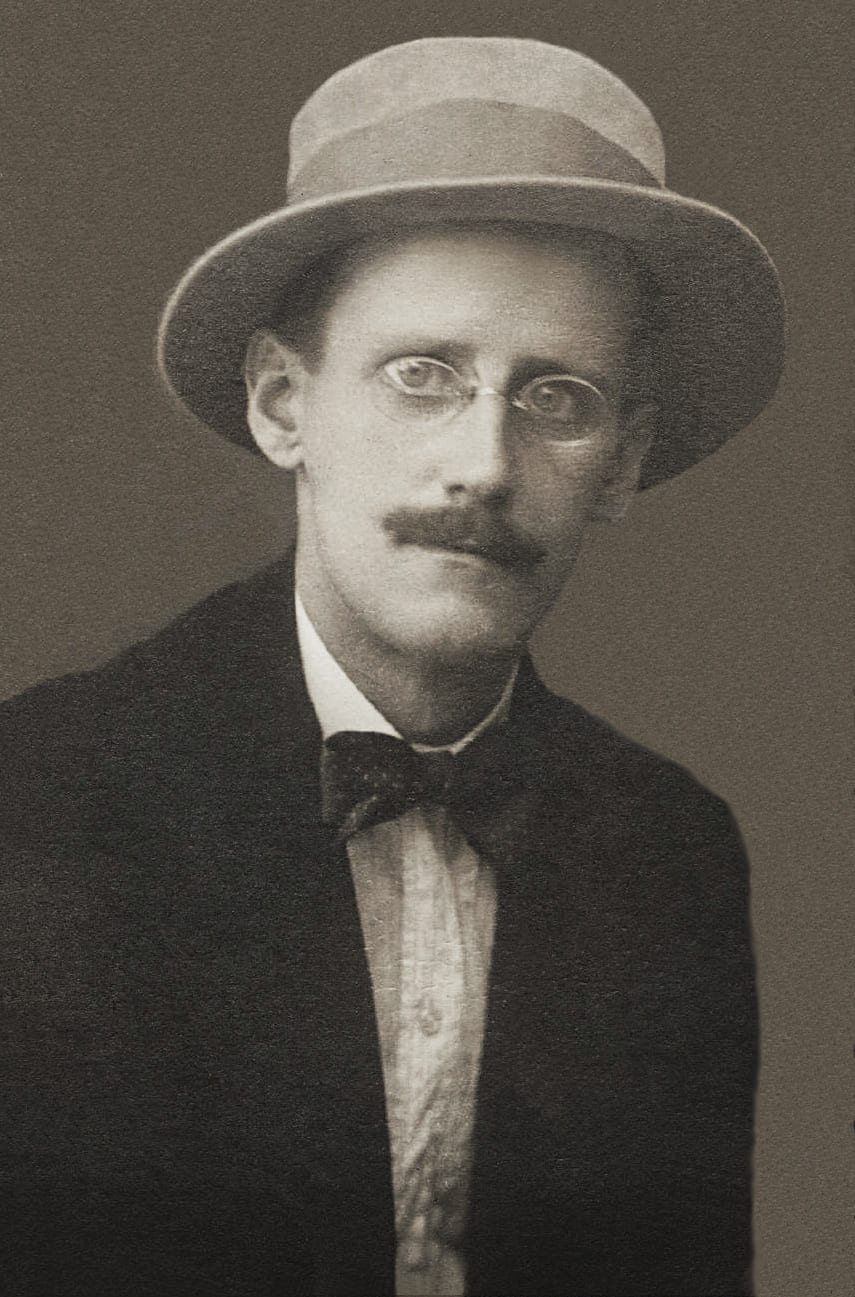
James Joyce's "Araby" is often remembered as a story of disillusionment: a boy adores Mangan's sister, promises to bring her something from a bazaar, arrives late, finds almost everything closed, and sees his fantasy collapse.[1] That summary is true, but it makes the ending sound more mechanical than it is. Joyce does not simply punish childish romance with adult reality. He builds a route in which romance has to travel through street design, household delay, money, Catholic residue, imperial commodity glamour, and the exhausted manners of a nearly closed market.
The story's cruelty is therefore spatial before it is psychological. Desire begins on a blocked Dublin street, passes through the boy's watchful house, is inflated by the strange music of a foreign-sounding name, and then reaches a hall where commerce is too tired to perform enchantment. By the final paragraph, the boy has not learned that love is false. He has learned that private feeling can be made ridiculous when the world around it refuses to supply the stage it imagined.
The Project Gutenberg eBook page identifies Dubliners as a collection of fifteen stories set in early twentieth-century Dublin, with "Araby" placed third, after "The Sisters" and "An Encounter."[1] The Internet Archive scan of the 1914 Grant Richards edition preserves the book's original publication setting as a plain London volume rather than the monument it later became.[2] That plainness matters. "Araby" is a small story about an enormous inner weather system trapped inside ordinary arrangements.
The street is blind before the boy is
Joyce's opening phrase, "North Richmond Street, being blind," is more than scene-setting.[1] The street is literally closed off, but the description also preloads the story's method. The boy will spend the story looking, mislooking, and being forced to recognize the limits of looking. Before Mangan's sister appears, before the bazaar acquires its spell, the built environment has already supplied a grammar: enclosure, dimness, repetition, and a release only when school lets bodies into motion.
The boys play in the darkening street, among houses that have watched a priest die and rooms that still hold old paper, dust, and inherited authority. Joyce lets childhood energy burn inside a narrow frame. That tension prevents the story from becoming merely sentimental. The boy's imagination is not foolish because it is intense; it is intense because the available world is so starved of enlargement.
This is why Mangan's sister first appears less as a developed character than as a signal. She stands at the railing, calls her brother in, and becomes visible through the ritual of watching. The boy's feeling attaches to posture, light, delay, and distance before it attaches to knowledge. He does not know her. He knows the way she interrupts the street.
The James Joyce Centre's page on Araby House points back to North Richmond Street as a place of social memory, noting recent work on the street, its neighbors, and its long association with Joyce's story.[3] The INOU's page adds a smaller modern afterlife: its head office at 8 North Richmond Street is named Araby House because of the building's association with Joyce's work.[4] Those present-day traces help clarify the story's precision. "Araby" does not float in a generic Dublin mood. It is anchored in a street whose very narrowness becomes imaginative pressure.
The word does more work than the bazaar
When Mangan's sister says she cannot go to Araby, the boy's errand is born as a substitute for presence. He will go for her; more exactly, he will go as if an object bought there could prove that his feeling has crossed the distance between them. The promise turns desire into logistics.
Yet the story's most powerful object is not something he buys. It is the name itself. Joyce writes of "the syllables of the word Araby," and that phrase catches how language becomes narcotic before experience can test it.[1] The boy does not need to know much about the bazaar. The sound has already done the work. It makes commerce sound Eastern, devotional, exceptional, and chosen. It lets the errand feel like pilgrimage.
Joyce is careful, though, not to mock the boy from above. The enchantment is immature, but it is not empty. It is a child's attempt to give feeling a form large enough to hold it. The adult world around him offers schoolwork, a late uncle, money counted in small coins, and rooms with worn moral furniture. "Araby" becomes a counter-word to all that: a place where the ordinary might consent to become symbolic.
That is why the uncle's delay hurts so much. The boy's journey depends on an adult who forgets, drinks, returns late, and treats the errand as a trivial request. The uncle does not need to be cruel. Negligence is enough. In Joyce, paralysis often works this way: not as dramatic prohibition, but as missed timing, social fatigue, and the small failure of someone with power to recognize urgency in someone without it.
The bazaar is commerce after the spell has expired
By the time the boy reaches the bazaar, the story has already begun to deflate the word that sustained him. The hall is large, dim, and mostly closed. The stalls do not open into wonder; they withdraw from him. The bazaar is not a portal but an almost-finished sales floor where the exotic has become merchandise and the merchandise has lost interest in being sold.
That setting is the story's masterstroke. If the bazaar had been dazzling, the boy's disappointment would have had to come from moral lecture. If it had been openly sordid, the lesson would be too easy. Instead it is tired. A few adults flirt and make shop talk; the boy lingers to preserve the appearance of interest; coins touch in his pocket with humiliating concreteness. The fantasy dies not because the world announces a grand truth, but because the scene is too thin to sustain the meaning he brought to it.
The final call that "the light was out" closes the story's symbolic circuit.[1] Light has been unreliable all along: streetlight, doorway light, the glow around Mangan's sister, the imagined radiance of Araby, the remaining lamps in the hall. When the upper part of the bazaar goes dark, the boy sees the machinery of his own wish. The darkness does not reveal nothing. It reveals him to himself.
That is why the last sentence has such violence. His eyes burn with "anguish and anger."[1] The anger is not only against the shopgirl, the uncle, the bazaar, or his own vanity. It is anger at disproportion: the discovery that a feeling which seemed sacred inside him could become awkward, late, underfunded, and almost invisible in public.
The ending is not wisdom yet
It is tempting to call the ending an epiphany, then treat epiphany as a clean upgrade from illusion to knowledge. "Araby" is rougher than that. The boy's self-recognition is real, but it is not yet mature wisdom. It is a wound. He sees himself as a creature driven by vanity because that is the language available in the moment. The judgment is too harsh and also partly true.
The story's path matters because it keeps that truth from becoming simple. The boy is vain, but he is not only vain. He is theatrical, but he is also starved for beauty. He misunderstands Mangan's sister, but he also responds to a world that gives him few honest forms for longing. He arrives too late, but lateness has been organized around him by adults, money, distance, and closing time.
This is Joyce's exactness. "Araby" lets the reader remember how childish fantasy feels from the inside while also showing how quickly it can curdle when it meets a social world built from delay and transaction. The bazaar does not kill romance by proving that romance is fake. It kills the boy's fantasy by refusing to become the scene he needed.
The aftermath remains unwritten. We do not learn what he says at home, whether he sees Mangan's sister again, or how he later narrates this evening to himself. Joyce stops at the instant when the inner story and the outer scene collide. That is enough. A blind street has led to a darkened hall. A name has become a place, then a disappointment. A boy who wanted to bring back a token instead brings back the first bitter knowledge that feeling, however intense, can arrive after the lights have gone out.
Sources
- James Joyce, Dubliners, Project Gutenberg eBook page and HTML text, including "Araby" and publication/catalog context.
- Internet Archive, Dubliners by James Joyce, 1914 Grant Richards edition scan and bibliographic record.
- James Joyce Centre, "Araby House and James Joyce," note on Michael Quinn's social study of Araby House, Joyce, and North Richmond Street.
- Irish National Organisation of the Unemployed, "About Araby House," current institutional note on 8 North Richmond Street and its Joyce association.
- Wikimedia Commons, "File:James Joyce by Alex Ehrenzweig, 1915 cropped.jpg," source page for the archival portrait used as the article image.