A woman looks into a mirror and finds someone she wants to send away. By the end of Mary Elizabeth Coleridge’s “The Other Side of a Mirror,” she has also admitted that this unwelcome figure is herself. The poem never tells us that the admission clears the glass. It makes the wish to clear it harder to satisfy.[1]
Across five six-line stanzas, the poem moves from an ordinary act of looking to a face stripped of beauty, a mouth unable to speak, and eyes burning with anger. Its force comes from the speaker’s shifting relation to what she sees. She can describe the woman in painful detail long before she can bear to say who the woman is.
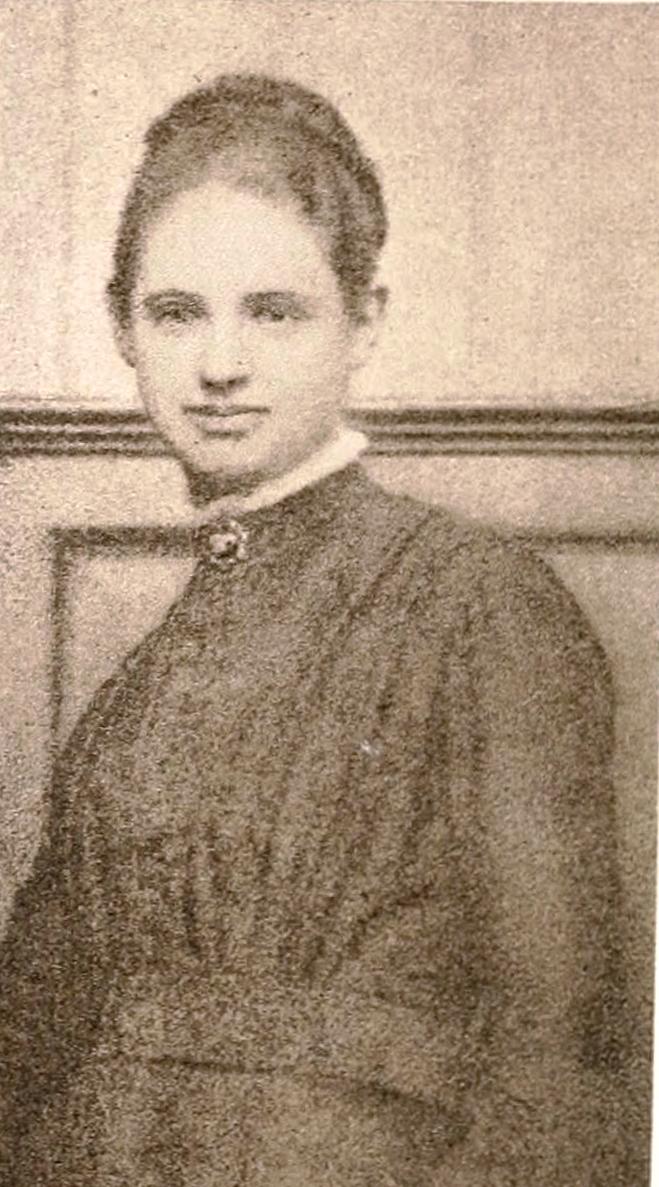
The poem appeared in Fancy’s Following in 1896, a privately printed collection of 125 copies published under the name Anodos. Henry Newbolt’s preface to the later collected Poems explains that Coleridge resisted using a family name already famous in poetry. That is his account of her reluctance; it is useful context, not a key that turns every speaker into the author.[1] Coleridge also wrote novels and reviews, discussed writing with friends, and taught literature to young women at the Working Women’s College.[4] The frightening figure in the glass belongs to a crafted poem within that larger writing life.
The speaker helps make the apparition
“I sat before my glass one day” sounds almost casual. The next line changes the balance of power: she “conjured up a vision bare.”[1] The verb gives the person looking an unsettling share in the event. She has helped summon what she will later try to dismiss.
The opening also establishes a history of looking. Earlier reflections were “glad and gay”; this one is different.[1] The glass has ceased to offer a familiar, agreeable appearance. Yet the poem does not identify an external cause. We receive no account of a quarrel, bereavement, or betrayal. What confronts us is the intensity of the feeling, before we know what story might explain it.
The first stanza calls the apparition a woman “wild / With more than womanly despair.”[1] The line break briefly leaves “wild” exposed. Then the next line measures the feeling against a presumed limit on what a woman’s despair should be. The phrase can suggest grief beyond ordinary endurance; it can also make us hear the speaker judging an emotion that exceeds an acceptable feminine appearance. That second possibility becomes sharper when the next stanza presents a face that has lost its loveliness.
Beauty is one of the measures by which this self is found wanting. The description does not grant the distressed woman a compensating serenity. Her hair forms a “thorny aureole,” a halo whose promise of holiness is immediately disturbed by “hard unsanctified distress.”[1] The religious associations invite us to expect suffering made sacred. The adjective withholds that consolation. Pain has changed the face without making its meaning reassuring.
An open mouth offers no release
The third stanza concentrates on the lips:
Her lips were open—not a sound
Came through the parted lines of red.[1]
An open mouth prepares us for speech. The dash interrupts that expectation, and the line break makes the absence last a little longer. We reach the next line waiting to hear something; what comes through is the statement that nothing does.
The mouth then becomes a wound that bleeds secretly. Coleridge joins two ways the body might release what it contains—speaking and bleeding—but only the painful one occurs. Even a sigh is denied. By the stanza’s last line, the woman has neither words nor the small relief of an audible breath.[1]
The speaker, meanwhile, is producing an exact account of this failure. The distinction matters. The poem gives language to a figure who cannot speak inside its scene. Its verbal control lets us remain with a suffering that its narrator finds almost unbearable to acknowledge.
That control was part of Coleridge’s practice. Eton College’s catalogue records two manuscript notebooks of Fancy’s Following: one containing corrections by Robert Bridges, the other a fair copy.[3] This does not establish which particular lines he touched. It does remind us that the published collection emerged through revision. The poem’s distress reaches us in carefully arranged stanzas, with the second, fourth, and sixth lines repeatedly returning to the same rhyme sound.
The fourth stanza makes the figure still harder to absorb into an attractive self-portrait. Her eyes hold both a dying desire and an energetic fire of jealousy and revenge. The movement is troubling: lost hope does not leave her simply exhausted. It also produces a strength that cannot change or tire.[1] That strength offers no obvious freedom. Endurance can prolong the condition in which she is trapped.
The last rhyme refuses to let her go
In the final stanza, the speaker stops describing the woman and addresses her. The remote “her” becomes someone who can receive an order:
Shade of a shadow in the glass,
O set the crystal surface free![1]
“Shade of a shadow” reduces the apparition twice, as though diminishing its substance might make it easier to remove. But the appeal gives this insubstantial thing considerable power. The speaker needs its cooperation to recover an untroubled surface.
She asks it to pass as the prettier visions have passed. That comparison quietly unsettles the wish. If the agreeable images were temporary too, clearing away the terrible one cannot guarantee a permanent, satisfying likeness. The mirror has already held different versions of the person sitting before it.
The final line recalls a whisper: “I am she!”[1] Its small volume sits uneasily beside the exclamation mark. The identification is emphatic, but barely voiced. And the sentence keeps both pronouns. The speaker recognises herself while still naming the recognised figure as someone over there.
Listen to the stanza’s repeated rhyme: “free,” “be,” “she.”[1] The sound that first carries the request for release ends by carrying the admission of identity. Each return tightens the connection between the woman looking and the woman she wants gone. The rhyme completes its pattern precisely where the speaker’s attempted separation becomes impossible to sustain.
Newbolt’s preface offers a more consoling frame for Coleridge’s dark poems. He acknowledges their strange shapes and shadows, but assures readers that her thought returns toward light.[1] This particular ending leaves that assurance outside the scene. We hear the request for banishment and the remembered confession; we are never told that the glass clears.
The poem therefore stops at a difficult achievement. The woman in the mirror has become recognisable without becoming welcome. Her suffering has acquired a language without finding a remedy. The last whisper changes who the speaker can say she is, while leaving her to live with what she has said.
Sources
- Mary E. Coleridge, Poems, second edition (Elkin Mathews, 1908): Henry Newbolt’s preface, dated 6 November 1907, for publication history and the editor’s account of her poetry; poem IX, “The Other Side of a Mirror,” pp. 8–9, the primary text used throughout this reading.
- Wikimedia Commons, “Mary Elizabeth Coleridge.jpg” — archival photograph dated 1883, reproduced from Gathered Leaves from the Prose of Mary E. Coleridge; image provenance and original file.
- Eton College Collections, MS 683 01 02 09 — two autograph manuscript notebooks of Fancy’s Following, including a corrected manuscript and a fair copy; catalogue dates them to the early 1890s.
- Poetry Archive, “Mary Elizabeth Coleridge” — biographical context, fiction and reviewing, literary gatherings, and teaching at the Working Women’s College.