Mrs. Dorman is explaining how the dead men walk. They rise from their slabs in the church, she says, and come down the aisle in their marble. Her employer interrupts the account with a private compliment: “another good phrase, Mrs. Dorman.” She is trying to get him to lock his door. He is enjoying her delivery.[1]
That parenthesis contains much of the horror of E. Nesbit’s “Man-size in Marble.” Jack, the painter who narrates the story, can recognize the force of someone else’s words without allowing them to change his conduct. His voice is affectionate, cultivated, often funny. Nesbit makes those attractions part of the trouble: we can enjoy listening to him while noticing how badly he listens.
This essay discusses the ending.
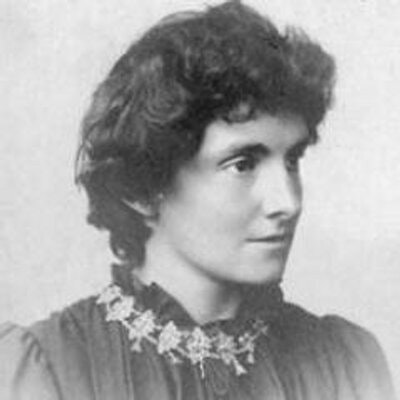
The story appeared in Home Chimes in December 1887 and entered Grim Tales in 1893.[2] It begins after the disaster, with Jack challenging the people who explain away his experience. The analysis here follows the text of that collection. Its peculiar tension comes from hearing a ruined man reconstruct the breezy confidence that helped ruin him.
A household made of good material
Jack and his wife, Laura, want a cottage that is healthy to live in and pleasing to look at. Their search becomes a small comedy of bad plumbing and bad taste. They eventually settle near a church, furnish their rooms with secondhand finds, and make their living through painting and writing. Mrs. Dorman supplies both domestic labor and local legends, which the couple turn into magazine stories.[1]
This arrangement establishes a habit of looking. The country offers views; old furniture offers character; a neighbor offers usable language. Even Mrs. Dorman’s appearance receives an aesthetic appraisal before Jack mentions her cooking. Everything seems available to be selected, enjoyed, or made into work. The habit becomes dangerous when a story might require a practical response.
When the housekeeper announces that she must leave before the end of October, Jack first tries to understand the decision as a problem with wages or holiday arrangements. Eventually she tells him about the two wicked men represented by the church’s marble figures. On All Saints’ Eve they return to their former home, the site of his cottage. He promises that he does not make fun of such things, then adds for the reader: “Which was partly true.”[1]
The aside invites a shared smile. Jack and his reader become the sophisticated audience; Mrs. Dorman becomes the performer who does not quite understand her effect. His politeness preserves that division. He can praise her phrasing while retaining the right to decide what her story means.
Nesbit makes the distinction audible in the exchange over the statues. Jack supplies the educated term effigies. Mrs. Dorman calls them bodies and describes their human scale. Her language allows stone to remain uncomfortably bodily. His places the figures within a familiar category of church furniture. The title takes her side of the exchange: the phrase he admires becomes the name under which his own story reaches us.[1]
Who gets to sound reasonable?
Laura’s first distress concerns work. Without help, she fears that cooking and cleaning will consume the time the couple needs to earn money. Jack answers with reassurance and indulgence. He calls her unreasonable, while presenting his affection as generous enough to accommodate the defect.[1]
The difference between her concern and his description matters. Sarah Jane Bissell’s study of Victorian women’s ghost stories argues that Jack’s treatment of Laura as delicate and childish obscures her position as a working writer. Bissell also draws attention to the narrator’s continuing condescension toward Mrs. Dorman, despite the catastrophe that vindicates her warning.[3] That reading helps us hear the pressure inside his endearments. Love does not guarantee that the beloved will be taken seriously.
The story nevertheless gives the marriage real pleasures. Jack washes the plates; the couple prepare breakfast together; they enjoy their improvised household. These passages keep him from becoming a simple caricature of a domineering husband. His failure can coexist with tenderness and useful work. The question is what happens when Laura’s feelings conflict with his account of how happy and safe they are.
He has withheld Mrs. Dorman’s warning from Laura, partly to avoid troubling her, though he admits to another, less definite reason for keeping quiet. On the fatal evening, she feels uneasy and asks whether he ever has presentiments. His reply closes the inquiry almost before it begins: even if he had them, he would not believe them. Later, when she wants to join his walk, he decides that she is too tired. He leaves her inside and the door unlatched.[1]
Outside, the prose fills with clouds, moonlight, fields, and silent woods. Jack’s painterly attention remains wonderfully active. He hears eleven strike, thinks of going in, then lets the night keep him. The descriptive pleasure delays his return. As readers, we are held outdoors by the same sentences that hold him there.
The warning returns in his own voice
At the church, Jack finds the slabs empty. Now the language he had treated as picturesque becomes his language of evidence: he describes the missing figures through Mrs. Dorman’s formulation of bodies drawn out at human size. The borrowed words have changed function. They no longer decorate a legend; they help him report an intolerable sight.[1]
His panic does not carry him straight home. Dr. Kelly intercepts him, laughs at his story, and challenges his courage. Jack agrees to return to the church, where the figures are back in place. The doctor’s confidence steadies him. The reader has just watched a frightened woman’s apprehension dismissed; now a frightened man is also persuaded to distrust himself. Reassurance works through the authority of its speaker, with another delay as the result.[1]
The final scene breaks the voice’s easy control. Jack finds Laura dead. His narration fills with questions about what she heard and saw, things he cannot now recover. He still tries to comfort her, calling her by pet names and promising safety. The familiar tenderness continues after its power to help has disappeared.
Then the account contracts to a short declarative sentence. In Laura’s clenched hand is a marble finger.[1] The object gives the story its brutal finish, but it does not restore her account of the encounter. Jack can produce evidence for his reader; he cannot obtain the answer he needs from his wife.
Nesbit’s supernatural fiction continues to be collected alongside the children’s books that dominate her reputation. Wordsworth’s 2025 collection places these tales within the Female Gothic tradition, connecting domestic relationships with terror.[4] “Man-size in Marble” makes that connection through the sound of an ordinary conversation. The fatal warning arrives clearly enough. Jack hears it, admires it, and turns it into a compliment. By the time he needs its words himself, the woman who should have been warned is beyond hearing.
Sources
- E. Nesbit, “Man-size in Marble,” in Grim Tales (A. D. Innes, 1893), Project Gutenberg — primary text, from the opening defense of the narrator’s testimony to the final discovery.
- Troy J. Bassett, “Grim Tales,” At the Circulating Library: A Database of Victorian Fiction, 1837–1901 — December 1887 magazine publication and the 1893 collection.
- Sarah Jane Bissell, Haunted Matters: Objects, Bodies, and Epistemology in Victorian Women’s Ghost Stories, PhD thesis, University of Glasgow (2014), pages 175–177 — Laura’s work, Jack’s condescension, and the authority of women’s warnings.
- Wordsworth Editions, Man-size in Marble and Other Grim Tales, selected and introduced by Stephen Carver (2025) — the collection’s contents and its placement of Nesbit’s supernatural fiction in the Female Gothic tradition.
- Penguin Books Australia, “E. Nesbit” — publisher’s author page and the archival portrait reproduced above; photographer and image date unspecified.