People often remember Main Street through its insult value. Sinclair Lewis attacked the small town, offended Minnesota, and converted "Main Street" into shorthand for provincial smugness. All of that happened. But it is too quick a way of describing what made the novel such an event in 1920. Main Street did not become durable because it sneered at one place from a superior distance. It became durable because it turned the emotional weather of belonging into a public argument. Through Carol Kennicott, Lewis made readers feel how conformity can pass for neighborliness, how aspiration can look ridiculous before it looks necessary, and how a town can be both intimate and airless at once.[1][2][3][4]
The novel tells you this from the first page. "This is America," Lewis begins, before declaring that the street in Gopher Prairie is also the continuation of Main Streets everywhere.[1] The line is not local color. It is a scaling device. Lewis does not want Sauk Centre disguised as fiction merely so that he can score points against his hometown. He wants one Midwestern street to stand in for a wider American faith in comfort, decency, standardization, and self-congratulation. The later sentence "Main Street is the climax of civilization" sounds like praise only until the irony fully settles in.[1] The book's reception history starts there, in the gap between civic self-description and what the novel makes visible.
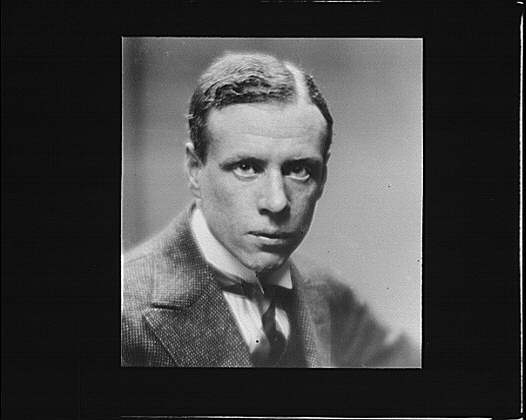
Image context: the cover uses a real archival portrait of Sinclair Lewis rather than a nostalgic town postcard. That choice fits the argument because this is a dossier about public afterlife, not architectural charm. The novel mattered once readers recognized that Gopher Prairie was not an exotic target. It was a mirror that happened to be held up from Minnesota.[3][6]
1. The publication story matters because the backlash was part of the proof
Library of America calls Main Street a "phenomenal event in American publishing and cultural history," and that description is not promotional exaggeration.[3] The book hit a nerve because it arrived as both bestseller and provocation. The Sinclair Lewis Foundation's summary still frames it through the same double movement: highly acclaimed upon publication, yet immediately bound to the conflict between Carol and "the small-town mentality" around her.[4] In other words, the public could not decide whether Lewis had written a great national novel or an act of betrayal. That uncertainty is not incidental to the book's reputation. It is the reputation.
The Minnesota Digital Library source set preserves the sharper local edge. It notes that many contemporaries found the novel "bleak and depressing," that some residents of central Minnesota resented their portrayal, and that the public library in Alexandria, Minnesota, banned it.[5] Those details matter because they keep the reception history concrete. A book does not get banned by a local library because it has failed to describe a social world. It gets banned because it has described one too legibly.
This is why a reception dossier fits Main Street so well. The novel's early life cannot be separated from the quarrel over whether Lewis had told the truth about provincial America or committed an unforgivable breach of civic manners. The backlash was part moral offense, part wounded recognition. Gopher Prairie readers could object to the satire. They could not fully deny its object.
2. Carol Kennicott became the book's lightning rod because she is neither heroine-saint nor easy snob
Carol is the reason the novel reaches beyond mere caricature. If Lewis had narrated only through town boosters, the satire might have been flatter; if he had given us a perfectly lucid reformer, the book might have become a tract. Instead he built a heroine whose aspirations are real, generous, vain, energetic, culturally hungry, and often half-formed at the same time.[1][2][3] Early on, Carol insists, "I want to do something with life."[1] That sentence is bigger than personal ambition. It names the pressure that Gopher Prairie cannot comfortably absorb: a desire for beauty, planning, art, usefulness, and mental enlargement that does not fit the town's narrow script for a doctor's wife.[1][5]
But Carol is not simply "right" while everyone else is wrong. Britannica's summary of the novel gets at the deeper mechanism when it describes the satire as double-edged, aimed not only at the townspeople but also at "the superficial intellectualism of those who despise them."[2] That is crucial. Lewis does not spare Carol's abstraction, impatience, or occasional theatricality. She can confuse taste with transformation. She can imagine that a library improvement, a better play, or a more beautiful civic center might by itself heal a culture whose habits run much deeper.[1][2]
That doubleness explains the force of the reception. Readers hostile to the novel could say Carol was pretentious, ungrateful, or impractical. Admirers could say the town was philistine, suspicious, and cruel. Both readings are available because Lewis made the conflict structurally honest. Carol is not a sovereign modern intelligence descending on yokels. She is a partly muddled but genuine sensor for everything the town trains itself not to notice.[1][2][3]
3. The novel's afterlife depends on how Lewis turned local complaint into a national realism problem
Lewis's 1930 Nobel lecture helps clarify why Main Street became more than a scandalous regional satire. Looking back, he describes discovering that one could write about Midwestern village life "as one felt about" it rather than as a dutiful hymn to neighborly virtue, and he mocks the genteel demand that common speech behave as if it belonged in "a women's literary club on Main Street."[5] That retrospective framing matters. Lewis understood the novel not as a tantrum against small places, but as a release from falsifying politeness.
Once that release happens, Main Street becomes national very quickly. Gopher Prairie is modeled on Sauk Centre, but the novel's logic does not depend on Minnesota exceptionalism.[1][4][5] It depends on repetition: the way clubs, churches, luncheon talk, storefront pride, suspicion of novelty, and fear of being thought affected can produce the same social texture in many places at once. The opening universalizes the town on purpose.[1] What looks like local satire is really a theory of distributed provincialism.
That is why the book remained alive after the first scandal cooled. If it had only insulted one region, it would now feel like a period quarrel. Instead it keeps returning whenever readers feel the pressure to admire their own environment before they have fully examined it. The afterlife comes from recognizability, not from a single set of dated local references.[2][3][4]
4. Why Main Street still reads as more than a museum piece
The strongest current reason to read Main Street is that it refuses both easy populism and easy cultural superiority. Lewis hears the complacency of Gopher Prairie, but he also hears how hunger for refinement can become thin, self-dramatizing, and detached from workable social change.[1][2] Carol keeps colliding with that limit. Her village-improvement dreams are not ridiculous because beauty and culture are trivial. They are vulnerable because form alone cannot cure a whole social arrangement.[1][3]
That is also why the book's ending matters. Carol is neither crowned reformer nor converted conformist in any fully satisfying way. The town wears her down, but it does not entirely absorb her imagination.[1] Library of America is right to call the novel wry, sad, and funny.[3] Those three qualities are inseparable. A harsher novel might have punished everyone; a softer one might have rewarded accommodation. Lewis leaves the contradiction alive.
So the cleanest description of the book's reception history is not that America first resisted it and then canonized it. Something sharper happened. America kept finding itself in it.[2][3][4][5] The same features that made some early readers call it bleak now make it durable: the distrust of civic self-flattery, the exact rendering of pressure to belong, and the refusal to imagine that aspiration automatically becomes action once it is sincerely felt.[1][2]
That is why Main Street made provincial life impossible to praise innocently. After Lewis, the small town could still be defended, loved, mourned, or idealized. It could no longer be described as naturally wholesome without also inviting suspicion about what such praise needed to hide. Carol Kennicott is the reason. She carries the book's restlessness into the town, and the town returns the favor by turning her restlessness into a public test case. The scandal was temporary. The recognition lasted.[1][2][3][5]
Sources
- Sinclair Lewis, Main Street (Project Gutenberg HTML text).
- Encyclopaedia Britannica, "Main Street" (novel by Sinclair Lewis).
- Library of America, Main Street & Babbitt - edition page with publication and cultural-history context.
- Sinclair Lewis Foundation, "Main Street" - overview of the novel and Carol Kennicott's conflict with Gopher Prairie.
- Minnesota Digital Library, "Sinclair Lewis's Main Street" - primary-source set on reception, resentment, and regional context.
- Library of Congress Prints & Photographs Online Catalog, "Portrait photograph of Sinclair Lewis" (Arnold Genthe, 1914 source page for the lead image).
- Nobel Prize, "Sinclair Lewis - Nobel Lecture" (1930).