Konstantin Levin is often introduced as the good half of Anna Karenina: the country landowner set against salons, adulterous glamour, rail stations, and social ruin.[1][2][3] That description is useful and still too neat. Levin matters because Tolstoy refuses to let him become a solved answer. He is not a pastoral mascot, not a moral lecturer in boots, and not merely "Tolstoy himself" with the serial numbers left on.[4][5] He is a man who keeps wanting life to come together under one honest principle and keeps discovering that body, work, marriage, jealousy, death, and faith do not fit into system as cleanly as he had hoped.
That is what makes the character last. Anna's story is the novel's great visible tragedy, but Levin carries its most stubborn inward labor.[1][2] He wants truth without pose, labor without theatricality, love without social falseness, and belief without cant. Tolstoy gives him all those hungers, then makes him live through the humiliating fact that sincerity does not automatically produce steadiness. Levin is earnest enough to be moving and raw enough to be embarrassing. The character study begins there.
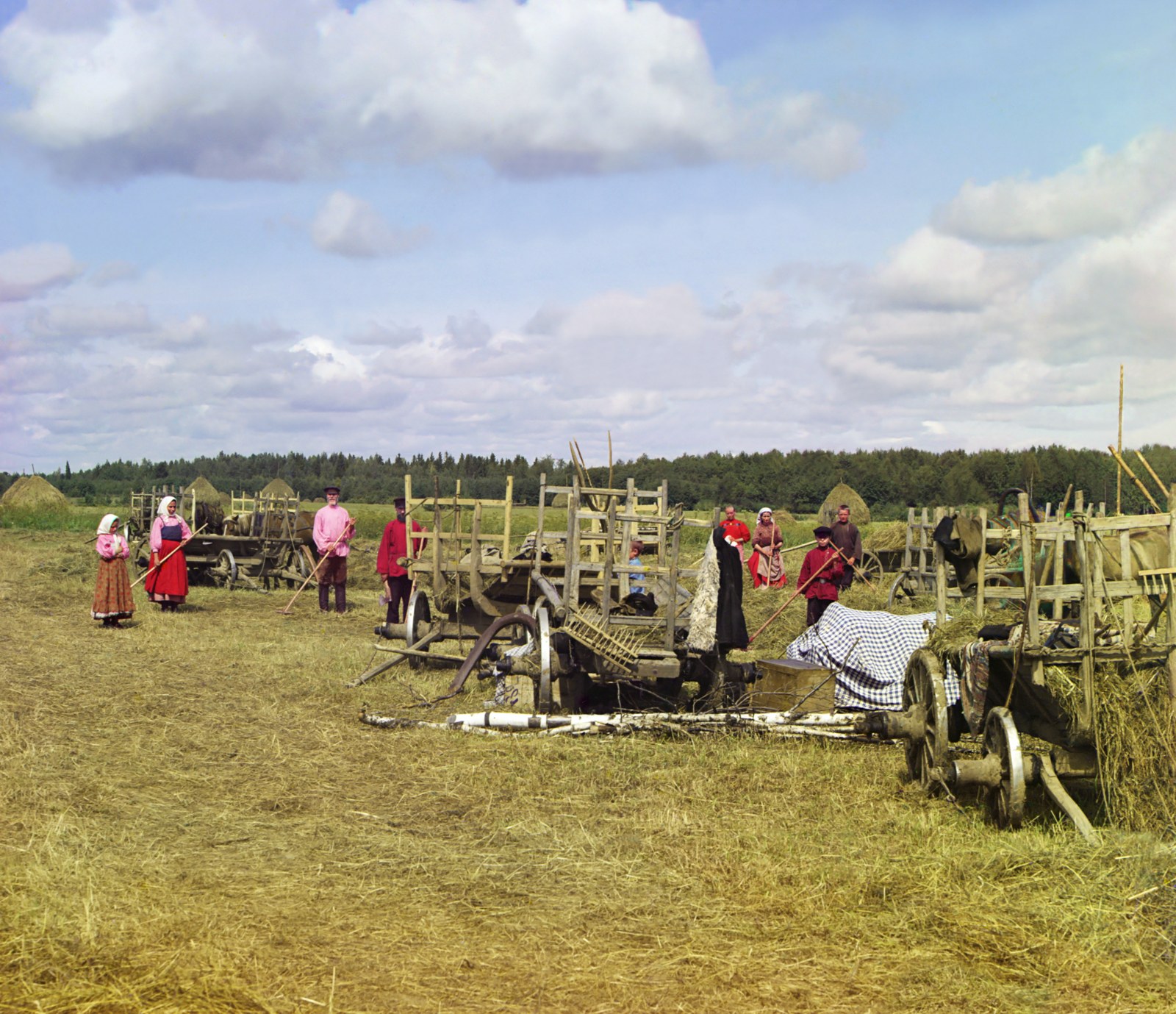
Image context: the cover uses a real archival rural field photograph rather than an illustrated edition or generic author portrait. That choice suits this essay because Levin's moral life repeatedly passes through bodily work: the scythe, the field, the rhythm of other workers, and the fleeting relief of practice before thought returns.[1][6]
Levin is built from hunger for honest life before he is built from wisdom
Levin enters the novel already dissatisfied with the forms available to him.[1] He can move in Moscow society, but he distrusts its conversational polish and rank calculations; he can manage an estate, but he knows ownership alone does not make labor meaningful. Britannica's short character entry gets the broad contrast right when it calls his fulfilled marriage a counterpoint to Anna's catastrophe, yet that formula can hide how agitated he is for most of the book.[3] Levin is not stable first and rewarded later. He is unstable in a different register from Anna: less spectacular, more self-accusing, more full of failed efforts to align thought with life.
Tolstoy builds that restlessness into Levin's relation to work. The farming chapters are often misremembered as rural therapy, as if Levin simply escapes the city's false surfaces and finds health in the fields.[1][2] But the mowing scene is stronger than pastoral cure. Levin does not merely admire peasant labor from above; he tries to enter its rhythm, to discover whether bodily exertion can abolish the split between thinking and living.[1] What he gets is not revelation in one clean stroke, but intermittent release: fatigue, pace, imitation, happiness, then the return of division. Work consoles him because it is real. It does not permanently settle him.
That pattern is crucial. Levin wants wholeness, but Tolstoy keeps giving him sequence instead: a good hour, then recoil; confidence, then self-disgust; practical purpose, then metaphysical need.[1][5] The character is therefore never reducible to a program of agrarian virtue. He is a man repeatedly testing whether activity can become belief.
Kitty does not cure him; marriage makes him more legible
Levin's courtship of Kitty is one of the most cherished threads in the novel because it offers an answerable tenderness beside Anna's destructive passion.[1][2][3] Yet even here Tolstoy is subtler than the summary. Levin does not move from loneliness into uncomplicated domestic light. He carries insecurity into love itself: pride, humiliation after Kitty's first refusal, romantic idealization, and later a jealousy so rapid and bodily that it startles him as much as it wounds her.[1]
This is where the character study has to resist the temptation to treat Levin as the novel's healthy norm. He is morally serious, but seriousness does not spare him from vanity. He wants marriage to be truthful, and that desire can turn tyrannical the moment he suspects opacity or divided feeling.[1] Tolstoy is exact about the indignity of this. Levin can feel deeply grateful for Kitty and still become petty, suspicious, and ashamed within the same domestic field. The novel's honesty about married life lives partly here. Happiness is not the end of psychological weather.
Britannica's entry on Anna Karenina notes that the Levin-Kitty plot is often read as reflecting Tolstoy's own marriage.[2] That autobiographical shadow matters less as gossip than as permission for tonal range. Tolstoy lets Levin's married life contain awkwardness, labor, erotic strain, household detail, quarrel, reconciliation, and births that do not float above fear.[1][2][4] He does not idealize domestic fulfillment by making it smooth. He makes it worth having because it remains difficult and ordinary at once.
His deepest education comes through helplessness, not mastery
Levin likes competence. He thinks in terms of management, methods, books on agriculture, and reforms that might bring estate life into clearer relation with justice and productivity.[1] But some of Tolstoy's hardest Levin chapters dismantle the fantasy that a person can organize his way to meaning. Nikolai's decline and death do this first.[1] Levin enters that ordeal with love, guilt, practical concern, and a terrible inability to help enough. The room with his dying brother strips away his cleverness. Kitty, not Levin, often proves steadier under direct bodily extremity.[1]
That reversal matters because it wounds Levin's preferred self-image. He wants to be the morally serious man, the one who confronts life at root, the one who refuses shallowness. Yet when death becomes intimate rather than theoretical, he is frightened, awkward, dependent, and exposed.[1] Tolstoy does not punish him for this. He lets helplessness become part of the character's education. Love proves real not when Levin finally understands suffering, but when he stays near what he cannot master.
The same is true later around childbirth and family fear.[1] Levin keeps discovering that the zones of life that matter most arrive mixed with panic. Birth is not pure blessing in his experience; it is also waiting, terror, uncertainty, gratitude, and the humiliating recognition that life goes forward without asking whether one has reached philosophical composure. Liza Knapp's description of Levin as Tolstoy's quasi-autobiographical counterweight is useful up to a point, but it becomes truly illuminating only when joined to this fact: Tolstoy makes his self-shadow least flattering at the moments when bodily dependence is strongest.[5]
The final turn gives him practice, not a system
Readers often remember Levin's ending as a religious conversion, and it is one, but not in the simple sense of doctrinal closure.[1][5] By the last movement of the novel he has passed through family joy and acute spiritual desolation. He admits that he has come near suicide, hiding rope and fearing his gun because life without meaning has become uninhabitable.[1][5] This is not decorative soul-searching. Tolstoy lets the crisis become practical and physical, exactly as he has done with work, jealousy, illness, and birth.
What changes Levin is not an argument won in abstract philosophy. It is the sudden intelligibility of a moral orientation already half-known to him: live for God, do not live for the belly alone, do not harm, do not lie, and do not wait for the whole universe to become transparent before acting well.[1][5] The point is easy to sentimentalize if reduced to "Levin finds faith." Tolstoy's finer move is to let Levin understand that the new clarity will not abolish irritation, vanity, or domestic impatience. He will still snap, still blunder, still fail to inhabit his best insight consistently.[1]
That refusal to romanticize the ending is the character's triumph. Levin is not cured into permanent serenity. He is given a form of ongoing labor. The last pages make this explicit: he can now attach daily life to a meaningful horizon, but daily life remains daily.[1] Children cry, arguments recur, weather changes, temper returns. Faith does not cancel psychology; it re-situates it. Levin therefore becomes one of literature's most persuasive serious men precisely because seriousness does not make him grand. It makes him answerable.
Why Levin lasts
Levin lasts because Tolstoy found the point where moral hunger and ordinary life stop flattering each other.[1][4][5] A weaker novel would have used him as a corrective emblem: healthy country values answering decadent city passion. Tolstoy does something riskier. He gives Levin many of the impulses readers want to admire, sincerity, work ethic, family devotion, spiritual urgency, and then keeps submitting those virtues to embarrassment, bodily limitation, jealousy, and incomplete understanding.[1]
That is why the character outlives summary. Levin is not important because he finally "stands for" Tolstoy's beliefs, rural authenticity, or family happiness. He is important because Tolstoy makes inward earnestness difficult to live with and still worth defending. The man in the fields, the rejected suitor, the jealous husband, the brother at a deathbed, the father in fear, the thinker hiding rope from himself: these are not separate Levins.[1] They are one person learning that meaning does not descend as finish. It has to be practiced inside a life that remains stubbornly unfinished.
Sources
- Leo Tolstoy, Anna Karenina (Project Gutenberg HTML text).
- Encyclopaedia Britannica, "Anna Karenina" (publication context and Levin-Kitty as the novel's major counterplot).
- Encyclopaedia Britannica, "Konstantine Levin" (character overview and contrast with Anna's tragic plotline).
- Encyclopaedia Britannica, "Leo Tolstoy" (biographical context and Tolstoy's larger search for life's meaning).
- Liza Knapp, Anna Karenina and Others: Tolstoy's Labyrinth of Plots (JSTOR book page describing Levin as Tolstoy's quasi-autobiographical hero and the novel's late religious pressure).
- Wikimedia Commons, "File:Gorskii 04422u.jpg" (source page for the Prokudin-Gorskii rural field photograph used as the article image).