
Louise Gluck's Nobel lecture, recorded in Berkeley on March 27, 2023 for the 2020 literature prize, sounds at first like it might settle into the expected laureate shape.[1][2] A childhood anecdote, a roll call of early reading, a few reflections on vocation, then a graceful close under institutional lights. What makes the ten-minute video worth watching now is that it steadily refuses that ceremonial scale. The lecture becomes an argument about how poems actually travel: not by conquering a room, but by finding one listener at a time.[1][2]
That argument begins with a child's competition. Gluck remembers pacing in her grandmother's house and trying to decide the greatest poem in the world, with Blake's "The Little Black Boy" and Stephen Foster's "Swanee River" as finalists.[2] The anecdote is charming, but it is not there just to show precocity. It establishes the lecture's real subject, which is singled-out hearing. Even as a child, she says, Blake felt alive because his voice seemed to be speaking "only to me or especially to me."[2] That is already a full poetics in miniature. Authority comes not from public volume but from the uncanny feeling of direct address.
The rest of the lecture keeps widening that first insight without abandoning it. Gluck moves from Blake to Shakespeare, then to Emily Dickinson, then to the panic of prize-day publicity, and finally to a statement about readers arriving "one by one."[2] Put together, those moments explain why the video matters for literary readers. It is not only a record of a Nobel laureate thinking aloud. It is a compressed theory of lyric scale, one that helps explain how Gluck's poems can sound both severe and intimate at once.[2][4]
The October 2020 telephone interview on Nobel's site makes the same tension visible in a rawer key.[3] She jokes that the prize might cost her friends, says the attention is disruptive, and then immediately shifts toward ordinary attachments, toward "the preservation of daily life" with the people she loves.[3] She also refuses to identify one definitive entry point into her work, because the books differ so much from one another, though she points new readers toward Averno and Faithful and Virtuous Night.[3] The lecture supplies the missing principle behind that resistance to simplification. The books differ in surface method, but the desired encounter remains strikingly constant: a voice speaking with enough precision that the reader feels chosen rather than counted.
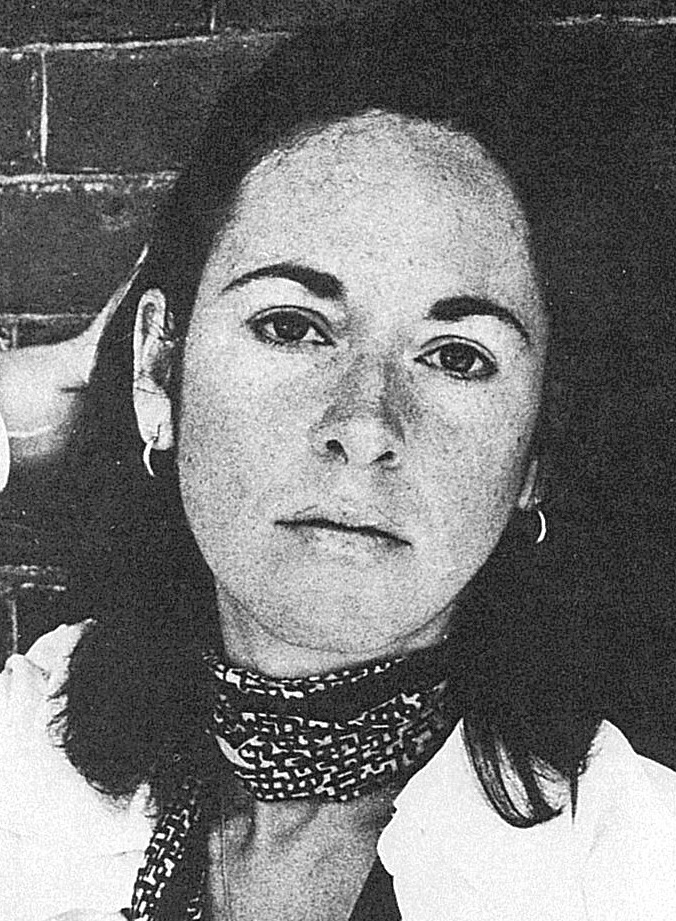
Image context: the cover uses a real 1977 photograph from Wikimedia Commons rather than a jacket montage or a new synthetic portrait. That choice fits the article because the lecture repeatedly pushes away from the inflated scale of literary public life and back toward a human figure, a voice, and a single line of attention.[5]
The official Nobel Prize video below is brief enough to watch whole. The most revealing stretches come in the opening childhood sequence, the Dickinson passage in the middle, and the closing claim that poetry reaches its many readers sequentially rather than as a crowd.[1][2]
Around 0:00 to 2:30, the childhood contest becomes a theory of address
The opening movement matters because it makes literary value feel prior to reputation.[1][2] Gluck does not begin with publication, canon, or professional ascent. She begins with pacing, inward recitation, and a private contest staged in the mind.[2] Blake is not important here because history has already declared him great. He becomes important because his poem enters a child's ear with the force of secret arrival. That is why the lecture's early phrase about hearing a dead writer speak "only to me or especially to me" lands so hard.[2] It turns reading into a scene of singular recognition.
That singularity is easy to sentimentalize, so it helps to hold it against the biographical page Nobel also publishes. There, Gluck recalls early reading, Greek myths, the Oz books, and the conviction that Blake and Shakespeare were the people she wanted to be talking to.[4] The lecture compresses that longer autobiographical background into a cleaner aesthetic claim. Poems matter because they create an impossible intimacy across time. They cross the distance between the living and the dead, not by shouting to a public, but by sounding uncannily exact inside one mind.
This is already enough to correct a familiar misreading of Gluck. Her work is often described in terms of austerity, severity, or emotional coldness.[2][3] Those labels miss the scale at which the poems are working. The voice does not flatter the reader by being warm in a social sense. It wins trust by being exact. In that sense, the childhood anecdote is not decorative at all. It tells you what to listen for in the rest of the lecture: not confession, not memoir, but the mechanics of precision.
Around 4:00 to 7:30, Dickinson turns privacy into an argument against flattening
The middle of the lecture is where the talk stops sounding merely reflective and becomes polemical.[2] Gluck describes the appeal of Emily Dickinson not as adolescent shyness, but as kinship with a temperament that distrusts public life, a realm in which "generalization obliterates precision" and partial truth replaces candor.[2] Then she performs a brilliant little demonstration. Dickinson's "I'm nobody! Who are you?" sounds conspiratorial and liberating in its original form; if the voice of the conspirator is replaced by the voice of the tribunal, the same words become menacing.[2] A scale shift changes the moral weather.
That observation reaches beyond Dickinson. It is a key for reading Gluck's own poetics. The lecture is not arguing that privacy is morally purer than public life, or that poets should retreat from history into a sealed chamber.[2] It is making a narrower, sharper claim. Certain kinds of truth survive only at a scale small enough to resist flattening. Once language starts serving the tribunal, nuance drains away. The sentence may still be grammatically identical, but its pressure changes. The voice no longer reveals; it adjudicates.
This is where the October 2020 interview becomes unexpectedly useful.[3] Prize-day publicity arrives there as interruption: the phone ringing, the hour too early, the practical day already being invaded by scale.[3] In the lecture, that same pressure returns in distilled form when she says that on the morning of October 8 the light felt too bright and the scale too vast.[2][3] What she fears is not visibility in itself. It is the way large-scale attention tempts language away from its most precise instrument, which is the charged disclosure possible between one voice and one listener.
Around 8:00 to the end, "one by one" becomes a model of literary afterlife
The lecture's closing turn is its strongest. Gluck grants the obvious point that writers presumably want to reach many, but then she redraws the meaning of many.[2] Some poets, she says, do not imagine that audience spatially, as in a filled auditorium. They imagine it temporally, sequentially, with readers arriving "one by one."[2] This is more than modesty. It is a distribution model for literature.
That formulation helps explain why the lecture feels so much richer than a success speech. A Nobel platform usually implies culmination: one writer, one stage, one massive audience. Gluck uses the platform to argue for the opposite image. The real life of a poem is serial and delayed. The poem meets one reader today, another years later, another after the writer is dead. The scale can become large only by refusing the fantasy of simultaneous possession.[2] This is why the talk keeps its composure. It does not need to crescendo. Its logic is anti-amphitheatrical by design.
The 2020 interview supports that reading in a modest but telling way. Asked where newcomers should begin, Gluck declines to offer a single representative book because the books are "very different, one from another," though she names Averno and Faithful and Virtuous Night as promising starts.[3] That answer is consistent with the lecture's final claim. Literature does not need one authorized entry gate. It needs repeated, solitary arrivals. One reader enters through Averno, another through the late poems, another through the Nobel lecture itself. The afterlife is cumulative, not simultaneous.[2][3]
What the video makes newly audible
Watching the lecture now, the most impressive thing is how little it performs authority while steadily exercising it.[1][2] Gluck does not build a heroic author-image. She narrows the frame instead. Childhood reading, Dickinson's scale of secrecy, the panic of overexposure, the sequential reader: each step trims away the false grandeur that literary institutions often project onto poets.[2][3] By the end, the prize ceremony has been quietly converted into a defense of private voice.
That is why this short video belongs in a literature feed rather than a general culture roundup.[1][2][3][4] Its real achievement is not biographical color. It clarifies an enduring craft problem: how a poem can reach beyond the self without becoming generic, and how a writer can speak to many without writing for the crowd. Gluck's answer is severe but generous. Precision first. Intimacy first. The reader comes later, and then another reader after that, each arriving alone.[2]
Sources
- Nobel Prize, "Nobel Prize lecture: Louise Gluck, Nobel Prize in Literature 2020," YouTube video, published April 11, 2023.
- Nobel Prize, "Louise Gluck - Nobel Lecture" - official lecture text and recording context, noting the lecture was recorded on March 27, 2023 in Berkeley, California.
- Nobel Prize, "Louise Gluck - Interview" - October 2020 telephone interview immediately after the Nobel announcement.
- Nobel Prize, "Louise Gluck - Biographical" - autobiographical note on early reading, teaching, and literary development.
- Wikimedia Commons, "File:Louise Gluck circa 1977 (cropped).jpg" - photographic source page for the article image.