Many Dickens novels attack one institution at a time. Bleak House gives you Chancery, Hard Times gives you utilitarian manufacture, Great Expectations gives you class shame turned inward. Little Dorrit is harsher because it treats imprisonment as a transferable social form. The Marshalsea is the novel's literal origin point, but Dickens keeps showing that the same habits of confinement survive outside its walls in finance, rank, administration, and family feeling.[1][2] Read that way, the prison plot and the bureaucracy plot are not parallel threads. They are one design.
That is why the book still feels so severe. In Britannica's summary, the novel is described as an attack on the injustices of the English legal system and on debtors' prison in particular.[2] True, but still not the whole achievement. Dickens is doing something more ambitious than topical protest. He is asking what happens when a society learns to call delay, dependency, and managed humiliation normal.
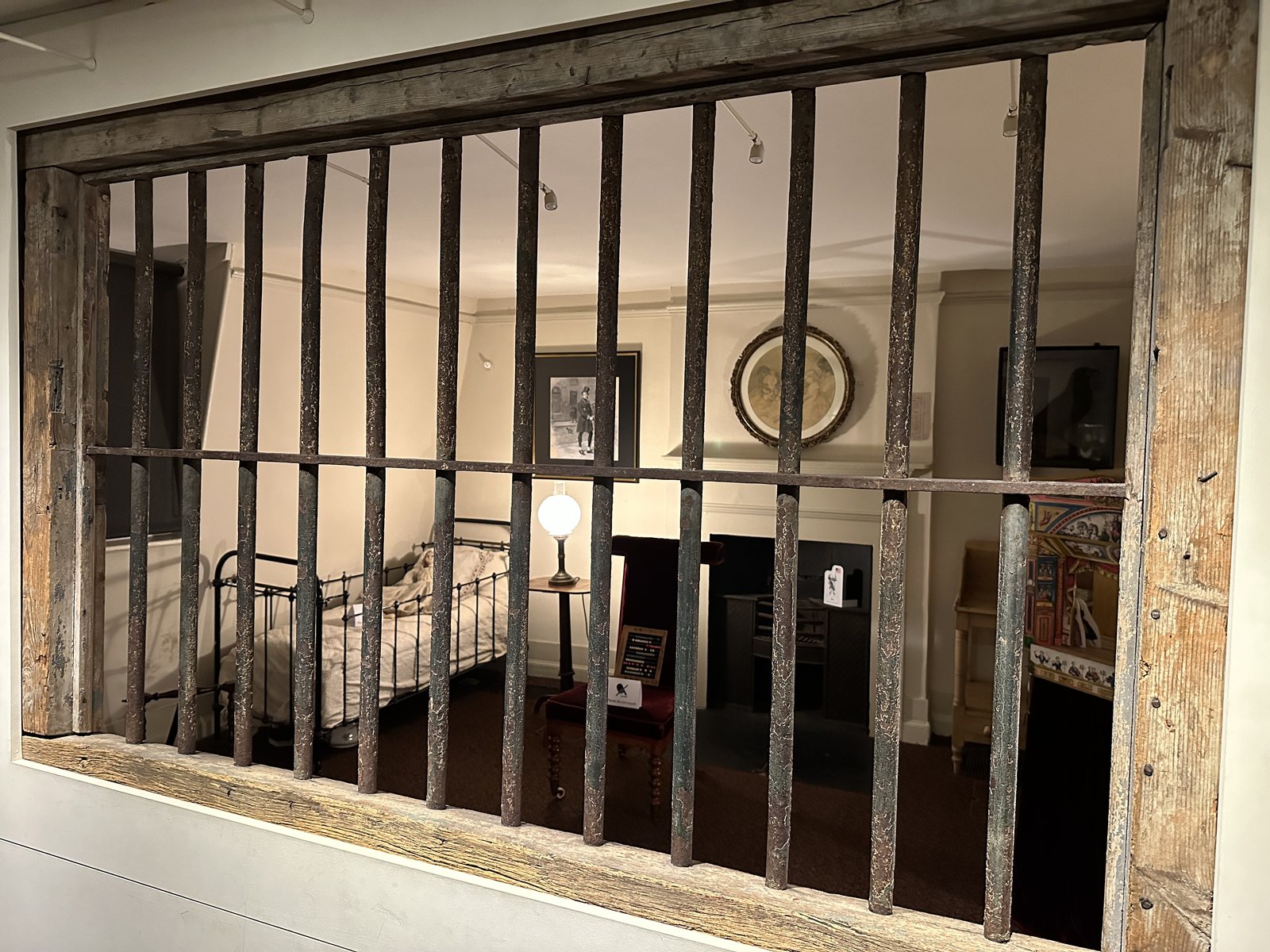
Image context: the lead image shows the remaining wall of the Marshalsea in Southwark, photographed in 2007 and preserved on Wikimedia Commons. It matters here not as literary tourism but as a material reminder that Dickens's most memorable prison was tied to an actual London site whose logic he then expanded into a full social map.[1][6]
1. The novel begins in a prison, but it does not leave the prison there
The publication context helps. Little Dorrit appeared serially from 1855 to 1857, then in book form in 1857.[2] The V&A notes that the original manuscript survives in the Forster collection, which is a useful reminder that this was one of Dickens's major middle-to-late novels, not an odd side experiment.[4] By this point he had already learned how to turn institutions into atmosphere. What changes here is scale. Instead of making one system oppressive in isolation, he lets the prison become the novel's governing metaphor.
That move had a personal charge. Britannica's Dickens biography notes that in 1824 his father went to prison for debt while the young Charles was withdrawn from school and sent into factory work.[3] It would be crude to reduce Little Dorrit to autobiography, but it would be equally crude to ignore the fact that Dickens knew debt imprisonment not as abstract policy but as a family catastrophe. The novel carries that memory forward in transformed form: not as memoir, but as a way of seeing how institutions seep into temperament.
Dickens states that seepage with unusual bluntness in the first book. Amy is "born and bred in prisons," then broadened into "a social condition" false enough to make even natural feeling seem strange.[1] That sentence is easy to skim past because Amy remains so gentle, but it is the novel's real thesis. Prison is not only stone walls, locked yards, and debt. It is a training in diminished expectation.
2. The Marshalsea manufactures identity before it merely restricts motion
One of Dickens's sharpest ideas is that confinement becomes a role. William Dorrit does not simply remain a debtor. He hardens into "the Father of the Marshalsea," a ceremonial dignity built out of helplessness, repetition, and public habit.[1] The title sounds comic at first, then ghastly. A prison should suspend social identity; here it manufactures a new one. Dorrit's vanity and fragility are not side notes to incarceration. They are products of long adaptation to it.
Amy changes under the same pressure, but in the opposite moral direction. Dickens says that she learns to become "useful, even indispensable."[1] The phrase matters because it gives the book a counter-ethic. In the Marshalsea, status is theatrical and stagnant; Amy's value comes from service, work, memory, and emotional steadiness. She carries messages, earns wages, soothes shame, and keeps a family functioning after its official head has become symbolic rather than practical.[1][2]
That is why Amy Dorrit can seem almost too good until one sees what Dickens is measuring. He is not trying to make her dazzling. He is asking what sort of character can grow inside enclosure without becoming carceral in spirit. Amy's answer is not freedom in the heroic-romantic sense. It is disciplined usefulness that never hardens into pride. The novel places immense moral weight on that distinction.[1][5]
3. The Circumlocution Office is the Marshalsea translated into administrative language
The great joke of the second system is also the bleakest: the Circumlocution Office exists to study "How not to do it."[1] Dickens repeats the phrase so often that it stops reading like a slogan and starts reading like a governing rhythm. Things are delayed, referred, classified, deferred upward, and returned unread. This is satire, but it is not only satire. It is the prison principle in another costume.
The crucial point is that the Office does not look like a jail. It looks respectable, furnished, credentialed, and national. That is why it is so important to the novel's architecture. Marshalsea confinement is obvious. Circumlocution confinement is procedural. In one place people are visibly enclosed; in the other, action itself is enclosed inside status hierarchy and official habit.[1][2]
Dickens understood that one could be socially mobile and still remain trapped in this larger sense. The Dorrit family leaves prison, acquires money, travels, and enters gentility, yet the old captivity survives as nervous performance. William Dorrit carries the Marshalsea into Europe because the prison has become part of his relation to shame and display.[1] The Dickens Project's reading of the novel's ending is useful here: it argues that Dickens creates a fallen world inside and outside the prison, and that no one entirely escapes its effects.[5] That seems right. Freedom in Little Dorrit is never clean or total.
4. Reception keeps returning to the novel because its systems travel well
The afterlife of Little Dorrit is bound up with that portability. Britannica presents the novel as a social attack on legal injustice and debtors' prison, which remains the clearest starting point.[2] But the book has lasted because readers keep recognizing newer versions of its transfer mechanism: institutions that justify themselves through delay, social orders that convert dependence into character, and respectable environments that punish people by making useful action feel impossible.
Even the surviving documentary record nudges the novel in that direction. The V&A's account of Dickens manuscripts places Little Dorrit among the major handwritten survivals in the Forster collection.[4] That matters because manuscript survival keeps the novel visible not simply as a famous story but as a made object inside Dickens's career. It remains teachable, rereadable, and open to re-argument. The Dickens Project's dedicated Little Dorrit page, with its serial-installment scaffolding and historical-context materials, shows how naturally the novel still invites slow structural reading rather than plot extraction.[4][5]
What survives most strongly, though, is the ending's refusal of grandeur. Dickens does not reward Amy and Arthur with triumphal social mastery. He sends them down into what he calls "a modest life of usefulness and happiness."[1] The line is almost shockingly restrained after so much prison language, financial panic, family theater, and bureaucratic obstruction. Yet that restraint is the point. The novel does not imagine liberation as dominance. It imagines a life scaled to care, work, and mutual reliability.
That ending is why Little Dorrit remains harder than its reputation. It is not merely a Victorian issue novel about bad prisons. It is a book about how whole societies learn prison habits: ceremonial status without agency, procedure without action, dependence disguised as respectability, feeling narrowed by shame. Against all that, Dickens offers not revolution, not glamorous rebellion, but the quiet moral labor of becoming useful without becoming servile. That is a smaller answer than many readers want. It is also why the book lasts.[1][2][5]
Sources
- Charles Dickens, Little Dorrit (Project Gutenberg full text, including the 1857 preface and cited passages on the Marshalsea, Amy, and the Circumlocution Office).
- Encyclopaedia Britannica, "Little Dorrit" (publication context, plot outline, and institutional focus).
- Encyclopaedia Britannica, "Charles Dickens" summary page (biographical context on the 1824 debt-prison shock and its effect on Dickens's fiction).
- Victoria and Albert Museum, "Charles Dickens' manuscripts and proofs" (Forster collection context and surviving Little Dorrit manuscript record).
- The Dickens Project, "Little Dorrit and Arthur Clennam: A Modest Life of Usefulness and Happiness" (critical framing of the novel's ending and prison logic).
- Wikimedia Commons, "File:Marshalsea-wall-December2007.jpg" (source page for the lead image of the surviving Marshalsea wall).