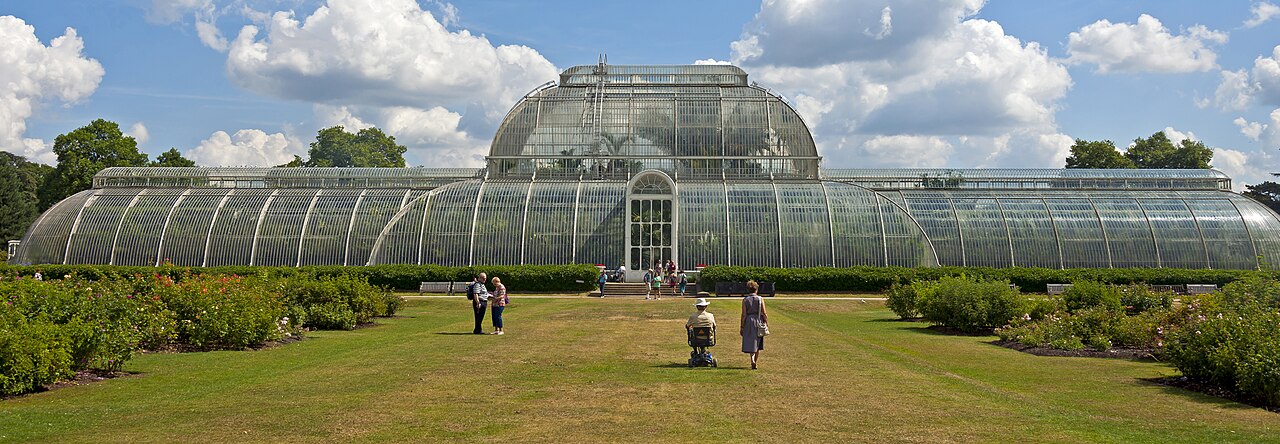
Virginia Woolf's "Kew Gardens" and Katherine Mansfield's "At the Bay" are both day stories that keep disappointing anyone who asks what happens next. Woolf gives us a flowerbed, a snail, passing couples, children, heat, air, and fragments of talk. Mansfield gives us Crescent Bay from misted dawn to darkness, with swimmers, children, servants, mothers, meals, errands, and private irritations moving through the long day. In each case, plot does not disappear because nothing matters. Plot recedes because perception has become the real event.
That is the useful comparison: both stories replace the old machinery of incident with a social weather system. Woolf compresses it into one London garden in July. Mansfield expands it across a New Zealand seaside settlement. One works like a magnifying glass; the other like a tide chart. But both ask the same formal question: what if fiction followed the pressure of attention rather than the ladder of action?
The Flowerbed And The Bay
Woolf's opening is almost aggressively non-narrative. The story begins not with a person but with an "oval-shaped flower-bed," then with color, petals, dust, a snail shell, a raindrop, and light passing through minute surfaces.[1] NYPL's exhibition note is blunt about the story's shape: it calls "Kew Gardens" essentially plotless and points to the way its impressionistic flora and fauna are paired with passing human conversations.[3] That is not a defect in the story. It is the design.
The flowerbed is a democratic device. Because the story begins at ground level, the human figures are not granted automatic centrality. They move past "with a curiously irregular movement," only a little more purposeful than butterflies or the snail.[1] Woolf does not mock them for this. She re-scales them. The garden makes human drama visible as one movement among many: color, insect, shell, voice, heat, municipal leisure, memory.
Mansfield opens "At the Bay" from the other direction. Her first movement is atmospheric enlargement: "Very early morning," a "white sea-mist," the hills, paddocks, bungalows, road, dunes, and sea all temporarily erased into one soft field.[2] Where Woolf starts with a close-up, Mansfield begins with the whole environment losing its boundaries. Encyclopedia.com's account of the story stresses that Crescent Bay appears out of mist at the beginning and disappears into darkness at the end, and that the story draws closely on Mansfield's remembered family world while refusing to become a conventional family plot.[4]
So the two stories reverse each other at the entrance. Woolf starts with a small object and lets social life wander around it. Mansfield starts with a whole bay and lets domestic life gradually emerge inside it. The shared modernist move is not simply "description." It is a transfer of authority. Setting is no longer the painted backdrop behind action. Setting decides what action can feel like.
People Become Passing Pressures
In "Kew Gardens," the people arrive as sequences: an older married pair, an old man and a younger man, two elderly women, a young couple. They do not build toward one another. They brush the same space and vanish. The first couple carries memory of another love; the older man's speech breaks into private visionary fragments; the women half-listen and half-evade; the young couple speak through hesitation and heat.[1]
The story's pleasure comes from how little Woolf explains. A conventional realist story might choose one pair and develop the hidden wound. Woolf lets each pair remain partial. The garden makes them legible for a moment, then lets them pass. That incompletion is not thinness. It is the social truth the form wants: public life is made of overheard fragments, not completed biographies.
Mansfield has more room and a more continuous cast, but she uses a similar refusal. "At the Bay" contains enough material for a family novel: Stanley Burnell's self-importance, Linda's fatigue, Beryl's hunger for some other life, Jonathan Trout's loose philosophical drift, Kezia's childhood perceptions, Mrs. Fairfield's household gravity.[2] Yet no single one becomes the protagonist in the old sense. The bay keeps redistributing emphasis.
That redistribution is especially sharp in the Stanley and Jonathan scene. Stanley wants even swimming to confirm rank: "First man in as usual!"[2] Jonathan, already in the water, ruins the victory by simply being there. The episode is comic, but it also gives the story's social method in miniature. A character builds a private plot of triumph; the environment quietly refuses to stage it for him.
Speech Without Mastery
Both stories are fascinated by speech that fails to organize the world. In Woolf, talk is often half-heard, repeated, or dislocated. People say things that seem intimate but arrive without enough frame to become confession. The reader is placed near the flowerbed, not inside a stable mind. We catch language as the garden catches light.
That matters because Woolf is not merely decorating silence. She is testing how much fiction can infer from rhythm, interruption, and adjacency. The old man's speech in "Kew Gardens" could be treated as eccentricity. The story instead lets his broken verbal field sit beside the snail's slow progress and the women's evasive listening.[1] Mind becomes one more pattern moving through the path.
Mansfield's speech has a different texture. It is more socially placed, more domestic, more stung by class, gender, work, and fatigue. Stanley's briskness, Beryl's restless self-address, Linda's inward recoil, the children's language, and Jonathan's drift all belong to a household order that everyone inhabits differently.[2] But speech still does not master experience. People talk around what they cannot change.
That is why "At the Bay" feels less like an anecdote than like a chambered day. Each section opens another room in the weather. A remark, a meal, a swim, a child's game, a flirtation, or a memory matters because it changes the pressure, not because it advances a plot. Mansfield's sections do not march; they breathe.
Scale Is The Difference
The key difference between the stories is scale. "Kew Gardens" is short enough to make attention feel almost botanical. Its human episodes are brief exposures around a central bed. The story's form asks us to notice equivalence: a snail's body, a couple's memory, a spot of color, a voice fading in public air. Woolf makes the garden a lens that reduces hierarchy.
"At the Bay" is broader and more tidal. Its sections can hold work, leisure, family history, sexual tension, maternal ambivalence, childhood freedom, and evening melancholy without making any of them final. Encyclopedia.com's context helps here: Mansfield had imagined some of the New Zealand stories as part of a larger "Karori" project, but "At the Bay" remains complete as a day rather than as a chapter toward a conventional novel.[4] Its breadth is novelistic; its refusal of plot is short-story precise.
This difference changes the emotional aftertaste. Woolf's story leaves a shimmer: the sense that human life is briefly visible inside a larger field of sensation. Mansfield leaves a bruise under the shimmer. The day has beauty, but it also exposes the exhaustion of marriage, the limits of fantasy, the pressure of respectability, and the way children inherit adult atmospheres before they can name them.
What The Plotless Day Makes Possible
Calling these stories plotless can sound like calling them slight. It is better to say they relocate plot into perception. In "Kew Gardens," the event is the reader learning to move attention from flower to snail to human fragment without demanding that one scale cancel the others. In "At the Bay," the event is a whole social world becoming readable through weather, routine, and small collisions.
That relocation is why both stories still feel fresh. They do not ask the reader to wait for revelation. They ask the reader to notice that revelation may have been happening at the wrong scale for conventional plot to catch. A flowerbed can disclose the comedy of human importance. A bay can disclose the ache inside ordinary family life. A day can refuse climax and still leave the reader altered.
Read together, Woolf and Mansfield make modernism feel less like difficulty for its own sake than like a change in courtesy. The stories stop interrupting the world to force it into narrative. They let the world keep moving and teach the reader to move with it: across petals, water, talk, light, irritation, memory, and dusk. Plot has not died. It has become weather.
Sources
- Virginia Woolf, "Kew Gardens" in Monday or Tuesday, Project Gutenberg HTML text used for close reading.
- Katherine Mansfield, "At the Bay" in The Garden Party, and Other Stories, Project Gutenberg HTML text used for close reading.
- The New York Public Library, "Kew Gardens (1919)" exhibition item on Woolf, Vanessa Bell, Hogarth Press, and the story's plotless impressionistic design.
- Encyclopedia.com, "At the Bay by Katherine Mansfield, 1922" contextual entry on the story's composition, Crescent Bay setting, family sources, and structure.
- Wikimedia Commons, "File:Rear of Palm House, Kew Gardens.jpg" by Daniel Case, real photograph used as the article image source.