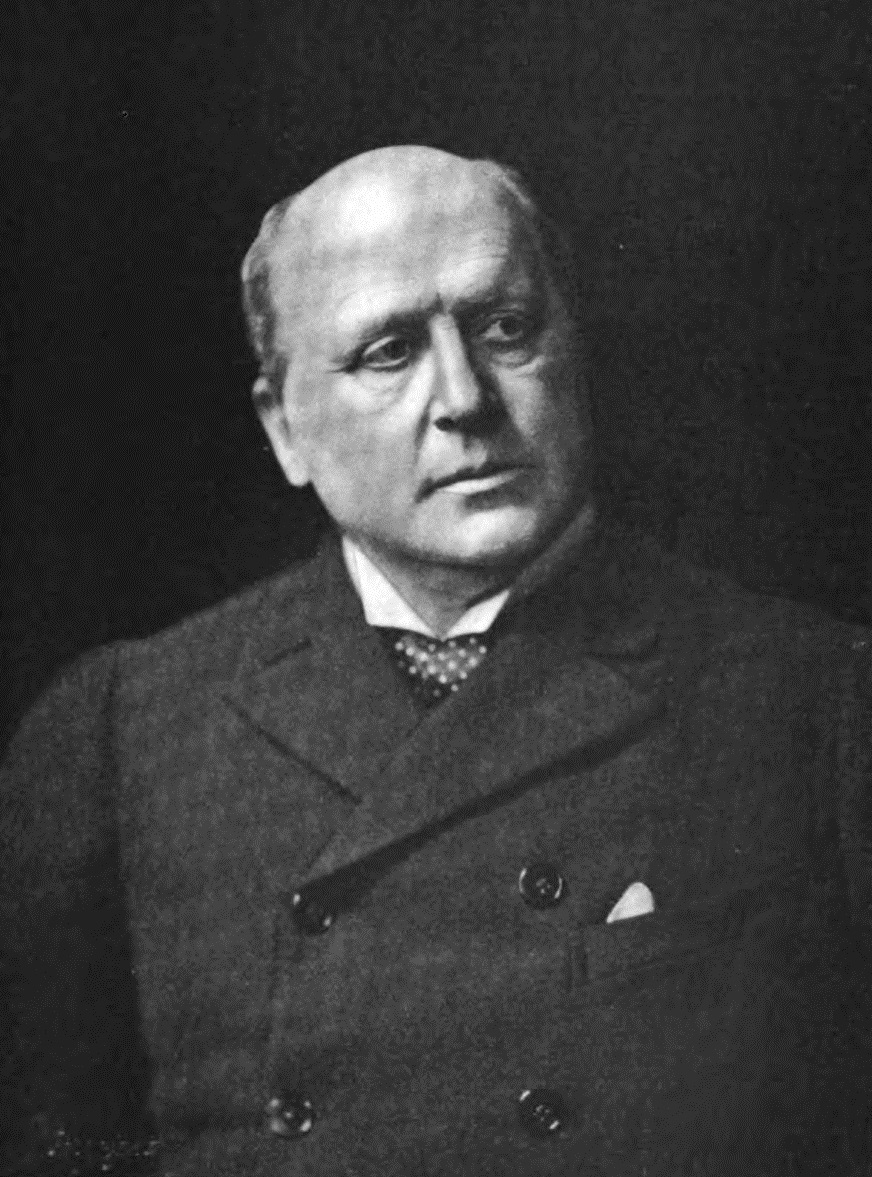
Isabel Archer remains alive because Henry James gives her a problem that never stays in the nineteenth century. She wants freedom before she knows what freedom is for. She wants amplitude, experience, and the right to choose without being arranged by family strategy or marriage-market arithmetic. James later said the germ of the whole novel was the image of a young woman “affronting her destiny.”[1] That phrase is exact because Isabel is not built as a passive victim of circumstance. She goes forward to meet experience, and the novel studies what happens when that courage outruns judgment.
Image context: the cover image shows Henry James late in life, not a literal scene from the novel. It belongs here because this character study is really about one of James’s most durable inventions: a heroine whose wish to live largely becomes inseparable from the danger of choosing badly.[6]
1) Isabel’s first charm is that she wants a life too large for the scripts around her
In the Gardencourt opening, Isabel feels fresh not because she is merely “spirited,” but because she distrusts prefabricated destinies. She does not want to marry simply because marriage is the respectable mechanism available to an intelligent young woman with beauty and no fortune. James lets her say that a woman should be able to “live to herself,” and the line lands as both principle and warning.[1] It names a real hunger for independence, but it also reveals how abstract her idea of liberty still is.
Isabel wants openness more than form. She values possibility more than placement. She admires intelligence, cultivation, and interior range, yet she has not learned that freedom is not just the absence of external control. Freedom also depends on the ability to read motives, structures, and uses. That gap in her understanding is the center of the character study. Isabel’s greatness and her vulnerability spring from the same source: she would rather risk error in a large life than accept safety in a small one.[1][3]
This is why she can seem so modern. She treats experience as something one ought to deserve by choosing, not simply inherit by obeying. James gives that impulse glamour, but he never flatters it into wisdom.
2) The inheritance does not solve Isabel’s problem. It enlarges it.
A weaker novel would use Ralph Touchett’s intervention as a liberation switch: give the heroine money, remove economic pressure, and let freedom begin. James does something harder. Isabel’s inheritance removes one kind of coercion only to expose another. Once she becomes rich, she can imagine that every later decision will be authentically hers. The money does not clarify her judgment; it gives her a larger stage on which to misread herself.[1][2]
That is one reason The Portrait of a Lady became a central James novel in the period collected by Library of America’s Novels 1881-1886, and why James returned to revise it a quarter-century later for the New York Edition.[3][4] Isabel is not simply a plot device for the international theme. She is a pressure test for the idea that self-determination can remain innocent after it acquires power.
The inheritance lets her feel ethically unpurchased. She need not marry for money, fear poverty, or submit to practical compulsion. Yet that very liberty makes her easier to deceive, because she begins to trust the moral purity of chosen experience itself. James’s counterargument is severe: a freely chosen mistake is still a mistake, and wealth can make vanity look like principle.
3) Osmond understands Isabel’s fantasy before Isabel understands Osmond’s appetite
Gilbert Osmond is dangerous not because he is melodramatically forceful, but because he presents domination as refinement. He looks like the answer to Isabel’s dislike of crude social ambition. Detached from commerce, poised, cultivated, aesthetically fastidious, he appears to offer life in a more selective register. Isabel mistakes this atmosphere for depth.[1][2]
What she fails to see is that Osmond’s taste is acquisitive. He does not want a partner with an independent center so much as a consciousness that can admire him and ratify the arrangement of his world. He collects persons as he collects objects. Madame Merle sees this with terrifying clarity, which is why her role matters so much. She recognizes in Isabel the exact mixture that can be used: moral ambition, hunger for experience, and a vanity fine enough to dislike calling itself vanity.[2]
James is merciless here about the social uses of aesthetic language. Culture in the novel is real, attractive, and worth wanting; it is also one of the screens behind which power can hide. Isabel’s marriage becomes tragic not because she chose passion over prudence in some simple way, but because she mistook a style of consciousness for a generous soul.
4) Rome teaches Isabel that freedom after choice is harder than freedom before it
The Roman marriage is where James turns the novel from social comedy into inward reckoning. Once Isabel understands Madame Merle’s relation to Osmond and begins to see what Pansy’s life has been shaped to become, her problem changes. She is no longer asking how to keep her future open. She is asking what responsibility looks like after knowledge has closed around her.[2]
This is the phase of the novel that gives the character her real weight. Isabel is not admirable because she suffers beautifully. She is admirable because she becomes more exact. Illusion drains away, and with it goes the luxury of thinking of freedom as a private atmosphere. Now freedom has to include moral reading: Who depends on me? What have I enabled? What would escape cost someone else?
That enlargement of the moral field helps explain why serious criticism keeps returning to the novel. In Stuart Burrows’s recent Cambridge study, James’s fiction is read through the pressure of promises and obligations to others.[5] Isabel makes that pressure visible in character form. Her intelligence matures when she can no longer imagine that the self is most itself in splendid separateness.
5) The ending unsettles because James refuses to confuse escape with clarity
Readers still divide over Isabel’s return to Rome because many novels train us to expect liberation to become spatial. Leave the bad marriage, refuse the house, take the handsome rescuer, and turn knowledge into exit. James withholds that simplification. Caspar Goodwood offers force, sincerity, and a possible flight route, but he does not solve Isabel’s deeper problem. He offers removal before comprehension has finished its work.[2][4]
That is why the ending continues to feel modern rather than merely frustrating. James is less interested in whether Isabel “wins” than in whether she can act without lying to herself. By the final movement, she knows Osmond, knows Madame Merle, knows the texture of the prison, and knows that Pansy remains inside it. Any action she takes now carries knowledge instead of fantasy. The late revisions James made to the novel sharpened rather than softened that inward pressure, which is one reason the ending keeps provoking serious rereading.[4]
The cleanest way to put it is that Isabel’s freedom does not disappear; it becomes expensive. She is freest in the last pages precisely because she is least enchanted by freedom as a mood.
6) Why Isabel Archer keeps returning
Isabel survives changes in critical fashion because James never reduces her to either martyr or fool. She is wrong, but she is wrong in an ambitious way. She wants life in the whole, and that desire remains attractive even after the novel teaches its cost.
Many characters in nineteenth-century fiction must choose between convention and revolt. Isabel’s case is harder. She chooses self-direction, then learns that self-direction without interpretive discipline can become available to manipulation. That structure still feels current. Plenty of modern people know some version of the mistake: confusing optionality with freedom, aesthetic fluency with moral depth, or chosen experience with self-knowledge.[1][5]
That is why this character study finally belongs less to marriage plot than to education plot. James begins with a brilliant young woman who thinks liberty means keeping the future open. He ends with a consciousness that has learned liberty must also mean reading power, consequence, and the claims of others. Isabel Archer’s greatness lies there. She does not keep her innocence. She acquires a harder form of vision.
Sources
- Henry James, The Portrait of a Lady, Volume 1 (Project Gutenberg; Preface and early Gardencourt chapters cited).
- Henry James, The Portrait of a Lady, Volume 2 (Project Gutenberg; Roman marriage, Pansy, Goodwood, and ending cited).
- Library of America, Henry James: Novels 1881-1886 (publication-period and volume context).
- Michael Gorra, “Lightness v. pungency: Michael Gorra on Henry James’s two versions of The Portrait of a Lady, 25 years apart.” Library of America.
- Stuart Burrows, “Promising Others,” in Henry James and the Promise of Fiction. Cambridge University Press.
- Wikimedia Commons, “File:Photo of Henry James.jpg” (lead image source).